


What Makes Rolex Watches So Expensive?
Key Points:
Rolex prices reflect in-house manufacturing, premium materials, precision engineering, testing, and ongoing research and development.
Brand heritage, global recognition, strong demand, and limited availability of certain models can contribute significantly to Rolex retail and secondary-market prices.
Pre-owned and vintage Rolex values depend heavily on reference, rarity, originality, condition, provenance, and current market demand.
Rolex watches can retain value well compared with many luxury goods, but resale performance is never guaranteed and varies significantly by model.
Rolex watches are expensive because their price reflects far more than the materials on the wrist. The brand combines highly controlled Swiss manufacturing, sophisticated mechanical movements, premium materials and rigorous quality testing with substantial investment in research and development. Producing watches to consistent standards of precision, durability and finish requires specialised facilities, skilled labour and manufacturing processes that are costly to develop and maintain.
The price of a Rolex also extends beyond manufacturing. More than a century of watchmaking history has created exceptional brand recognition and global demand, while the limited availability of certain models can influence what buyers are prepared to pay. This is particularly visible on the secondary market, where sought-after references may sell for significantly different prices from their official retail prices. Together, engineering, materials, quality control, heritage and market demand help explain why Rolex watches command such a substantial premium.
Why Are Rolex Watches So Expensive?
Rolex watches are expensive because their price reflects an entire system of watchmaking rather than any single costly component. The company combines extensive Swiss manufacturing, mechanical engineering, premium materials, strict quality control and continued investment in research and development. Each of these elements adds to the cost before factors such as brand reputation and demand are considered.
The main reasons Rolex watches command premium prices include:
-
extensive in-house manufacturing and control over key components
-
sophisticated mechanical movements
-
premium metals, ceramics and sapphire crystals
-
demanding assembly, adjustment and testing
-
investment in new materials and watchmaking technologies
-
more than a century of brand heritage and strong global demand
Rolex Controls Much of Its Own Manufacturing
Rolex has a high degree of vertical integration. At its major sites in Switzerland, the company manufactures key components including movements, cases, dials and bracelets, while its own foundry produces the gold alloys used in its watches.
Controlling so much of the production process requires significant investment in specialist facilities, machinery and skilled personnel. In return, Rolex can closely manage materials, tolerances, finishing and quality throughout production.
Research and Development Behind Every Rolex
Research and development is another less visible cost. Rolex invests in movement architecture, materials, precision, shock resistance and manufacturing processes, with numerous patented technologies developed over the years.
This work requires engineers, laboratories and specialist equipment. The resulting innovations may be hidden inside the movement or incorporated into a material, but their development and production are still reflected in the price of the finished watch.
Why Are Rolex Materials So Expensive?
Rolex uses materials selected not only for their appearance but also for durability, corrosion resistance and long-term stability. Some, such as gold and platinum, are inherently valuable. Others require specialist development and processing before they can become watch components.
|
Material |
Typical use |
Key characteristic |
|
Oystersteel |
Cases and bracelets |
High corrosion resistance |
|
18 ct gold |
Cases, bezels and bracelets |
Precious metal produced in controlled alloys |
|
Everose gold |
Cases and bracelets |
Proprietary 18 ct pink-gold alloy |
|
Platinum |
Selected models |
Dense and valuable precious metal |
|
Cerachrom |
Bezels and inserts |
Scratch and colour resistance |
|
Sapphire crystal |
Crystals |
High scratch resistance |
Oystersteel and Corrosion Resistance
Rolex uses Oystersteel, a stainless steel from the 904L family, for its steel watches. It offers strong resistance to corrosion and can achieve the highly polished finish associated with many modern Rolex models. Its properties are particularly appropriate for professional watches designed for exposure to demanding environments.
Gold, Everose Gold and Platinum
Rolex operates its own foundry and produces the gold alloys used in its watches. These include 18 ct yellow and white gold as well as proprietary Everose gold, developed to preserve the appearance of its pink colour. Selected references are also produced in platinum, adding considerably to their raw material cost.
Cerachrom, Sapphire Crystal and Other Materials
The company also uses engineered materials such as Cerachrom for many bezels and bezel inserts. The ceramic is highly resistant to scratches and colour fading. Sapphire crystals provide similar protection against everyday scratching. These materials add durability while requiring precise manufacturing and finishing, contributing further to the overall cost.

Why Does Rolex Cost So Much to Manufacture?
Manufacturing costs do not end once the individual components have been produced. A mechanical Rolex contains numerous parts that must work together within extremely fine tolerances. Movement assembly, adjustment, finishing, inspection and testing all require additional expertise and time before a completed watch can leave the factory.
Rolex Movements and Precision Engineering
Modern Rolex watches use self-winding mechanical movements developed for accuracy, reliability and efficient automatic winding. Depending on the calibre, they incorporate technologies designed to improve resistance to shocks and magnetic fields, energy efficiency and power reserve.
Many current calibres provide approximately 70 hours of power reserve, although specifications vary. Innovations such as the Chronergy escapement and Parachrom hairspring illustrate the engineering that goes into components largely hidden from the owner.
Assembly, Finishing and Quality Control
Precision components still need to be correctly assembled and adjusted. Rolex combines advanced manufacturing technology with specialist human work during assembly, regulation and inspection.
Quality control extends beyond the movement. Cases, dials, hands, bezels and bracelets must also satisfy the company's functional and aesthetic requirements. Maintaining consistent standards across production requires specialised machinery, trained staff and repeated inspections.
Rolex Testing and Superlative Chronometer Certification
Rolex movements receive official chronometer certification from COSC before the completed watches undergo further testing by Rolex. The brand's Superlative Chronometer certification covers the fully assembled watch, including precision, automatic winding, power reserve and waterproofness.
Finished Superlative Chronometers are tested to an accuracy tolerance of −2/+2 seconds per day. Water resistance is also checked according to the specifications of each model, an especially important consideration for dive watches such as the Submariner and Sea-Dweller. Buyers are therefore paying not only for precisely manufactured components, but for a complete mechanical watch that has been assembled, adjusted and tested to defined performance standards.
Comment from Barrington Watch Winders: One of the most important things to understand about Rolex pricing is that much of the value is hidden inside the watch. Precision engineering, testing and manufacturing standards are not always visible at first glance, but they play a major role in how the watch performs over time.
How Much Do Rolex Watches Cost?
Rolex prices vary widely because the collection ranges from relatively simple Oystersteel watches to precious-metal and gem-set models. Case material, movement, bracelet, bezel, dial and complications can all affect the final retail price. In the UK, new Rolex watches start at several thousand pounds, while gold, platinum and gem-set references can reach tens of thousands of pounds or more.
Broadly, the price range can be divided into several groups:
-
Oystersteel watches are generally among the more accessible Rolex models. An Oyster Perpetual starts at roughly £5,000 to £6,000, while professional models such as the Submariner and GMT-Master II typically cost more.
-
Two-tone watches, known by Rolex as Rolesor, combine Oystersteel with gold and are consequently more expensive than comparable steel versions.
-
18 ct gold watches often cost £30,000 or more, depending on the collection and configuration.
-
Platinum watches sit towards the top of the range, with models such as the Day-Date reaching well into five figures.
These figures are indicative rather than fixed. Rolex periodically changes its UK prices, and different sizes, materials and configurations can create substantial variations within the same collection.
Why Is the Rolex Brand So Expensive?
The cost of manufacturing alone does not explain the Rolex premium. Part of the price reflects more than a century of watchmaking history and the reputation built around the brand. Rolex is recognised far beyond watch collecting, giving the name a commercial value that a technically impressive but less established manufacturer may not possess.
|
Brand factor |
Why it matters |
|
Heritage |
Rolex traces its origins to Hans Wilsdorf and Alfred Davis in London in 1905 |
|
Innovation |
Important milestones include the Oyster case and automatic winding developments |
|
Recognition |
Collections such as the Submariner, Datejust and Daytona are widely recognisable |
|
Reputation |
Decades of consistent products and positioning have built consumer confidence |
|
Cultural presence |
Rolex has longstanding links with exploration and international sport |
Hans Wilsdorf registered the Rolex name in 1908. The Oyster waterproof wristwatch case followed in 1926, while Rolex patented a self-winding mechanism with a Perpetual rotor in 1931. These developments became important parts of the company's identity.
Rolex has since reinforced that heritage through associations with exploration, motorsport, tennis, golf and sailing, as well as relationships with prominent ambassadors. This visibility has helped make the crown logo recognisable even to people with little interest in mechanical watches.
That recognition has economic value. Buyers are paying partly for the confidence, prestige and continuity associated with a name that has occupied a prominent position in watchmaking for generations.
Why Are Some Rolex Watches More Expensive Than Retail?
A Rolex retail price and its secondary-market value are not necessarily the same. For highly desirable references, the number of buyers can exceed the watches readily available through authorised retailers. Someone unable or unwilling to wait for retail availability may therefore pay more to obtain a particular watch immediately on the secondary market.
Several factors can create this premium:
-
Limited retail availability. Popular references may be difficult to obtain from an authorised retailer at a particular time.
-
Strong demand. Certain models, dial colours, materials and configurations attract significantly more interest than others.
-
Immediate availability. Secondary-market buyers can sometimes obtain a sought-after reference without waiting for an allocation.
-
Changing market conditions. Collector demand and wider economic conditions can move secondary-market prices both upwards and downwards.
The Cosmograph Daytona is one of the clearest examples. Certain Oystersteel versions have historically attracted particularly strong demand. Popular GMT-Master II references can behave similarly, while the Submariner remains one of the most recognisable Rolex sports watches.
However, this does not mean every Daytona, GMT-Master II or Submariner sells above retail. The exact reference, age, condition, configuration and current demand all matter. Some watches command substantial premiums, while others trade close to or below their official retail price.
This distinction helps explain why discussions about Rolex prices can be confusing. Rolex determines the official price of a new watch, but the secondary market reflects what buyers are prepared to pay when availability and demand meet in the open market.
Why Are Some Pre-Owned and Vintage Rolex Watches So Expensive?
A pre-owned Rolex is not automatically cheaper than a new one. Once a watch enters the secondary market, its value is influenced by availability, collectability and condition rather than simply its original retail price. Certain discontinued and vintage references can therefore cost considerably more than they did when new.
Several factors have an especially strong influence:
-
Rare and discontinued references. Once Rolex stops producing a particular reference, the number available becomes finite. Desirable discontinued models, unusual dial variations and short-production configurations can attract significant collector interest.
-
Age and historical importance. An older Rolex is not valuable simply because it is old. Collectors may pay premiums for watches associated with an important period in Rolex history, particularly early examples of models such as the Submariner, GMT-Master and Cosmograph Daytona.
-
Originality. Original dials, hands, bezels and other period-correct components can be important to collectors. Replacement parts or extensive restoration may affect the value of some vintage watches.
-
Condition. Two watches with the same reference number can command very different prices depending on wear, previous polishing and the preservation of their original components.
-
Provenance and completeness. Original boxes, papers, receipts and documented service history can make a watch more desirable. Exceptional provenance may add further value, particularly for historically significant pieces.
Rarity therefore needs context. A scarce Rolex that attracts little collector interest will not necessarily be expensive, while a desirable reference combining rarity, originality and excellent condition can command a substantial premium.

Do Rolex Watches Hold Their Value?
Rolex watches have a reputation for retaining value better than many luxury goods, supported by strong brand recognition and an active international secondary market. However, value retention varies considerably between models and should not be interpreted as a guarantee that every Rolex will appreciate.
Important factors affecting Rolex resale value include:
-
the model and exact reference
-
the original purchase price
-
current condition and originality
-
box, papers and other accompanying items
-
rarity or discontinued status
-
age and collector significance
-
current supply and market demand
Popular professional models can behave very differently from less sought-after configurations, while buying at a substantial secondary-market premium can also affect future returns. Market prices change as collector tastes, availability and economic conditions change.
A Rolex can therefore prove to be a strong store of value, and some references have appreciated significantly over long periods. That does not make every Rolex a good investment. Watches involve servicing costs, transaction costs and unpredictable market movements. For most buyers, potential resale value is better considered an additional benefit rather than the primary reason to purchase a Rolex.
Comment from Barrington Watch Winders: Strong resale performance should be viewed as a characteristic of certain Rolex references, not a guarantee attached to the brand as a whole. Condition, originality, market demand and the price paid initially can all make a substantial difference to long-term value.
Are Rolex Watches Worth the Money?
Whether a Rolex is worth the money depends on what the buyer expects from it. Judged purely as an instrument for telling the time, spending thousands of pounds is unnecessary. Far less expensive watches can provide excellent accuracy and reliability.
The premium begins to make more sense when the watch is considered as a complete luxury product. The price brings together:
-
mechanical engineering and automatic movements
-
durable materials and careful manufacturing
-
extensive testing and quality control
-
designs with long-term continuity
-
more than a century of watchmaking heritage
-
worldwide brand recognition
-
a well-established secondary market
For someone who values those characteristics and intends to wear the watch for many years, a Rolex may justify its price in ways that cannot be measured by timekeeping performance alone. Durability, ownership experience, collectability and the ability to resell a recognised reference can all contribute to its value.
A Rolex may make less sense for a buyer interested mainly in the logo, expecting guaranteed financial returns or stretching a budget simply to own the brand. Ultimately, the price pays for both a highly engineered mechanical watch and the considerable cultural and commercial value surrounding the Rolex name.
Watch Winders for Rolex Automatic Watches
If you decide that a watch winder suits the way you wear and rotate your Rolex watches, the next step is choosing a model that combines suitable winding settings with the capacity your collection requires. Barrington Watch Winders offers options ranging from individual winders for a single automatic watch to larger multi-watch models for collectors. The following selection highlights several options for keeping a Rolex wound, displayed securely and ready to wear.
Barrington Oxford Single Winder - Black

(The Barrington Oxford Single Winder in Black is a compact option for keeping one automatic Rolex wound and ready to wear. Priced at £275, it offers five Turns Per Day settings from 650 to 1,950 and clockwise, counter-clockwise or bi-directional rotation, allowing the winding programme to be adjusted to suit the watch. Its ultra-quiet Japanese motor makes it suitable for bedrooms as well as living spaces, while the watch returns to the 12 o'clock position when resting for a clean display. Measuring just 12 cm wide, the winder can run from AC mains power or four AA batteries, and Barrington's Jump feature allows additional single winders to be connected and powered from one AC source if the collection grows).
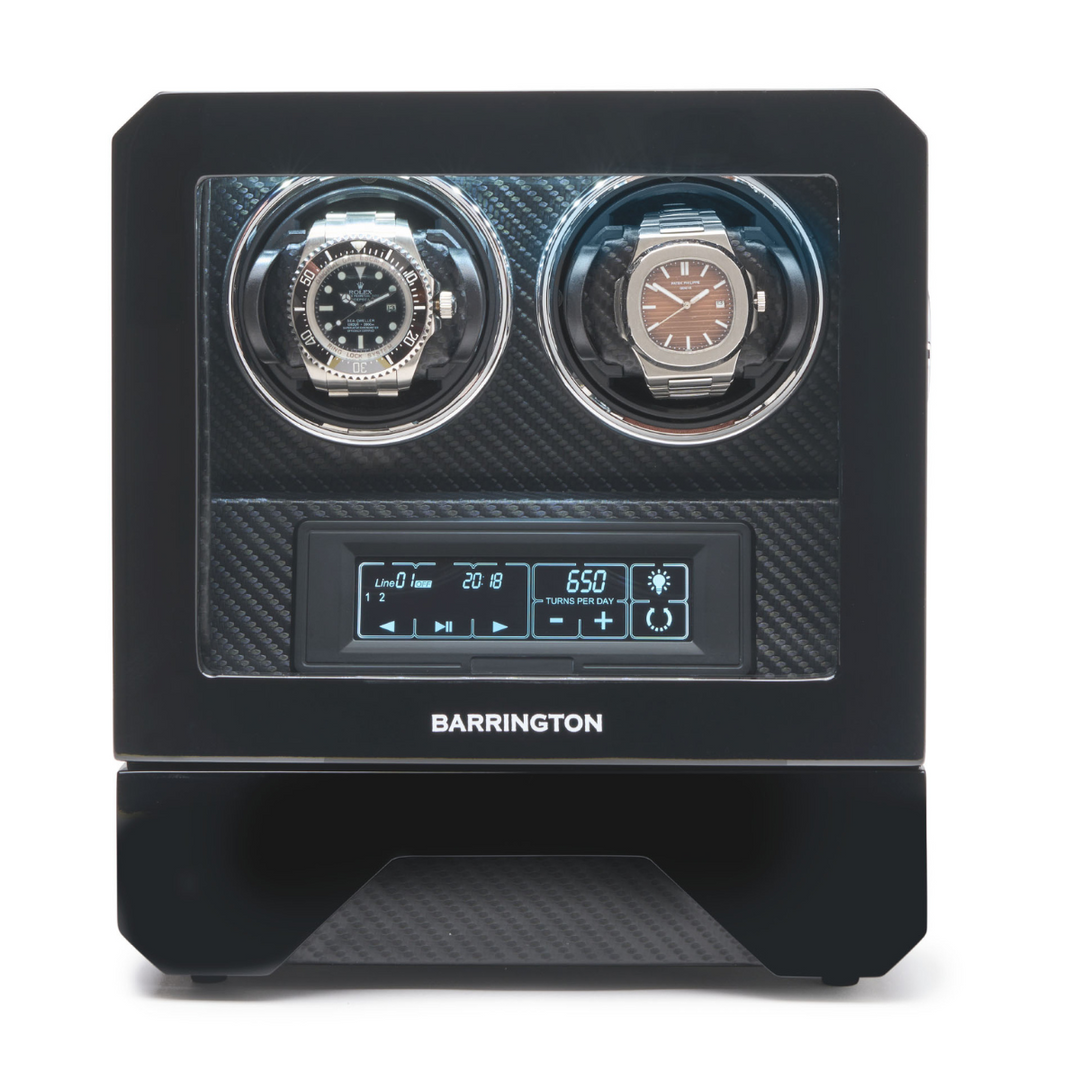
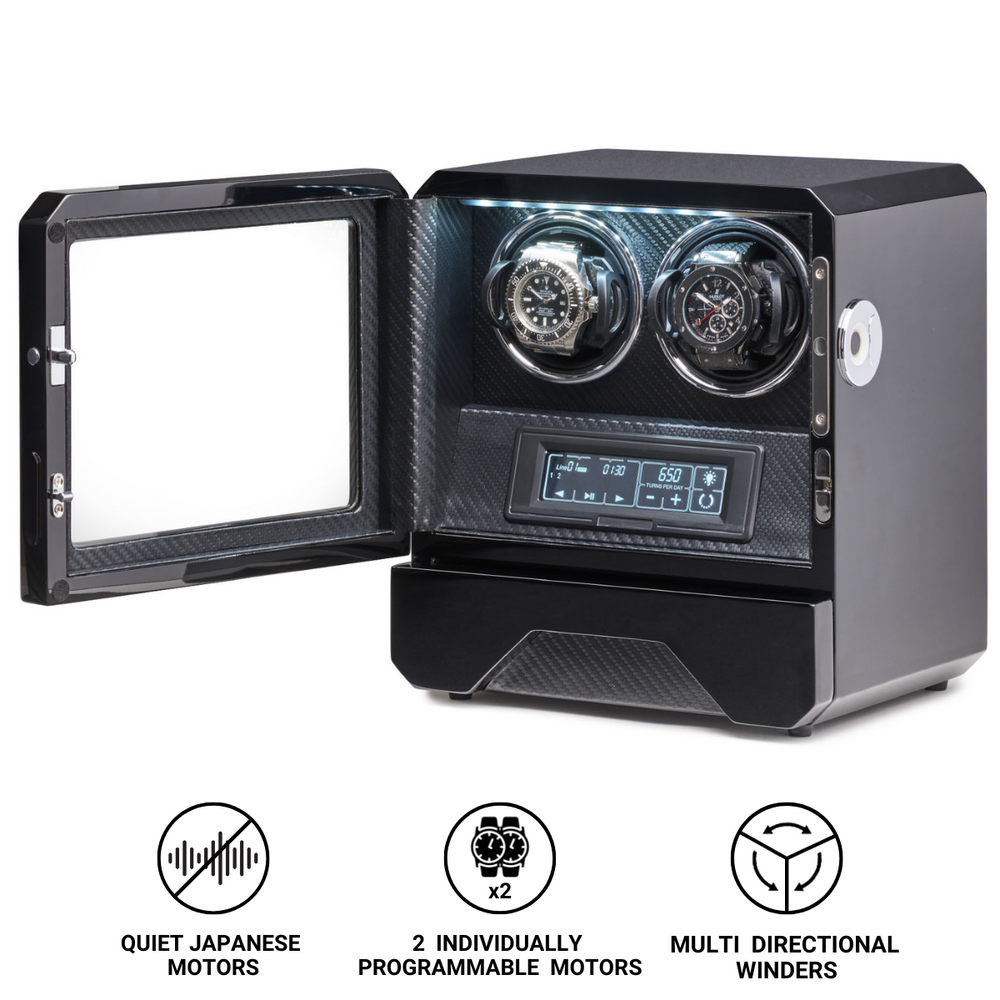
2 Watch Winder

(The Barrington 2 Watch Winder is designed for collectors who want to keep two automatic Rolex watches running simultaneously while controlling each one independently. Its two rotors can each be programmed with a choice of 650, 750, 850, 1,000 or 1,950 Turns Per Day and clockwise, counter-clockwise or bi-directional rotation, making it possible to accommodate watches with different winding requirements. Ultra-quiet Japanese Mabuchi motors and the 12-hour rotation and 12-hour rest cycle make it suitable for bedrooms or offices, while the closed display case includes LED lighting, a storage drawer and rotors that stop at the 12 o'clock position. A touchscreen and remote provide convenient control, while a fingerprint lock capable of storing up to 20 fingerprints adds an extra level of security for the watches inside).
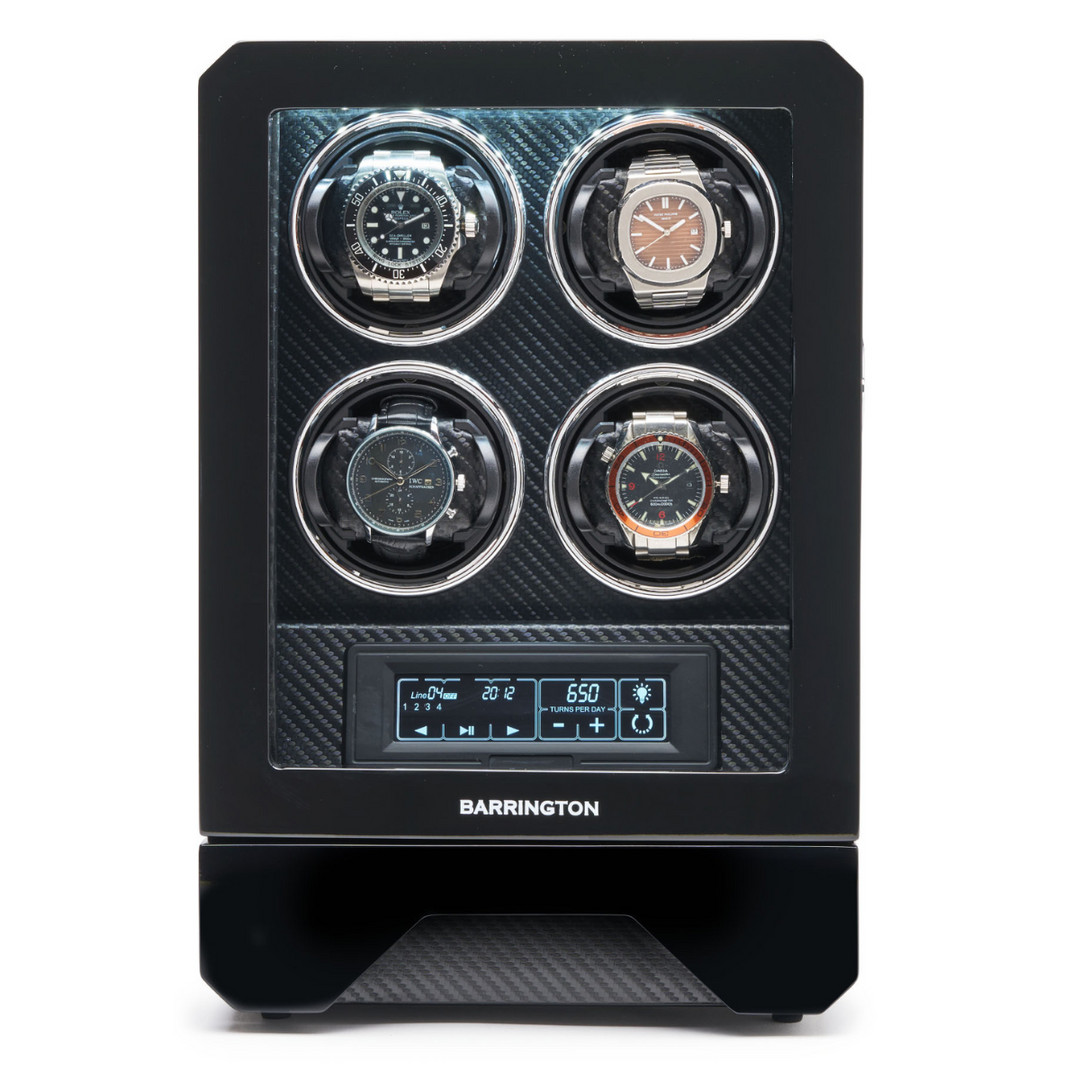
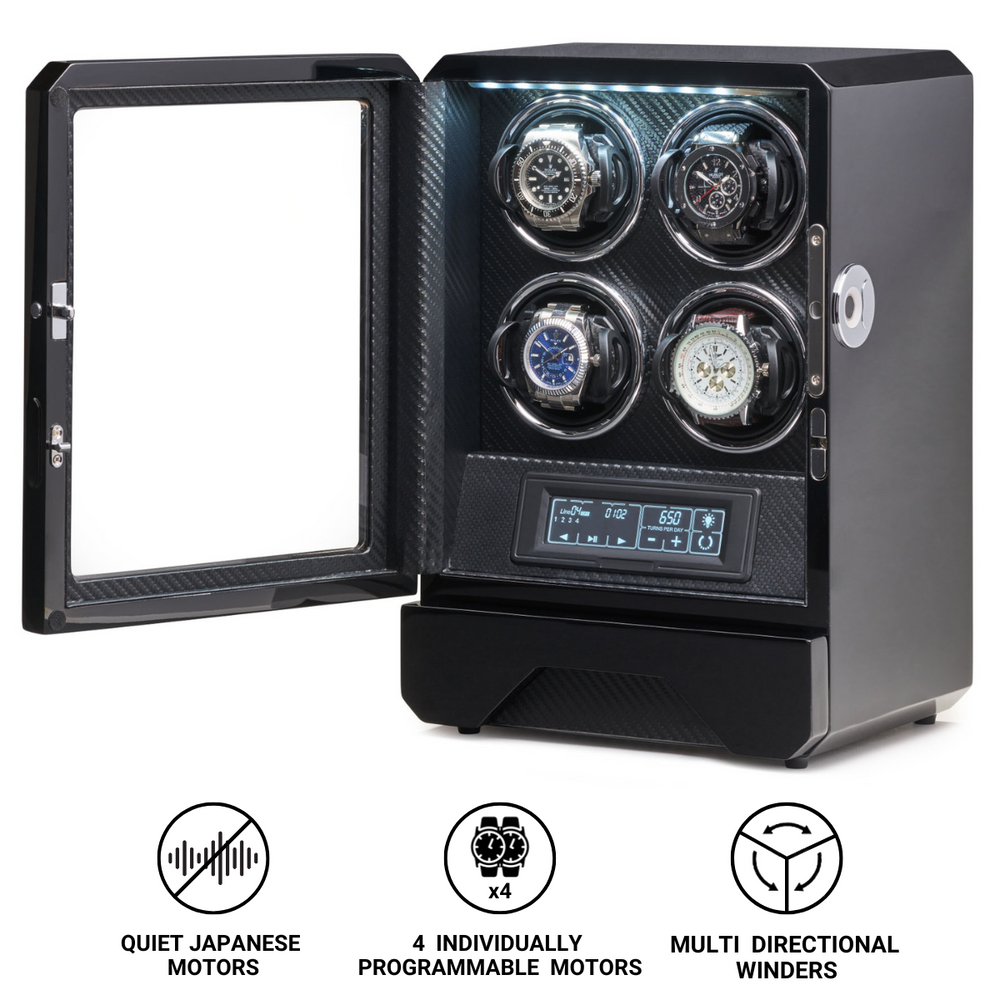
4 Watch Winder

(The Barrington 4 Watch Winder is a practical choice for a larger Rolex collection, with four individually programmable rotors that allow watches with different winding requirements to be accommodated in the same unit. Each rotor offers five Turns Per Day settings from 650 to 1,950 and a choice of clockwise, counter-clockwise or bi-directional rotation. Premium Japanese Mabuchi motors operate quietly, while Barrington's Gentle Rotation programme alternates periods of movement with a 12-hour rest period. The closed display case also features LED downlighting, a storage drawer, touchscreen and remote controls, a fingerprint lock capable of storing up to 20 fingerprints, and rotors that return each watch to the 12 o'clock position when resting).
Whichever option suits your collection, the key is to use winding settings appropriate for the movement inside your Rolex. Barrington winders provide adjustable Turns Per Day and rotation direction settings, together with the Gentle Rotation method, which alternates controlled periods of movement with rest. This makes it possible to choose a setup based on your particular watch and collection rather than simply keeping the movement in continuous rotation.
How to Look After an Expensive Rolex Watch
An automatic Rolex should be treated with the same care as any high-quality mechanical watch. When it is not being worn, keep it in a clean, dry and secure place where it is protected from unnecessary knocks, moisture and extreme temperatures. If the watch is worn regularly, normal wrist movement keeps its automatic movement wound. When left unworn for longer than its power reserve, it will eventually stop.
A watch winder is therefore not essential for owning a Rolex, but it can be convenient for collectors who rotate between several automatic watches or prefer to keep a watch running between wears. Barrington Watch Winders offers Rolex watch winders with adjustable Turns Per Day and rotation direction settings, using the company's Gentle Rotation method with programmed periods of rotation and rest. This allows owners to select settings appropriate for their Rolex while keeping the watch wound and ready to wear without continuous rotation.





Hinterlassen Sie einen Kommentar