


How to Store Watches Properly: The Complete Guide to Watch Storage
Key Points:
Proper watch storage protects timepieces from scratches, moisture, temperature extremes and magnetic fields.
Watch boxes, protective cases and safes provide secure storage, while watch winders keep compatible automatic watches running and ready to wear.
Choosing the correct Turns Per Day (TPD), rotation direction and cushion size is essential for effective automatic watch storage.
Barrington Watch Winders offers single and multi-watch winders, as well as secure winding safes, for different collection sizes and storage needs.
Proper watch storage protects watches from scratches, moisture and heat, helping preserve their appearance and condition. Storage needs differ by movement: quartz watches require battery checks, manually wound watches can safely stop, and automatic watches may be kept running between wears.
Watch boxes and padded watch cases protect watches when not in use, while watch winders maintain the power reserve of compatible automatic models. The right solution keeps watches and collections protected, organised and ready to wear.
Why Proper Watch Storage Matters
Proper watch storage protects both the appearance and mechanical condition of a timepiece. Leaving watches on hard surfaces or storing several together without separation can scratch polished cases, crystals and bracelets. Leather straps may also deteriorate when exposed to moisture, heat or prolonged sunlight.
Environmental conditions present additional risks. Excessive humidity can encourage corrosion, while high temperatures may affect movement lubricants and accelerate the ageing of seals and straps. Strong magnetic fields can interfere with the accuracy of susceptible mechanical movements. Dust and accidental impacts are further concerns, particularly for watches stored openly.
Understanding how to store watches properly means distinguishing between physical protection and maintaining mechanical operation. Traditional watch boxes protect watches while they remain stationary. Watch winders provide an additional function by keeping compatible automatic movements wound, allowing them to remain ready for use.
How to Store Watches by Movement Type
The correct approach to storing watches depends primarily on their movements. Automatic, manually wound and quartz watches have different power sources, so their storage requirements are not identical.
The following distinctions are important when deciding how to store watches:
-
Automatic watches. These movements use a rotating weight, known as a rotor, to wind the mainspring through wrist movement. Many modern automatic watches have power reserves of approximately 38 to 80 hours, although some offer considerably more. Once the reserve is exhausted, the watch stops. A padded box provides safe passive storage, while a correctly configured watch winder keeps the movement running between periods of wear.
-
Manual-winding watches. These require the wearer to wind the mainspring using the crown. They can remain stopped during storage without immediate harm. Conventional watch winders cannot wind these movements because rotating the watch does not operate their winding mechanism.
-
Quartz watches. Battery-powered quartz models do not require movement to remain operational. Their main long-term concern is battery deterioration or leakage. Batteries should be checked regularly, and professional removal may be advisable before extended storage.
-
Vintage and complicated watches. Older movements may have fragile components, ageing seals or specialised winding requirements. Automatic models with perpetual calendars, moon-phase displays or other complications can benefit from continuous operation, but compatibility and mechanical condition should be confirmed first.
For automatic watch storage, a winder is particularly convenient when several timepieces are worn alternately. However, stopping a properly maintained automatic movement is not inherently damaging.
|
Watch Type |
Recommended Storage |
Watch Winder Suitable? |
Main Considerations |
|
Automatic |
Padded box or watch winder |
Yes |
Power reserve and winding settings |
|
Manual-winding |
Watch box or protective case |
No |
Crown winding and safe positioning |
|
Quartz |
Watch box or protective case |
No |
Battery condition and moisture |
|
Vintage mechanical |
Protective case |
Depends |
Movement condition and compatibility |
|
Automatic with complications |
Watch winder or padded box |
Often useful |
Correct settings and calendar functions |
Watch Storage Cases, Boxes and Other Storage Solutions
Choosing suitable watch storage solutions depends on collection size, available space and how frequently each watch is worn. Some accessories provide basic protection, while others combine secure positioning, display and mechanical operation.
The main options for storing watches at home include:
-
Watch boxes and display cases. A watch storage box typically contains individual compartments lined with soft materials such as velvet or suede. Dividers prevent contact between watches, while padded cushions help retain the shape of bracelets and straps. A storage case for watches should provide sufficient clearance around large cases, prominent crowns and folding clasps. Closed boxes also limit dust exposure, although transparent lids should be kept away from direct sunlight.
-
Watch rolls and protective pouches. These offer compact watch case storage for individual timepieces or small collections. Leather, suede and padded fabric interiors reduce friction against the case and bracelet. Choose a design that prevents watches from touching or moving against one another. Avoid sealing damp watches in plastic bags, as trapped moisture can increase the risk of corrosion and strap deterioration.
-
Watch stands and valet trays. These are practical watch storage ideas for timepieces worn daily. A lined tray provides a designated place to remove a watch without placing it directly on furniture. However, open storage offers limited protection against dust, sunlight and accidental knocks.
-
Watch winders and winding boxes. Unlike ordinary watch storage cases, these devices contain powered rotating holders designed for automatic watches. The movement periodically winds the mainspring through its rotor. Enclosed models also provide protected display storage, making them useful for collectors who regularly alternate between automatic timepieces.
An effective arrangement may combine several solutions. Frequently worn watches can remain accessible, valuable pieces can receive additional security, and automatic watches requiring continuous operation can be placed in dedicated winders.
For automatic watch owners, the ability to maintain the movement while storing it securely makes watch winders worth examining in greater detail.

Watch Winder Storage: Benefits for Automatic Watches
Watch winder storage offers a practical distinction from ordinary watch boxes: it maintains the power reserve of compatible automatic movements during periods when they are not being worn.
An automatic watch contains a weighted rotor that responds to movement. As the rotor turns, the winding mechanism transfers energy to the mainspring, which supplies power to the watch. A watch winder reproduces this winding action by rotating the entire timepiece at controlled intervals.
The principal benefits of using a watch winder for automatic watches include:
-
Maintaining the power reserve. Correctly programmed rotation helps replace energy consumed while the watch is running. This allows the movement to continue operating beyond its normal power reserve when the watch is not on the wrist. Modern automatic movements generally incorporate a slipping mainspring arrangement that prevents conventional overwinding when fully wound.
-
Reducing repeated adjustments. When an automatic watch stops, its time and any relevant calendar indications must be reset. A winder keeps these displays operating, reducing the inconvenience of repeated manual adjustments.
-
Supporting complicated calendar functions. Watches equipped with annual calendars, perpetual calendars and moon-phase indications may require several setting operations after stopping. Some perpetual calendars also require particular care when correcting their displays. Maintaining operation can simplify ownership, especially when these watches are worn intermittently.
-
Combining storage and presentation. A suitable winder holds the watch securely on a fitted cushion, keeping its case and bracelet away from hard surfaces. Enclosed models offer further protection from dust and incidental contact while allowing the collection to remain visible.
The main difference between passive and active automatic watch storage is convenience rather than an absolute requirement for mechanical preservation.
A properly maintained automatic watch can remain stopped in a conventional box without immediate damage. Watch winders do not replace lubrication checks, movement servicing or repairs, and unnecessary rotation provides no additional performance benefit.
Barrington Watch Winders offers solutions for individual automatic watches and larger collections, combining programmable rotation with dedicated watch holders and enclosed display options.
For collectors who alternate between several automatic watches, this arrangement provides a convenient way to keep selected timepieces running and ready to wear without resetting them after every period of inactivity.
How to Choose a Watch Winder for Proper Watch Storage
Selecting a watch winder requires more than matching its appearance to a room or collection. Its winding programme, rotation direction and watch holder must suit the movement and dimensions of the timepiece.
The following factors are particularly important when choosing a device for automatic watch storage.
-
Turns Per Day (TPD) and rotation direction. TPD indicates how many complete rotations the winder performs within its programmed cycle. Different automatic calibres require different winding amounts and directions. Some wind clockwise, others counter-clockwise, while bidirectional movements can accept winding in either direction. A watch winder with adjustable settings allows its operation to match the relevant calibre rather than applying the same programme to every watch.
-
Watch cushions and secure positioning. The cushion must hold the watch firmly without excessive pressure on its bracelet or strap. Loose positioning can allow the watch to shift during rotation, while an oversized holder may place unnecessary tension on the clasp. Case dimensions, bracelet circumference and cushion flexibility should all be considered.
-
Motor quality and intermittent operation. A well-constructed winder should rotate smoothly, with minimal vibration and mechanical noise. Intermittent programmes allow the watch to remain stationary between winding cycles. This is preferable to unnecessary continuous rotation because the objective is to maintain sufficient power, not maximise movement.
-
Capacity and independent programming. A single watch winder suits an individual automatic timepiece, while collectors may prefer multiple rotors. Independently adjustable holders are especially useful when the collection includes movements with different winding requirements.
Barrington's Oxford Single Watch Winder provides five TPD options: 650, 750, 850, 1,000 and 1,950. It also supports clockwise, counter-clockwise and bi-directional rotation.
The correct watch winder settings should be selected according to the movement manufacturer's recommendations. Case weight or watch brand alone does not determine the necessary TPD. Barrington also provides a winding-settings database to help identify compatible programmes.
Cushion dimensions are equally important. Barrington offers Omni cushions for watch and bracelet circumferences of approximately 16.5 to 22 cm, while Micro cushions accommodate approximately 12.5 to 16.5 cm. Choosing the appropriate size improves positioning without unnecessarily stretching the bracelet.
Barrington's Gentle Rotation system uses short periods of movement separated by pauses. Its programmed winding activity takes place over a 12-hour period, followed by 12 hours of rest. The system is designed to provide the selected rotation count without keeping the watch moving continuously.
Quiet operation is another consideration for winders installed in bedrooms or offices. Barrington uses Japanese motors designed for low-noise operation, although no motor-driven device can be considered completely silent.
For watch collection storage, capacity should reflect both the current collection and likely future additions.
The Barrington Oxford Single Watch Winder is a compact option for one timepiece. Compatible single units can also be connected using the Barrington Jump system, allowing several winders to share a power supply.
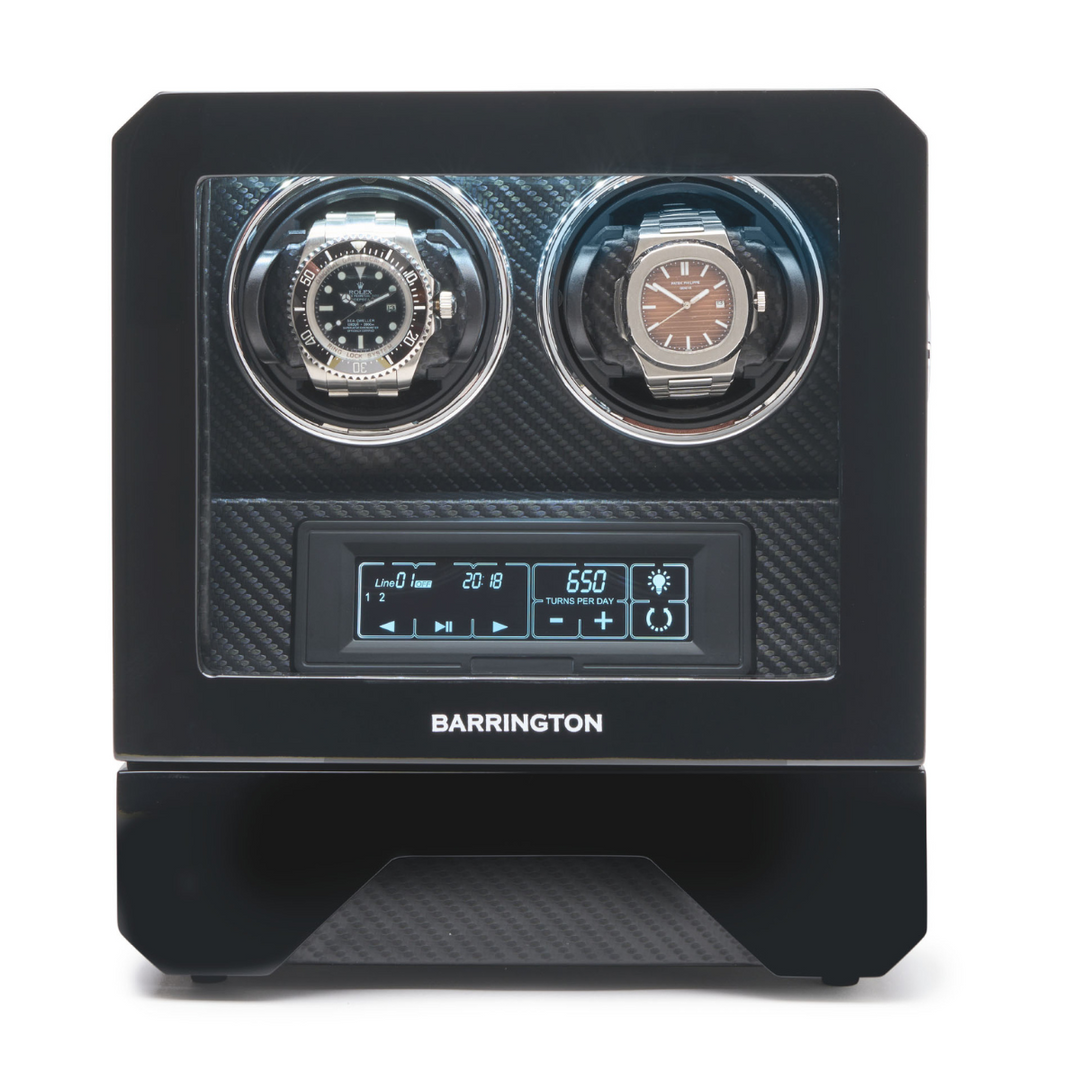
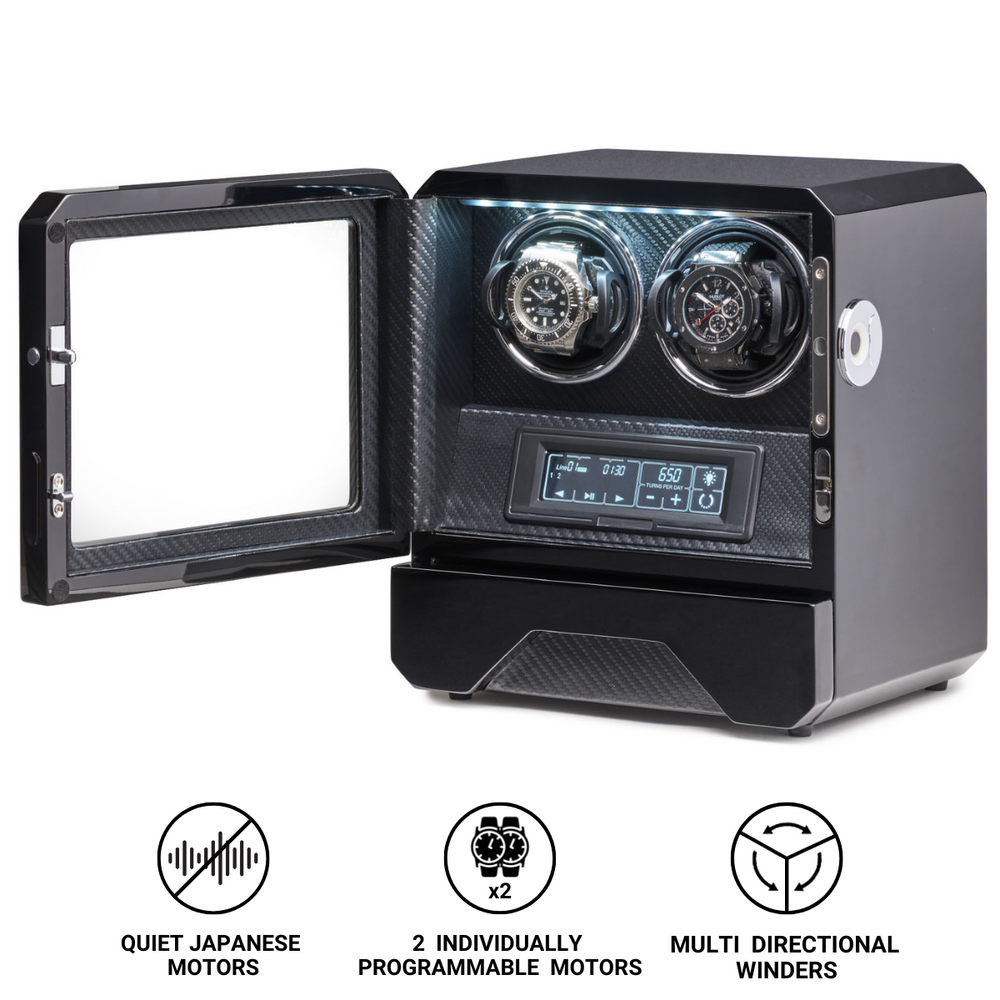
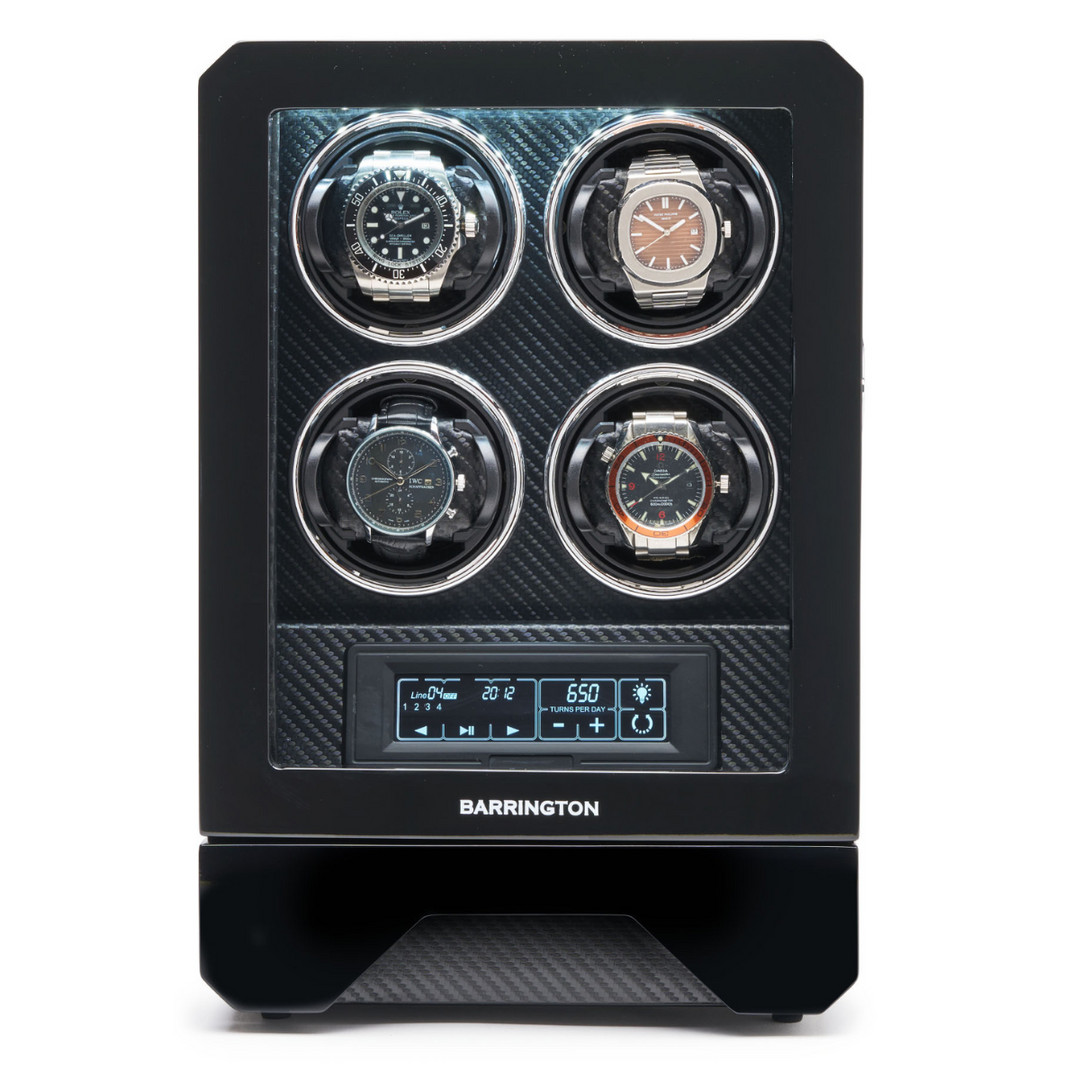
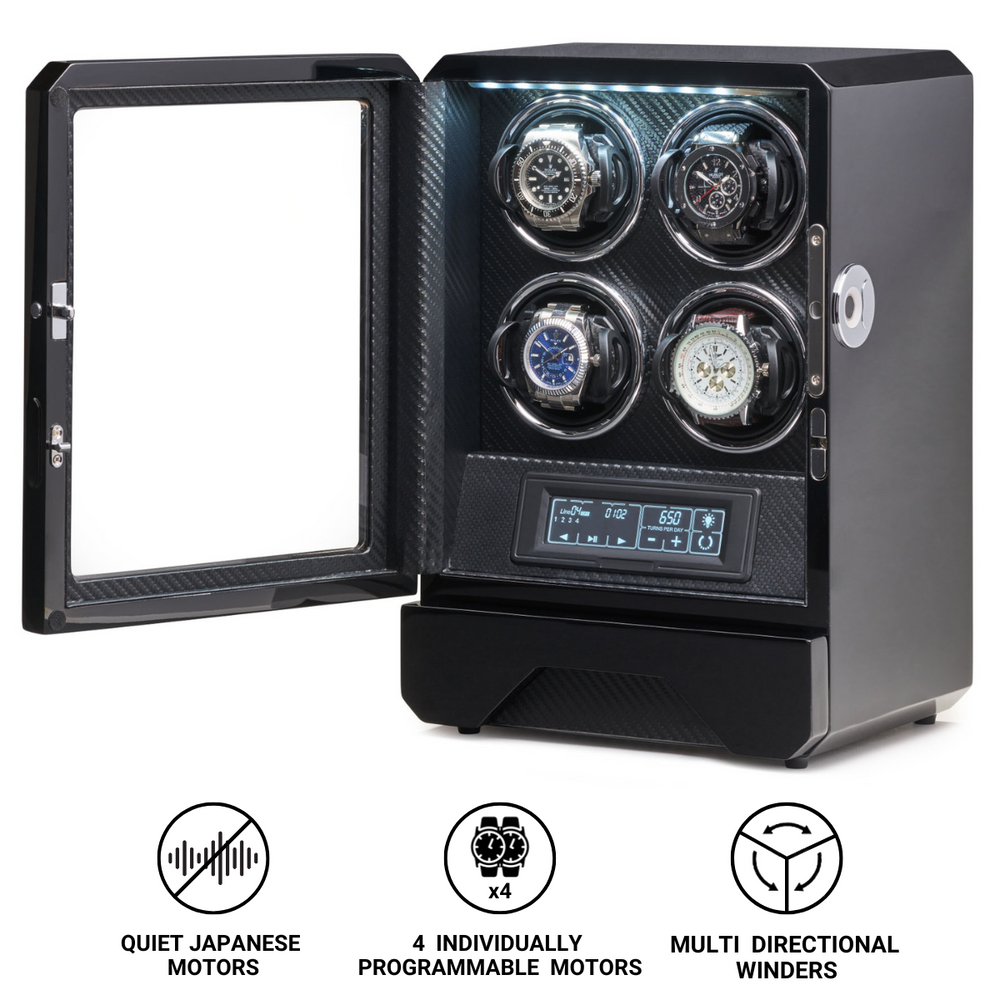
Barrington Multi Watch Winders provide alternatives for larger collections, including two, four, six and nine-watch configurations with individually programmable rotors. This allows different automatic calibres to operate under their respective winding programmes.
The most suitable arrangement is one that provides secure positioning, appropriate winding control and sufficient capacity without unnecessary mechanical activity.
Barrington Watch Winders Expert Comment: Even watches from the same manufacturer may require different winding settings, depending on the movement inside. We recommend checking the specific calibre and its required Turns Per Day (TPD) and rotation direction before placing a watch in a winder. Correct programming helps maintain sufficient power without unnecessary rotation.
Barrington Watch Storage Solutions: From Single Winders to Watch Safes
Choosing the right watch storage solution depends on the number of automatic watches you own, how frequently you wear them and the level of protection your collection requires. Barrington Watch Winders offers a range of precision-engineered products, from compact single watch winders to multi-watch cabinets and secure winding safes. With adjustable winding settings, carefully designed watch holders and elegant finishes, these solutions combine practical automatic watch storage with attractive presentation. Below, we explore several Barrington models suited to different collection sizes and storage needs.
Barrington Oxford Single Winder - Red

(The Barrington Oxford Single Winder in Red combines a striking finish with compact dimensions of 12 × 12.5 × 19 cm, making it suitable for displaying an automatic watch on a desk, shelf or bedside cabinet. Its ultra-quiet Japanese motor operates with five adjustable Turns Per Day (TPD) settings ranging from 650 to 1,950, alongside clockwise, counter-clockwise and bi-directional rotation. Barrington's Gentle Rotation system alternates winding cycles with rest periods, helping maintain the watch's power reserve without unnecessary continuous movement. The watch remains securely positioned on a choice of Omni or Micro cushions and stops facing upwards at 12 o'clock for an attractive display. Power is supplied through the mains or four AA batteries, while the Jump connection allows multiple Oxford winders to operate from a single power source. This model is particularly suitable for collectors seeking a compact, customisable storage solution for one automatic watch).
9 Watch Winder

(The Barrington 9 Watch Winder is designed for collectors who want to store, display and maintain up to nine automatic watches in one elegant cabinet. Its nine individually programmable rotors offer five Turns Per Day (TPD) settings from 650 to 1,950, with clockwise, counter-clockwise and bi-directional rotation to accommodate different movements. Premium Japanese Mabuchi motors and the Gentle Rotation system provide quiet, intermittent operation, with 12 hours of winding activity followed by 12 hours of rest. Each watch is held securely on a clip-in cushion and returns to the 12 o'clock position when stationary. The enclosed cabinet features a carbon fibre-effect interior, LED lighting, a fingerprint lock supporting up to 20 fingerprints and a built-in drawer for additional storage. Touchscreen controls and a remote allow convenient adjustment of individual rotors. Measuring 34 × 45 × 19.5 cm, this mains-powered model is particularly suitable for established collectors seeking organised automatic watch storage with convenient access and additional security features).
Barrington Oxford Single Winder - Black

(The Barrington Oxford Single Winder in Black offers a discreet and practical solution for storing and maintaining one automatic watch. Its compact dimensions of 12 × 12.5 × 19 cm and understated black finish make it suitable for a bedroom, office or display shelf. The ultra-quiet Japanese motor supports five adjustable Turns Per Day (TPD) settings of 650, 750, 850, 1,000 and 1,950, with clockwise, counter-clockwise and bi-directional rotation to accommodate different automatic movements. Barrington's Gentle Rotation technology combines intermittent winding with scheduled rest periods, helping maintain the watch's power reserve without unnecessary continuous rotation. The watch is held securely using an Omni or Micro cushion and returns to the 12 o'clock position when stationary. The unit operates using AC mains power or four AA batteries, which typically provide 60 to 70 days of operation. Its Jump connection also allows multiple Oxford winders to share a single power source, making this model a flexible choice for collectors planning to expand their automatic watch storage).
Whether you need a single winder for an everyday automatic watch or a larger unit for an expanding collection, the priority is choosing a model that matches your watches' winding requirements and storage needs. Barrington's range offers options for different capacities, allowing collectors to keep compatible automatic watches securely positioned, properly wound and ready to wear. A suitable watch winder can become a practical part of your daily routine while providing an organised home for your collection.
Ideal Watch Storage Conditions at Home
Environmental stability is central to effective watch storage. Even watches with robust cases and modern movements benefit from protection against extreme temperatures, excessive moisture and avoidable physical damage.
For everyday storage, a stable indoor temperature of approximately 15 to 25°C is generally preferable to locations exposed to substantial heat or cold. Moderate humidity is also important, particularly for watches with leather straps, vintage components or uncertain water resistance.
The best way to store watches is to choose a clean, secure location with consistent conditions.
Important precautions include:
-
Temperature and humidity. Avoid placing watches near radiators, fireplaces, bathroom windows or poorly insulated storage areas. Excessive moisture increases corrosion risks, while prolonged heat can affect seals, straps and movement lubricants.
-
Sunlight and ultraviolet exposure. Direct sunlight can fade certain dial materials and accelerate deterioration in leather and rubber straps. Display cases should therefore be positioned away from windows receiving prolonged sunlight.
-
Magnetic fields. Strong magnets in electronic accessories, magnetic clasps and some equipment can affect susceptible mechanical movements. The degree of risk depends on the magnetic field and the watch's resistance specification.
-
Dust and physical contact. Enclosed cases reduce dust accumulation, while individual compartments prevent bracelets, crowns and case edges from scratching neighbouring watches.
Correct positioning is equally important. Watches should rest on soft, clean surfaces or properly fitted cushions, with sufficient space to protect protruding components.
Avoid supporting a watch directly on its crown or chronograph pushers. When using a cushion, ensure the bracelet and clasp do not press against the caseback or other exposed surfaces.
Screw-down crowns should be fully secured according to the manufacturer's instructions. However, crown positioning does not compensate for deteriorated seals or guarantee water resistance.
These principles apply equally to ordinary storage boxes and watch winders, which should themselves stand on stable, level surfaces.
Long-Term Watch Storage and Maintenance
Long-term watch storage requires additional preparation, particularly when a timepiece will remain unused for several months. The aim is to reduce unnecessary environmental exposure and identify problems before they develop into more serious damage.
Cleaning and careful inspection should take place before the watch is stored.
-
Clean the case and bracelet. Remove fingerprints, perspiration and surface dirt using a clean, soft microfibre cloth. Metal bracelets may require more thorough cleaning, but water should only be used where the manufacturer's guidance and the watch's condition permit it. Never assume that a vintage watch remains water-resistant simply because its caseback carries a depth rating.
-
Protect straps and seals. Leather straps should be clean and completely dry before storage. Avoid harsh cleaning products and excessive moisture. Rubber straps should also be kept away from prolonged heat and direct sunlight.
-
Inspect the watch before putting it away. Check the crystal, crown, bracelet attachment and general condition. Visible moisture beneath the crystal, unusual winding resistance or irregular operation should be investigated rather than ignored.
Mechanical watches can generally remain stationary during extended storage. Modern movement lubricants are designed to retain their properties over time, although they still age and eventually require replacement.
An automatic watch does not need to run continuously simply to avoid damage from stopping. Occasional manual winding may be appropriate where recommended by the manufacturer, but repeatedly winding a watch solely to prevent inactivity is not universally necessary.
A watch winder is useful when an owner wants an automatic model to remain operational and ready for use. For a watch that will not be worn for many months, passive storage may instead be preferable, particularly if the movement requires servicing.
Quartz watches require a different precaution. An exhausted battery left inside a watch for an extended period can leak and damage electronic components or contacts. If long-term storage is planned, professional battery removal may be appropriate, particularly for valuable pieces.
After extended storage, inspect the watch before returning it to regular use. Where necessary, arrange servicing and water-resistance testing according to the manufacturer's recommendations.
Barrington Watch Winders Expert Comment: An automatic watch does not need to run continuously to remain in good condition. For watches worn regularly, a properly configured winder offers the convenience of keeping them ready to wear, while a clean, dry and padded case is a suitable alternative for extended periods of inactivity. The choice should reflect how frequently you use each timepiece.
Luxury Watch Storage and Organising a Watch Collection
Luxury watch storage involves both preservation and security. As collections grow, individual boxes and loose cases can become difficult to manage, particularly when watches differ in size, movement type and frequency of use.
A structured watch collection storage system helps protect individual timepieces while making the collection easier to maintain.
Two areas deserve particular attention:
-
Secure storage and watch safes. High-value collections may justify a properly installed safe with suitable burglary resistance and insurance acceptance. A conventional display case offers physical protection but does not provide comparable security against theft. Some specialist cabinets combine secure access with integrated watch winders, allowing automatic watches to remain operational while stored. Barrington's 12 Watch Winder Safe, for example, accommodates 12 automatic watches on individually programmable rotors and includes fingerprint access, a four-digit PIN option and alarm functions.
-
Collection organisation and documentation. Watches can be grouped by movement type, frequency of wear or individual storage requirements. Keep original boxes, warranty cards, certificates, purchase records and service documentation in a secure location. Maintaining an inventory with reference numbers, serial numbers and photographs can also assist with servicing, insurance and future resale.
A mixed collection may require several watch storage solutions. Quartz and manually wound watches can occupy padded compartments, while regularly worn automatic watches remain in winders configured for their respective movements.
For valuable collections, security should be considered independently of display quality. Where insurance coverage depends on a particular safe rating, installation method or declared watch value, these requirements should be checked before selecting storage equipment.
Watch Storage for Travel: Cases, Rolls and Security
Travelling introduces storage risks that are less common at home. Luggage handling, vibration, accidental compression and sudden temperature changes can expose watches to unnecessary stress.
A dedicated watch travel case provides protection by keeping the timepiece securely positioned during transport. Rigid cases are useful where external pressure is a concern, while padded watch rolls offer compact storage for several watches.
When selecting watch storage cases for travelling, prioritise secure internal compartments over appearance alone. Each watch should remain separated from neighbouring cases, clasps and bracelets. A suitable storage case for watches should also prevent movement when carried or placed inside luggage.
Additional precautions include:
-
Carry valuable watches in hand luggage where permitted, rather than checked baggage.
-
Avoid leaving watches in parked vehicles, direct sunlight or damp environments.
-
Assess hotel safe security rather than assuming every in-room safe provides adequate protection.
-
Keep insurance information and proof of ownership accessible separately from the watches themselves.
For collectors travelling with several automatic watches, conventional protective cases are usually more practical than powered winders. The watches may stop during longer journeys, but they can be reset or returned to their winders once suitable storage is available.
Proper travel storage prioritises physical protection and security, ensuring that watches reach their destination without avoidable damage.
Conclusion
Proper watch storage protects timepieces from scratches, moisture, temperature extremes and unnecessary mechanical stress. The best storage solution depends on the movement type, collection size and frequency of wear. While padded watch boxes and protective cases are suitable for most watches, a correctly configured watch winder offers additional convenience for automatic models by maintaining their power reserve and keeping them ready to wear.
Barrington Watch Winders, established in 2010, specialises in precision-engineered storage solutions for automatic watches. Its range includes single and multi-watch winders featuring adjustable Turns Per Day (TPD), selectable rotation directions and Gentle Rotation technology. Whether storing one automatic watch or organising a growing collection, Barrington provides practical solutions that combine reliable winding performance, secure positioning and elegant presentation.





Hinterlassen Sie einen Kommentar