What is Power Reserve?
In mechanical watchmaking, few concepts are as fundamental and yet as misunderstood as power reserve. It refers to the remaining operating time of a watch once it has been fully wound and then left to run without additional winding or movement. In essence, the power reserve is a measure of how long the movement will continue to function before it exhausts the energy stored in its mainspring.
For centuries, power reserve has played a central role in horology, defining both the engineering performance and the user experience of a mechanical watch. Understanding how it works offers a glimpse into the intricate balance between mechanics, materials, and energy management that underpins fine watchmaking.
The Principle Behind Power Reserve
Every mechanical watch relies on a source of stored energy to operate. This energy comes from the mainspring, a tightly coiled strip of metal housed within the barrel of the movement. When the watch is wound, either manually or automatically through the motion of the wearer’s wrist, the mainspring stores potential energy by tightening around its arbor.
As the watch runs, this energy is gradually released through the gear train, which transmits torque to the escapement and balance wheel, the components responsible for regulating time. The duration for which the mainspring can continue to release sufficient energy to keep the balance oscillating at a stable rate defines the power reserve.
Most traditional mechanical watches have a power reserve of between 38 and 48 hours, enough to run for approximately two days before stopping. However, advancements in materials and engineering have allowed some models to extend this autonomy significantly, with modern watches now boasting reserves ranging from 70 hours to several weeks.
Manual and Automatic Winding
The method of replenishing the mainspring’s energy determines how the power reserve is maintained. In a manual-wind watch, the wearer must turn the crown regularly to tension the mainspring. Once fully wound, the watch runs until the stored energy is depleted, at which point it must be rewound.
In contrast, an automatic or self-winding watch contains a rotor that moves with the motion of the wrist. This motion continuously winds the mainspring, keeping the power reserve topped up as long as the watch is worn. The wearer’s activity level directly affects the efficiency of the automatic winding system.
Both types of watches can benefit from knowing their power reserve status, which is why many timepieces feature a power reserve indicator on the dial or case back. This display, often presented as a small hand or arc, shows how much energy remains before the watch will stop.
How Power Reserve Is Measured
The measurement of power reserve is a matter of precision and consistency. Watchmakers test it under controlled conditions, usually by fully winding the watch and letting it run until the movement stops. The total duration between these two points defines the official power reserve specification.
However, real-world performance may differ depending on factors such as temperature, lubrication, position, and wear. Friction within the gear train or inconsistencies in the escapement can alter the rate at which energy is released, slightly reducing the effective power reserve compared to the laboratory rating.
The quality of the mainspring also plays a crucial role. Modern alloys such as Nivaflex or Elinflex offer superior elasticity and resistance to deformation, allowing for longer and more stable energy release compared to traditional carbon-steel springs.
The Importance of Constant Torque
One of the greatest technical challenges in designing a movement is ensuring that the energy released from the mainspring remains consistent throughout the entire power reserve. As the mainspring unwinds, its torque naturally decreases, which can affect the amplitude of the balance wheel and lead to rate variations.
To counter this, watchmakers employ a variety of solutions. Some movements use a stop mechanism known as a “stopwork,” which prevents the spring from unwinding when torque becomes too weak to ensure accuracy. Others incorporate constant-force devices, such as remontoirs or fusee-and-chain systems, which regulate the delivery of power to the escapement. These mechanisms ensure that the watch maintains steady performance across its entire running time, not just during the first few hours after winding.
Innovations in Power Reserve Technology
Modern watchmaking has made remarkable progress in extending power reserve without compromising precision or compactness. Several innovations have contributed to this evolution:
-
Improved materials – The use of advanced alloys and nanotechnology allows for mainsprings that can be wound tighter and store more energy without fatigue.
-
Multiple barrels – Many high-end watches feature two or more mainspring barrels connected in series. This configuration increases the total energy capacity and provides smoother torque delivery.
-
Optimised gear train efficiency – Through refined design and superior finishing, watchmakers reduce friction within the movement, enabling more efficient energy transfer.
-
Reduced energy consumption – Lightweight components, silicon escapements, and low-friction pivots help decrease power loss, extending running time without enlarging the movement.
These advancements have made it possible for manufacturers to offer power reserves of several days or even weeks. For instance, Panerai and IWC produce models with eight-day reserves, while brands such as A. Lange & Söhne and Hublot have introduced watches capable of running for up to 50 days.
The Aesthetic and Practical Role of Power Reserve Indicators
The inclusion of a power reserve indicator is both a practical and aesthetic choice. From a functional standpoint, it allows the wearer to know when the watch needs winding, ensuring that the movement never stops unexpectedly. For manual-wind watches, this feature is particularly valuable, as it helps the owner maintain the optimal state of tension for consistent accuracy.
Visually, a power reserve indicator can add balance and sophistication to a dial. Its design varies widely: some resemble fuel gauges, others display linear scales or arcs, and in some models, the indicator is integrated into a subsidiary dial. On certain pieces, especially from brands like Jaeger-LeCoultre or Blancpain, the indicator is placed discreetly on the case back, accessible only to the owner.
Power Reserve in Automatic Watches
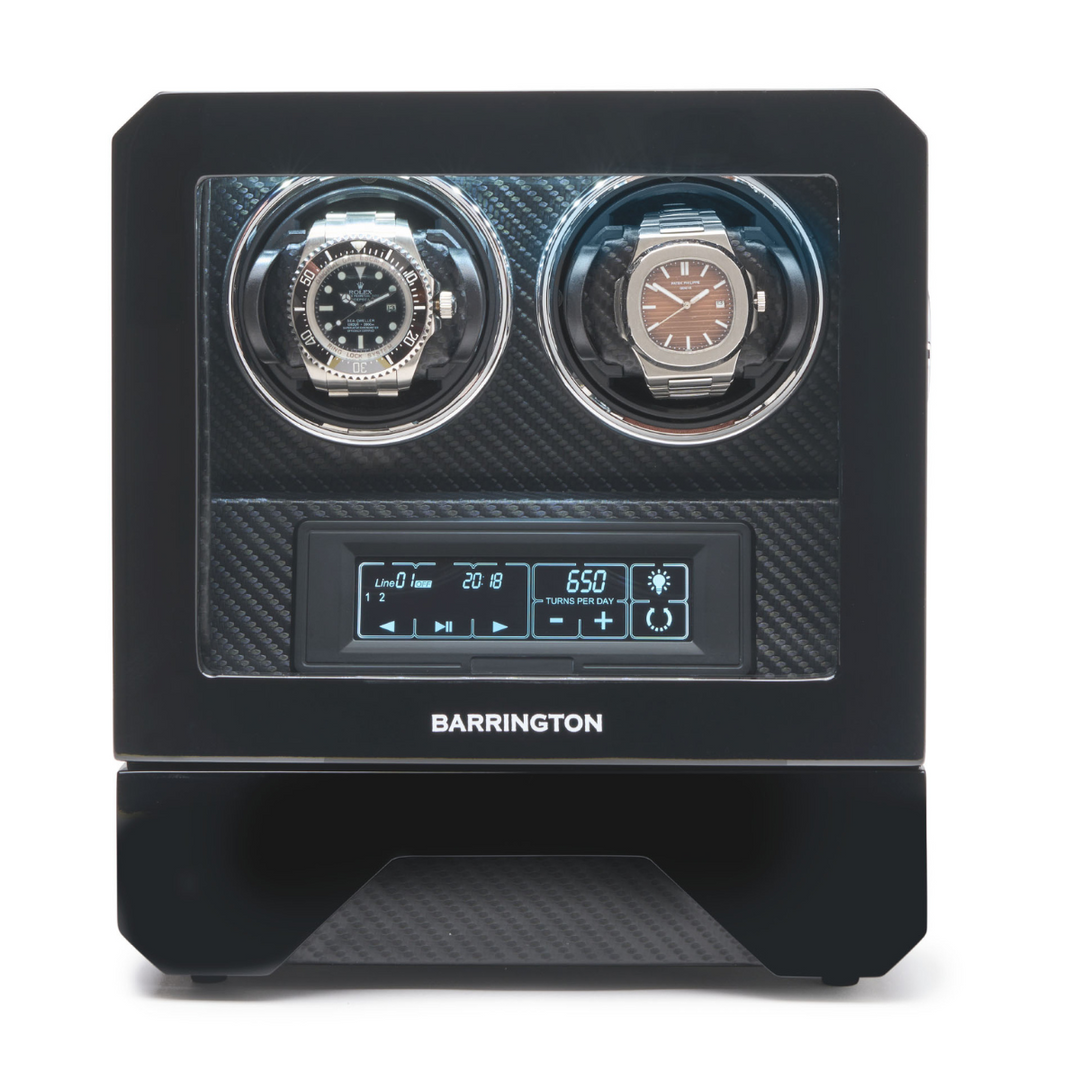
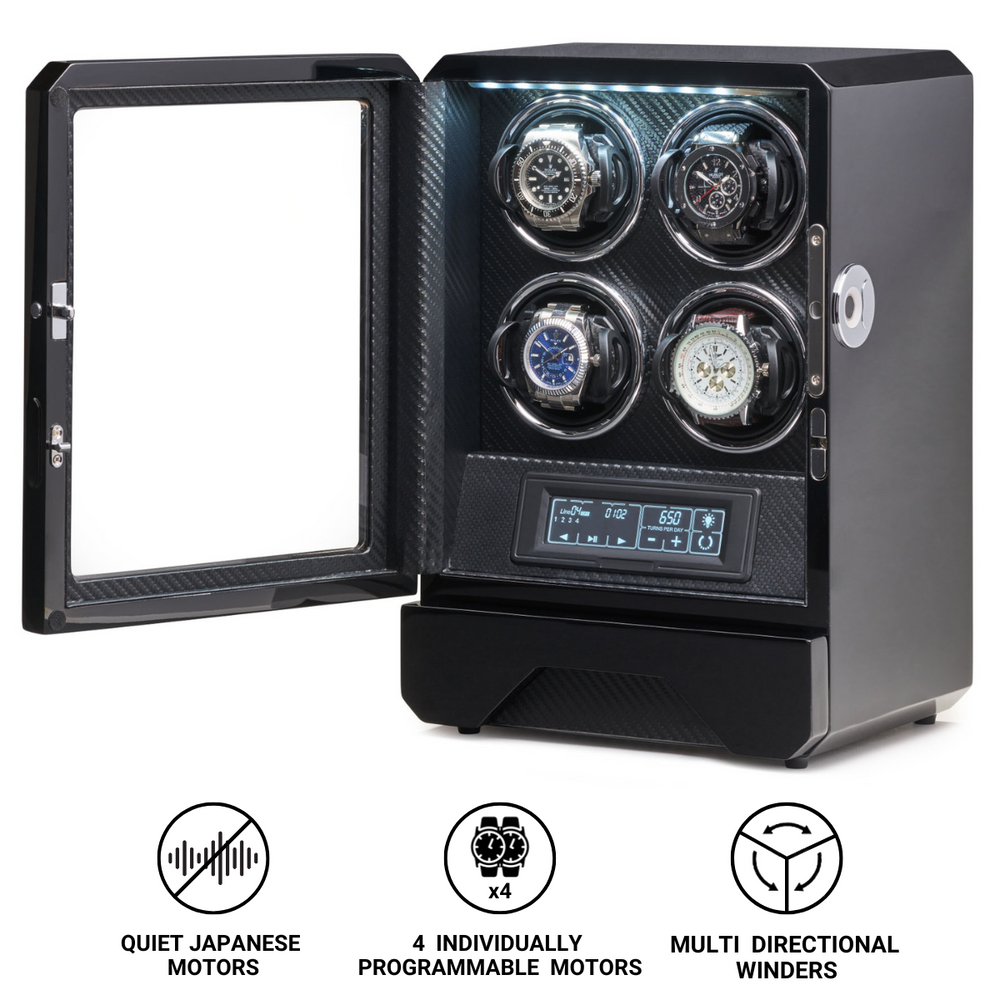
Automatic watches depend on continuous movement to maintain their reserve. When not worn, the mainspring gradually unwinds until the watch stops. This is where watch winders become useful: by simulating wrist motion, they keep the rotor moving and preserve the power reserve in automatic timepieces.
Manufacturers design automatic systems with a slipping clutch mechanism that prevents overwinding once the mainspring reaches maximum tension. This ensures durability and avoids excessive stress on the spring, which could otherwise lead to breakage.
The efficiency of automatic winding depends on the wearer’s activity. Someone with a sedentary lifestyle may not generate enough wrist movement to keep the watch fully wound, leading to reduced reserve. This makes understanding and monitoring power reserve essential for maintaining timekeeping reliability.
Extended Power Reserve and Its Advantages
A longer power reserve offers clear advantages in modern life. It allows a wearer to alternate between different watches without needing to reset them each time. A watch with a 70-hour reserve can be taken off on Friday evening and will still be running accurately on Monday morning.
For travellers or collectors who rotate their timepieces, extended autonomy adds convenience and peace of mind. In complicated watches, such as perpetual calendars or moon phase models, a long power reserve reduces the risk of losing complex settings when the watch stops.
The Relationship Between Power Reserve and Accuracy
Contrary to what many assume, a longer power reserve does not automatically mean greater precision. The key lies in how the energy is managed and transmitted rather than in how much of it exists. A watch with a shorter but well-regulated power curve may keep better time than one with a massive but inconsistent reserve.
High-end watchmakers often adjust their movements to perform best within the first two-thirds of the mainspring’s unwinding cycle, where torque is most stable. Some even employ stop mechanisms that halt the movement before torque drops below a defined threshold, preserving accuracy at the expense of a few extra hours of running time.
Historical Evolution of Power Reserve
The concept of power reserve is almost as old as mechanical watchmaking itself. Early marine chronometers of the 18th century, used for navigation at sea, were among the first timepieces to feature power reserve indicators. For sailors, knowing how long the chronometer would continue to run was vital for calculating longitude accurately.
Throughout the 20th century, the power reserve indicator became a hallmark of high-grade mechanical watches. Brands like Jaeger-LeCoultre, Breguet, and Glashütte Original refined the complication, integrating it elegantly into wristwatch designs. In recent decades, it has evolved from a purely functional feature into a statement of mechanical sophistication.
Conclusion
Power reserve represents the heartbeat of mechanical watchmaking, the measure of a movement’s endurance and efficiency. It encapsulates the delicate balance between energy storage, release, and regulation that defines horological excellence.
Whether expressed through a modest two-day autonomy or an extraordinary fifty-day reserve, this feature reflects the ingenuity and progress of centuries of craftsmanship. For collectors and enthusiasts, understanding the dynamics of power reserve deepens the appreciation of what makes a mechanical watch truly alive.
A well-designed movement is not judged solely by how long it runs, but by how consistently and gracefully it maintains its rhythm throughout its reserve. In that, the art of power reserve continues to remind us that even in a world driven by digital precision, the beauty of time remains mechanical at heart.