


Best Chronograph Watches in 2026: Top 10 Models for Every Budget
Key Points:
The 10 best chronograph watches in 2026, from affordable Seiko and Bulova models to luxury Omega, Zenith and Rolex timepieces.
Quartz, solar, automatic and manual-winding chronographs offer different advantages in accuracy, functionality and maintenance.
The Omega Speedmaster Moonwatch leads our selection, while the Seiko Speedtimer delivers excellent value for everyday wear.
Barrington Watch Winders offers adjustable winding solutions to keep compatible automatic chronographs running and ready to wear.
Chronograph watches combine timekeeping with an independent stopwatch, giving a practical complication a distinctive sporting character. From solar-powered quartz models to intricate mechanical calibres, the choice in 2026 spans a wide range of designs and prices.
Our selection of the ten best chronograph watches in 2026 covers affordable options, versatile Swiss designs and celebrated luxury models. We assess each for its movement, wearability and practical features, while highlighting the compromises worth considering before you buy.
Best Chronograph Watches in 2026 at a Glance
The best chronograph watches combine reliable movements, useful timing functions and thoughtful design. Our selection considers movement construction, accuracy, finishing, wrist comfort, historical significance and value for money. Practical factors such as servicing, water resistance and availability also influence our recommendations.
Rather than ranking watches solely by price or prestige, we have selected ten models for different budgets and preferences.
|
Model |
Best For |
Movement |
Case Size |
Approx. Price |
|
Seiko Prospex Speedtimer SSC961 |
Affordable Solar |
Solar quartz V192 |
39mm |
£670 |
|
Brew Metric Retro |
Meca-Quartz |
Hybrid VK68 |
36mm |
£370* |
|
Bulova Lunar Pilot 96K111 |
Space Heritage |
High-frequency quartz |
43.5mm |
£599 |
|
Tissot PRX Automatic Chronograph |
Everyday Automatic |
Valjoux A05.H31 |
42mm |
£1,695 |
|
TAG Heuer Carrera Glassbox |
Versatility |
Automatic TH20-00 |
39mm |
£6,200 |
|
Omega Speedmaster Moonwatch Professional |
Best Overall |
Manual-winding 3861 |
42mm |
From £6,600 |
|
Zenith Chronomaster Sport |
Precision |
Automatic El Primero 3600 |
41mm |
From £10,600 |
|
Rolex Cosmograph Daytona 126500LN |
Luxury Sports |
Automatic 4131 |
40mm |
£14,050 |
|
Breitling Navitimer B01 |
Aviation |
Automatic B01 |
43mm |
From £7,950 |
|
Breitling Top Time B01 |
Vintage Racing |
Automatic B01 |
41mm |
From £6,050 |
Prices are indicative UK retail figures for selected versions as of November 2026 and may vary by retailer, configuration and availability. The Brew price is an approximate UK equivalent rather than a confirmed local retail price. Rolex secondary-market prices may substantially exceed official retail.
Best Chronograph Watches Under £1,000
Affordable chronograph watches offer impressive accuracy and functionality without the expense of traditional mechanical movements. Quartz, solar and hybrid technologies have made this category increasingly competitive, with designs ranging from conventional racing watches to unusual independent creations.
Three models stand out for different reasons:
Seiko Prospex Speedtimer SSC961: Best Affordable Solar Chronograph

Image source: www.seikowatches.com
The Seiko Prospex Speedtimer SSC961 combines vintage motorsport aesthetics with modern solar technology. Its 39mm stainless steel case measures 13.3mm thick, while the white dial, contrasting dark subdials and fixed tachymeter bezel create a traditional racing appearance. Red accents distinguish the chronograph indicators and improve readability.
Inside is Seiko's solar-powered Calibre V192, which charges from natural and artificial light. It provides approximately six months of operation when fully charged, measures elapsed time in fifths of a second for up to 60 minutes and offers accuracy within 15 seconds per month. A sapphire crystal and 100 metres of water resistance reinforce its practical credentials.
At approximately £670, the Speedtimer is an excellent affordable chronograph for everyday use. Its quartz movement lacks the mechanical character of an automatic chronograph, but the combination of accuracy, comfortable proportions and low-maintenance operation makes it particularly appealing.
Brew Metric Retro: Best Meca-Quartz Chronograph

Image source: www.brew-watches.com
The Brew Metric Retro offers a distinctive alternative to conventional racing chronographs. Its rounded rectangular case draws inspiration from 1970s industrial design, combining brushed and polished surfaces with an integrated-style bracelet and colourful dial. Measuring 36mm across and 10.75mm thick, it offers unusually compact proportions.
The Seiko VK68 meca-quartz movement combines quartz timekeeping with a mechanical chronograph module. This produces a sweeping central chronograph hand and rapid reset while retaining the convenience of battery-powered operation. A sapphire crystal, 50-metre water resistance and coffee-inspired timing markings complete the design.
The Metric Retro stands out through originality rather than technical extravagance. Its unconventional dial may require some familiarisation, and UK buyers should consider potential import charges, but it represents an interesting choice for collectors seeking something different.
Bulova Lunar Pilot: Best Affordable Chronograph with Space Heritage

Image source: www.bulova.com
The Bulova Lunar Pilot has a genuine connection with space exploration. During Apollo 15 in 1971, astronaut David Scott wore a privately owned Bulova chronograph on the lunar surface. The modern collection preserves elements of that historic design while introducing advanced quartz technology.
Reference 96K111 features a 43.5mm stainless steel case, sapphire crystal and a high-frequency quartz movement operating at 262kHz. Its chronograph includes a 60-minute counter and twentieth-of-a-second indication, while recessed subdials and prominent pushers preserve the instrument-like appearance.
Priced around £599, the Lunar Pilot combines historical significance with technical capability. Its substantial dimensions may feel imposing on smaller wrists, but few affordable chronographs offer such a direct connection to spaceflight history.
Best Swiss Chronograph Watches for Everyday Wear
Swiss automatic chronographs offer traditional mechanical engineering alongside versatile designs suitable for regular use. The strongest examples balance movement quality, functionality and comfort without sacrificing their distinctive character.
Tissot PRX Automatic Chronograph: Best Everyday Automatic Chronograph

Image source: www.tissotwatches.com
The Tissot PRX Automatic Chronograph builds on the angular case and integrated bracelet design inspired by the brand's 1970s models. Its 42mm stainless steel case features contrasting brushed and polished surfaces, while three chronograph registers at 3, 6 and 9 o'clock create a balanced sporting appearance.
Inside is the Swiss Valjoux A05.H31 automatic movement, offering approximately 60 hours of power reserve. The mechanism is visible through an exhibition caseback, while a sapphire crystal and 100-metre water resistance support everyday practicality.
At around £1,695, the PRX represents an accessible introduction to Swiss automatic chronographs. Its considerable thickness and approximately 184g weight make it less suitable for those seeking a lightweight watch, although the integrated bracelet creates a cohesive and recognisable design.
TAG Heuer Carrera Glassbox: Best Versatile Luxury Chronograph

Image source: www.tagheuer.com
Introduced in 1963, the TAG Heuer Carrera has maintained a close association with motorsport. The modern Glassbox interpretation combines vintage influences with contemporary manufacturing, most notably through its curved sapphire crystal extending over the tachymeter scale.
Its 39mm stainless steel case provides relatively restrained proportions, while the manufacture Calibre TH20-00 incorporates automatic winding, a column-wheel mechanism and approximately 80 hours of power reserve. The movement is visible through a sapphire caseback, and water resistance reaches 100 metres.
The Carrera's strength lies in its versatility. Refined finishing, excellent dial legibility and balanced proportions allow it to work with both formal and casual clothing. With selected versions priced around £6,200, however, it competes against several highly regarded luxury chronographs.
Best Sports Chronograph Watches in 2026
Sports chronographs have produced some of watchmaking's most recognisable designs. Their development is closely connected with motorsport, space exploration and advances in mechanical timing.
The following three watches represent different approaches, from traditional manual winding to high-frequency engineering and contemporary luxury sports construction.
Omega Speedmaster Moonwatch Professional: Best Chronograph Overall

Image source: www.omegawatches.com
The Omega Speedmaster Professional is among the most historically significant chronographs ever produced. Introduced in 1957 as a racing watch, it subsequently became associated with NASA's space programme. Buzz Aldrin wore a Speedmaster on the lunar surface during Apollo 11 in July 1969, establishing the Moonwatch's enduring reputation.
The modern Speedmaster Moonwatch retains its familiar 42mm stainless steel case, black dial, three registers and tachymeter bezel. Its manually wound Co-Axial Master Chronometer Calibre 3861 provides approximately 50 hours of power reserve, with certification covering accuracy, magnetic resistance and overall performance.
Buyers can choose between Hesalite crystal with a solid caseback or sapphire crystal with an exhibition back. Both preserve the traditional appearance, although the sapphire version offers a view of the movement. Water resistance is limited to 50 metres, making the watch less suitable for aquatic activities than some competing sports models.
Starting at approximately £6,600 in the UK, the Moonwatch combines proven design, outstanding heritage and modern mechanical engineering. Manual winding requires regular attention, but for enthusiasts who appreciate traditional watchmaking, this interaction can be part of its appeal.
Zenith Chronomaster Sport: Best High-Frequency Chronograph

Image source: www.zenith-watches.com
Zenith introduced the El Primero in 1969, establishing one of the defining movements in automatic chronograph history. The Chronomaster Sport continues this heritage with the El Primero 3600, operating at 36,000 vibrations per hour, equivalent to 5Hz.
This high-frequency movement enables the chronograph to display elapsed time in tenths of a second. Its central chronograph hand completes a full revolution every ten seconds, working alongside the graduated ceramic bezel. The automatic movement also provides approximately 60 hours of power reserve.
The 41mm stainless steel case features pump-style pushers and Zenith's distinctive overlapping tricolour registers. This recognisable design balances technical sophistication with a sporty appearance, although it is less understated than some competing models.
With prices starting around £10,600, the Chronomaster Sport appeals particularly to enthusiasts interested in mechanical innovation. Its tenth-of-a-second indication is an impressive technical achievement, although it should not be confused with equivalent long-term timekeeping accuracy.
Rolex Cosmograph Daytona 126500LN: Best Iconic Luxury Sports Chronograph

Image source: www.rolex.com
Introduced in 1963, the Rolex Cosmograph Daytona has become one of the most recognisable watches associated with motor racing. The current Oystersteel reference 126500LN features a 40mm Oyster case, contrasting chronograph registers and a tachymeter scale engraved into its Cerachrom ceramic bezel.
The manufacture Calibre 4131 incorporates automatic winding, a column wheel, vertical clutch and approximately 72 hours of power reserve. Rolex's Superlative Chronometer standard specifies accuracy of -2/+2 seconds per day after casing. The screw-down crown and pushers contribute to 100-metre water resistance.
An Oyster bracelet with Oysterlock clasp and Easylink extension adds comfort and security. Despite its sophisticated mechanism, the Daytona maintains relatively restrained proportions suitable for everyday wear.
Its greatest drawback is availability. Although the UK retail price is approximately £14,050, demand frequently exceeds authorised retailer supply, resulting in substantially higher secondary-market prices. The Daytona remains a benchmark luxury sports chronograph, but prospective buyers must consider whether its prestige justifies the premium.
Best Heritage and Pilot Chronograph Watches
Heritage chronographs preserve design features originally developed for professional use. Aviation and motorsport have particularly strong traditions, with Breitling offering two contrasting interpretations of these influences.
Breitling Navitimer B01: Best Aviation Chronograph

Image source: www.breitling.com
Introduced in 1952, the Breitling Navitimer became one of aviation's most recognisable wrist instruments. Its defining feature is a rotating circular slide rule, designed for calculations involving speed, distance, fuel consumption and other flight-related measurements.
The modern Navitimer B01 Chronograph 43 combines a 43mm stainless steel case with three chronograph registers and the distinctive slide-rule bezel. Its Manufacture Calibre B01 incorporates a column wheel, vertical clutch and approximately 70 hours of power reserve. The movement is COSC-certified and visible through a sapphire caseback.
The Navitimer's complex dial and substantial dimensions provide considerable wrist presence. However, the 30-metre water-resistance rating limits its suitability for activities involving water.
Starting around £7,950 in the UK, the Navitimer appeals to collectors who appreciate aviation heritage, mechanical craftsmanship and an unmistakable design.
Breitling Top Time B01: Best Vintage-Inspired Racing Chronograph

Image source: www.breitling.com
The Breitling Top Time was introduced in 1964, targeting a younger audience interested in motorsport and contemporary styling. Unlike the technically dense Navitimer, it embraced cleaner layouts, contrasting registers and unconventional dial designs.
Modern Top Time B01 models preserve this identity with approximately 41mm cases, prominent pushers and vintage-inspired two-register dials. Selected editions celebrate partnerships with Triumph Motorcycles, Ford and other names connected with motoring culture.
The Manufacture Calibre B01 offers automatic winding, a column-wheel chronograph, vertical clutch and approximately 70 hours of power reserve. COSC certification provides independent confirmation of its chronometer performance.
Prices begin at approximately £6,050 for selected models. The Top Time appeals to buyers seeking Breitling's mechanical engineering in a more relaxed, retro-inspired design, although its bold styling may be less versatile than conventional chronographs.
Other Chronograph Watches Worth Considering in 2026
Several additional models deserve attention for their unusual movements, designs or historical connections. These alternatives broaden the selection beyond our ten main recommendations.
-
TAG Heuer Monaco Chronograph: The 2026 titanium reinterpretation retains the famous square case and introduces the TH20-11 automatic movement.
-
Longines Spirit Pilot Flyback: A 39.5mm aviation chronograph with a COSC-certified movement and flyback function.
-
Seiko Astron GPS Solar Dual-Time Chronograph: Combines solar charging, GPS time synchronisation and dual-time functionality.
-
Bulova Lunar Pilot Black Hole: A distinctive 2026 model with a 41mm black-coated case and exceptionally dark dial.
-
Citizen Tsuno Chrono Custom Tube Screamer: A limited collaboration with Ibanez featuring guitar-pedal-inspired styling.
-
Timex Waterbury Heritage Chronograph: Affordable quartz timing with vintage racing influences and an ice-blue dial.
-
Grand Seiko Tentagraph SLGC001: A high-beat automatic chronograph with titanium construction and approximately three days of power reserve.
-
Hamilton Intra-Matic Chronograph H: A manually wound chronograph combining traditional mechanics with vintage motorsport styling.
Limited editions may be difficult to find through authorised retailers, making availability an important consideration.
How to Choose the Best Chronograph Watch
Choosing a chronograph involves balancing technical specifications with comfort, practicality and long-term ownership costs. Five considerations can help narrow the options.
-
Budget and value for money. Quartz chronographs provide accurate timing at accessible prices. Swiss automatic movements introduce greater mechanical complexity, while luxury models command premiums for finishing, materials, heritage and brand reputation. Higher prices do not automatically guarantee better practical performance.
-
Movement type. Quartz watches generally provide superior accuracy and lower maintenance costs. Automatic chronographs wind through wrist movement, whereas manual models require winding through the crown. Solar technology reduces battery replacement requirements, while meca-quartz combines electronic regulation with a mechanical stopwatch module.
-
Case size and comfort. Diameter is only one factor. Lug-to-lug length, thickness, weight and bracelet construction influence how a chronograph feels on the wrist. Prominent pushers may also increase its perceived size.
-
Functions and durability. Consider whether you need a simple stopwatch, flyback mechanism or specialised timing scales. A tachymeter converts elapsed time into a rate, while a telemeter estimates distance using the delay between visible and audible events. Water resistance should match the intended activities.
-
Servicing and ownership costs. Mechanical chronographs are generally more complex to maintain than conventional watches. Check manufacturer support, service history and replacement-part availability, particularly when buying pre-owned.
The best choice depends on how the watch will be worn. A quartz model may suit frequent everyday timing, while mechanical enthusiasts may prefer the craftsmanship and character of an automatic or manually wound movement.
Comments from Barrington Watch Winders: When choosing a mechanical chronograph, consider more than its movement and appearance. The cost of servicing, availability of replacement parts and ease of everyday use can make a significant difference to the long-term ownership experience. A well-maintained, reliable watch will often provide greater satisfaction than a more complicated model that rarely gets worn.
Automatic Chronograph Watches: How the Movements Work
A chronograph combines conventional timekeeping with an independent stopwatch. Pushers control its start, stop and reset functions, while additional hands or registers display elapsed seconds, minutes and sometimes hours.
Quartz movements use electronic regulation for accuracy and convenience. Solar quartz versions recharge through exposure to light, while meca-quartz movements incorporate mechanical components to give the stopwatch a more traditional action.
Mechanical chronographs rely on gears, springs, levers and coupling systems. Automatic movements wind through an oscillating rotor, while manual calibres obtain energy directly from the crown. Two construction details are particularly important:
-
Column wheel versus cam operation. A column wheel coordinates the chronograph's functions through a rotating wheel with raised pillars. Cam-operated mechanisms use shaped levers to perform similar tasks. Both can be reliable, although their construction and operating feel differ.
-
Vertical versus horizontal clutch. The clutch connects the running movement to the chronograph mechanism. Horizontal systems engage gears laterally, while vertical systems transfer power through friction surfaces, potentially reducing the visible jump of the chronograph seconds hand when timing begins.
More specialised complications include flyback chronographs, which reset and restart timing with a single press, and split-seconds chronographs, which use an additional hand to record intermediate times. These functions increase mechanical complexity and generally appear in higher-priced watches.
Chronograph Watch History: Key Milestones and Innovations
Chronograph development began in the nineteenth century with instruments designed to record elapsed intervals. Nicolas Rieussec's 1821 invention used ink to mark measurements on rotating discs, establishing an important milestone in the complication's history.
Several developments shaped modern chronograph watches:
-
Early twentieth century: Chronograph mechanisms were adapted for wristwatches, improving their convenience and portability.
-
1957: Omega introduced the Speedmaster, establishing an influential motorsport chronograph design.
-
1963: Rolex launched the Cosmograph, which subsequently became associated with Daytona.
-
1969: Zenith, Seiko and the Chronomatic consortium introduced pioneering automatic chronograph movements.
-
Modern era: High-frequency movements, improved clutch mechanisms and advanced materials increased performance and durability.
These innovations explain why contemporary chronographs combine traditional styling with increasingly sophisticated engineering.
Pre-Owned Chronograph Watches: Prices and Value Retention
The pre-owned market offers opportunities to purchase discontinued references, unusual configurations and established luxury chronographs below their original retail prices. However, resale performance varies considerably between models.
Rolex Daytona watches demonstrate how limited supply and strong demand can drive secondary-market prices above official retail. Certain steel references attract substantial premiums, although this does not guarantee future appreciation.
Omega Speedmaster watches generally offer broader buying opportunities, with prices varying according to reference, condition and historical significance. Breitling Navitimer values also depend on movement generation, case material and configuration.
Important factors affecting resale value include:
-
Condition and originality: Excessive polishing, replacement parts and poor mechanical condition can reduce desirability.
-
Documentation: Original boxes, warranty papers and service records support buyer confidence.
-
Reference and demand: Historically significant or desirable configurations may command premiums, but limited production alone does not guarantee value.
-
Market conditions: Collector preferences, availability and economic factors influence transaction prices.
Service history is particularly important when purchasing a pre-owned mechanical chronograph. A seemingly inexpensive watch may require an extensive overhaul, eliminating the apparent saving. Chronographs should primarily be purchased for enjoyment and mechanical interest rather than guaranteed financial returns.
Chronograph Watch Care: Servicing, Storage and Watch Winders
Mechanical chronographs contain additional components that require careful handling and appropriate maintenance. Servicing should follow the manufacturer's recommendations, with particular attention to lubrication, water-resistance testing and the condition of the chronograph mechanism.
Pushers should be operated according to the manufacturer's instructions, especially around water. Watches should also be protected from strong impacts, excessive humidity and extreme temperatures.
Storage requirements depend on the movement. Quartz and solar chronographs do not require mechanical winding, while manual models must be wound through the crown. Automatic chronographs can safely stop between periods of wear, although resetting them may be inconvenient.
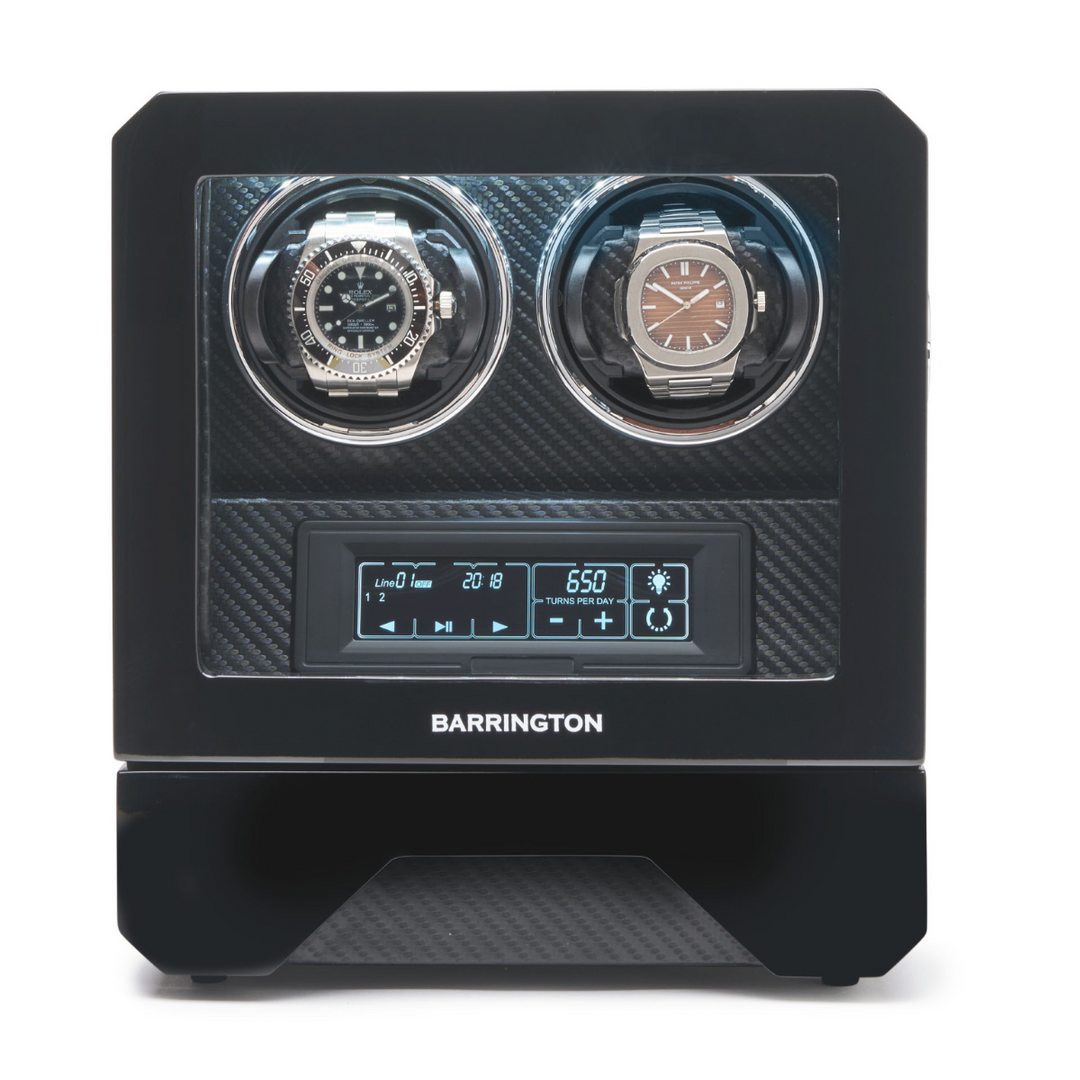
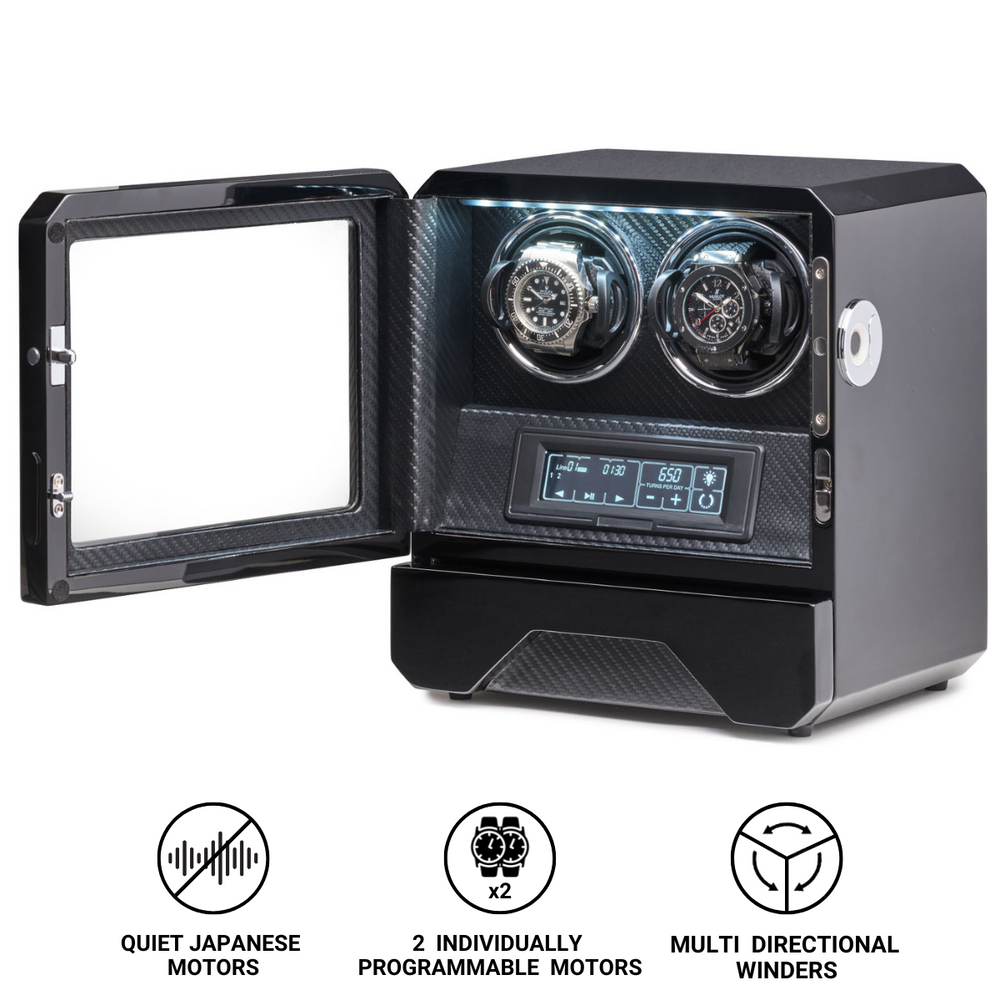
For collectors who regularly rotate between automatic watches, a compatible watch winder can keep them running between uses. Barrington Watch Winders offers adjustable rotation directions and turns-per-day settings, allowing owners to select suitable programmes for supported movements.
Before using a watch winder, check the movement manufacturer's recommended winding direction and turns per day (TPD). Proper configuration helps maintain an automatic chronograph's running condition, but a watch winder does not replace servicing and is unnecessary for quartz or manual-winding models.
Secure storage, careful handling and regular maintenance remain the most important measures for preserving a chronograph's condition and long-term reliability.
Comments from Barrington Watch Winders: An automatic chronograph does not need to run continuously to remain in good condition, but keeping it wound can make switching between watches more convenient. We recommend checking the movement's specific Turns Per Day (TPD) and rotation direction requirements before using a watch winder. Correct settings help keep your timepiece ready to wear without unnecessary winding cycles.
Best Watch Winders for Automatic Chronograph Watches
For collectors who regularly alternate between automatic chronographs, a watch winder offers a convenient way to keep compatible timepieces running between wears. Barrington Watch Winders provides precision-engineered solutions with adjustable rotation direction and turns-per-day (TPD) settings, making it possible to accommodate the winding requirements of different automatic movements. From individual watch winders to larger multi-watch cabinets, the range caters for both smaller collections and enthusiasts with several timepieces.
Barrington Oxford Single Winder - Blue

The Barrington Oxford Single Winder in Blue offers a compact and elegant solution for keeping automatic chronograph watches running between wears. Measuring just 12 × 12.5 × 19cm, it features an ultra-quiet Japanese motor and five Turns Per Day (TPD) settings, from 650 to 1,950, with clockwise, counter-clockwise and alternating rotation options to suit different movements. Its secure watch cushion accommodates various wrist sizes, while the automatic 12 o'clock resting position ensures an attractive display. Power is supplied through the mains or four AA batteries, offering approximately 60 to 70 days of cordless operation. Barrington's Jump feature also allows several single watch winders to share one power source, making the Oxford a practical choice for collectors planning to expand their collection.
Barrington Oxford Single Winder - Orange

The Barrington Oxford Single Winder in Orange combines reliable automatic watch winding with a bold, contemporary finish that makes it an eye-catching addition to any collection. Its compact 12 × 12.5 × 19cm housing weighs just 800g, making it easy to position on a desk, shelf or bedside table. The precision-engineered Japanese motor operates quietly, while five adjustable Turns Per Day (TPD) settings, ranging from 650 to 1,950, and three rotation directions accommodate the winding requirements of different automatic chronograph movements. Barrington's Gentle Rotation system operates intermittently, followed by a 12-hour rest period, and the watch always returns to an upright 12 o'clock position when stopped. Owners can choose between Omni and Micro cushions for different bracelet sizes, while mains or battery power provides flexibility in placement. The integrated Jump connection also allows additional Oxford watch winders to share a single power source as the collection grows.
Barrington 4 Watch Winder

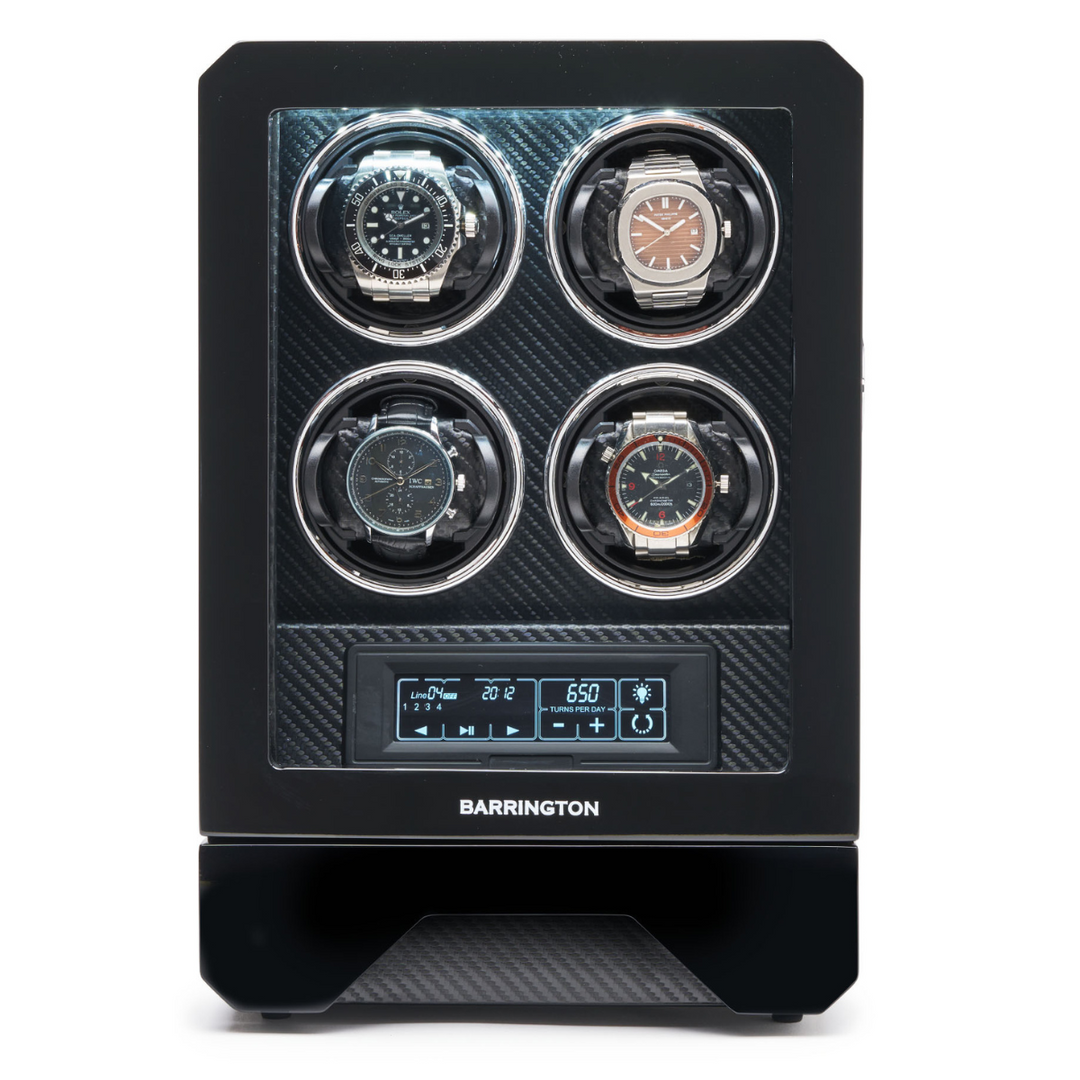
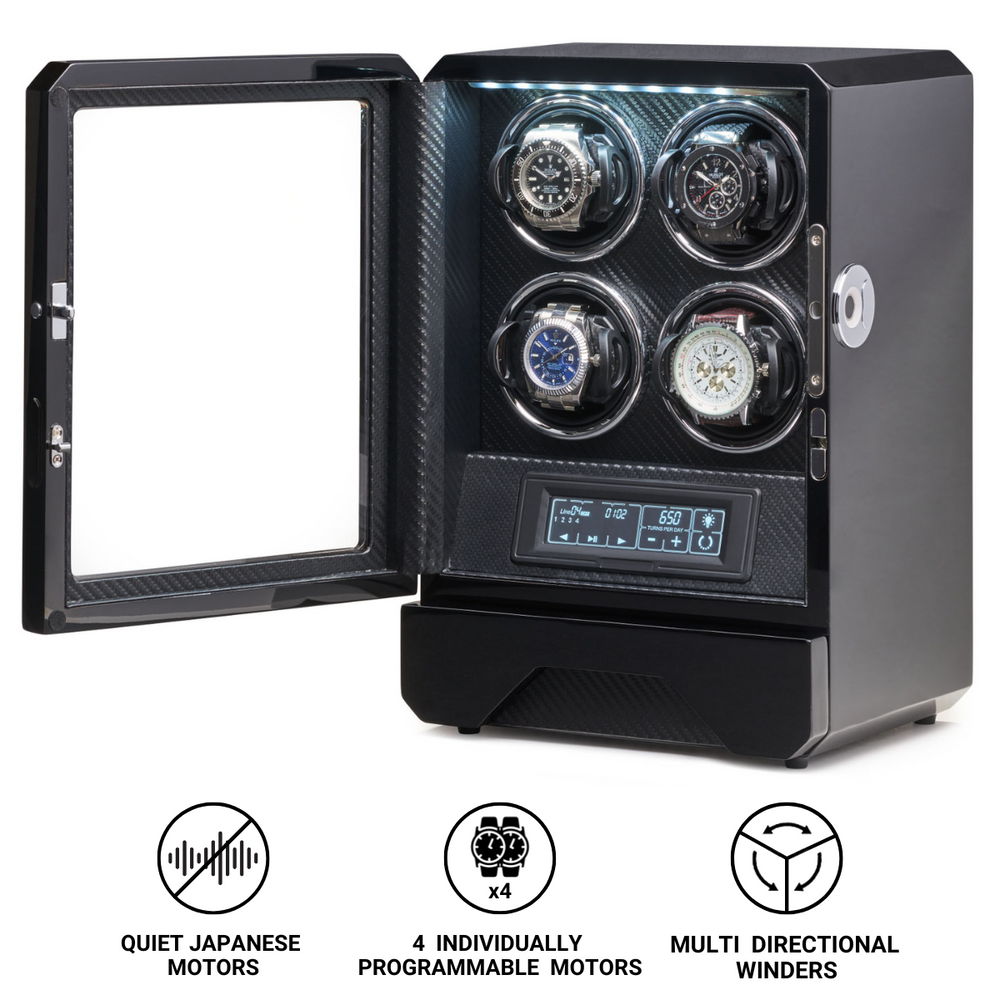
The Barrington 4 Watch Winder is designed for collectors who want to keep up to four automatic chronographs running while displaying them in a secure, elegant cabinet. Its four independently programmable rotors allow each watch to operate at its preferred Turns Per Day (TPD) setting, with five options from 650 to 1,950 and clockwise, counter-clockwise or alternating rotation. Premium Japanese Mabuchi motors provide quiet operation, while the Gentle Rotation system runs intermittently for 12 hours before entering a 12-hour rest period. The cabinet features a carbon fibre-effect interior, LED lighting and secure clip-in cushions that hold each watch in place, with rotors returning to the 12 o'clock position when stopped. A fingerprint lock supporting up to 20 fingerprints adds security, while touchscreen controls, a remote control and an integrated storage drawer provide everyday convenience. Measuring 23.5 × 35 × 18.5cm, the mains-powered unit also comes with a two-year warranty and a repairable design, including user-replaceable motors, making it a practical option for collectors with a growing selection of automatic watches.
Whether you own a single automatic chronograph or a growing collection, choosing the right watch winder comes down to capacity, movement compatibility and personal preferences. Barrington Watch Winders combines flexible winding programmes with thoughtful design, helping collectors keep their automatic watches ready to wear while providing an elegant way to display them.
Best Chronograph Watch for You: Final Recommendations
The Seiko Prospex Speedtimer is an affordable choice for everyday use, while the Tissot PRX offers an introduction to Swiss automatic chronographs. The Omega Speedmaster Moonwatch remains our best overall pick for its heritage, reliability and timeless design.
For high-frequency mechanical engineering, consider the Zenith Chronomaster Sport; for prestigious luxury sports styling, the Rolex Daytona stands out. If your collection includes automatic chronographs, Barrington Watch Winders offers adjustable watch winders to keep compatible timepieces running between wears.





Leave a comment