


Best Luxury Watch Brands for Men: Which Are Worth the Money?
Key Points:
The best luxury watch brands for men combine mechanical excellence, distinctive design, craftsmanship and long-term ownership value.
Longines, Tudor, OMEGA and Grand Seiko offer compelling value for money across different price segments.
Selected Rolex, Patek Philippe and Audemars Piguet references demonstrate strong value retention, although investment returns are never guaranteed.
Barrington Watch Winders offers precision-engineered single and multi-watch winders to keep luxury automatic timepieces wound, elegantly displayed and ready to wear.
Choosing between the best luxury watch brands for men involves more than comparing price tags and prestigious names. Some manufacturers excel in mechanical precision, reliability and technical innovation, while others distinguish themselves through meticulous hand-finishing, complicated movements or distinctive design. Certain brands also benefit from enduring demand on the secondary market, making value retention an important consideration.
However, the most expensive watch is not necessarily the best purchase. Understanding what different luxury watch brands for men offer at various price points helps buyers make more informed decisions. This guide examines leading manufacturers, their signature collections, technical strengths and long-term ownership costs to determine where exceptional watchmaking genuinely justifies the price.
What Makes the Best Luxury Watch Brands Worth the Money?
A luxury watch should offer more than a recognisable name on its dial. Its value comes from a combination of engineering, craftsmanship, design and the ownership experience. When comparing the best luxury watch brands, we consider the following criteria:
-
Movement quality. Calibre construction, power reserve, technical innovations and complications.
-
Accuracy and reliability. Timekeeping performance and long-term mechanical durability.
-
Materials and finishing. The quality of cases, bracelets, dials and movement decoration.
-
Design and heritage. Originality, historical significance and lasting aesthetic appeal.
-
Serviceability. Access to qualified watchmakers, replacement components and manufacturer support.
-
Value retention. Secondary-market demand and potential depreciation.
-
Value for money. The relationship between purchase price and tangible ownership benefits.
An in-house movement does not automatically outperform a well-engineered third-party calibre. Similarly, exceptional luxury watch craftsmanship does not necessarily translate into greater accuracy. The most rewarding purchases are those where the manufacturer's strengths align with the owner's priorities.
Comments from Barrington Watch Winders: A luxury watch should be chosen for the enjoyment it brings over years of ownership, rather than simply for the name on its dial. We believe that mechanical quality, everyday practicality and ease of maintenance deserve as much consideration as prestige and initial purchase price.
Luxury Watch Brands Explained: From Entry-Level to Haute Horlogerie
Luxury watchmaking encompasses several overlapping market segments. Entry-level luxury watch brands concentrate on accessible prices and dependable engineering, while high-end manufacturers devote considerably more resources to elaborate complications, artisanal finishing and exclusive production.
|
Category |
Brand examples |
Key characteristics |
|
Entry-level luxury |
Longines, TAG Heuer, Oris |
Accessible mechanical luxury |
|
Established luxury |
Tudor, OMEGA, Breitling, Grand Seiko |
Technical performance and refined finishing |
|
Premium luxury |
Rolex, Cartier, IWC, Zenith, Jaeger-LeCoultre |
Prestige, distinctive design and engineering |
|
Haute horlogerie |
Patek Philippe, Audemars Piguet, Vacheron Constantin, A. Lange & Söhne |
Exceptional craftsmanship and sophisticated complications |
Collectors often refer to the Holy Trinity of watchmaking, an unofficial designation encompassing three historic Swiss manufacturers: Patek Philippe, Audemars Piguet and Vacheron Constantin. These brands are particularly respected for their contributions to mechanical complications, movement finishing and traditional watchmaking.
However, this classification is not a definitive hierarchy of quality. Manufacturers such as Grand Seiko and A. Lange & Söhne demonstrate that exceptional craftsmanship extends well beyond traditional Swiss watchmaking.
15 Best Luxury Watch Brands for Men
The following selection covers manufacturers from Switzerland, Germany and Japan. Rather than assigning ranking positions, we examine each brand's distinctive strengths, signature collections and overall value proposition.
Rolex: Best for Long-Term Value and Everyday Versatility

Image source: www.rolex.com
Founded in 1905, Rolex has built its reputation around robust movements, recognisable designs and consistent manufacturing standards. Modern Superlative Chronometer-certified Oyster watches meet an accuracy standard of -2/+2 seconds per day after casing. Durable bracelets, screw-down crowns and dependable automatic calibres make many models excellent everyday companions.
The Oyster Perpetual and Datejust offer versatility, while the Submariner and GMT-Master II provide specialist functionality. Selected steel models occupy the £6,000 to £12,000 price bracket. Rolex benefits from an established secondary market, although limited availability and substantial premiums on certain references can undermine their value proposition.
OMEGA: Best for Technical Innovation and Performance
OMEGA distinguishes itself through mechanical engineering. Its Co-Axial escapement reduces sliding friction, while Master Chronometer-certified models undergo testing for accuracy, magnetic resistance, water resistance and power reserve. Resistance to magnetic fields of 15,000 gauss is particularly valuable in modern environments.
The Aqua Terra provides everyday versatility, the Seamaster Diver 300M combines luxury with diving functionality, and the Speedmaster Moonwatch offers historically significant chronograph design. With selected models costing approximately £5,000 to £8,000, OMEGA offers compelling technical value. Pre-owned examples can be particularly attractive due to depreciation from retail prices.
Tudor: Best for Accessible Mechanical Luxury

Image source: www.tudorwatch.com
Tudor has established a distinctive identity beyond its association with Rolex. Many contemporary Black Bay and Pelagos models feature manufacture calibres, approximately 70 hours of power reserve and chronometer certification. Selected references also meet Master Chronometer standards.
The Black Bay combines vintage-inspired styling with modern construction, while the Pelagos prioritises diving functionality. At approximately £3,000 to £5,500, selected Tudor watches offer substantial mechanical capability without Rolex-level expenditure. Although resale values are generally less impressive, Tudor remains an excellent choice for a first luxury mechanical watch.
Grand Seiko: Best for Precision and Exceptional Finishing
Grand Seiko represents a distinctive Japanese approach to luxury watchmaking. Zaratsu polishing, intricate dial textures and sophisticated movements distinguish the manufacturer from many Swiss competitors. Its Spring Drive technology combines mechanical power with electronic regulation, while Hi-Beat calibres demonstrate expertise in high-frequency mechanical watchmaking.
The Heritage Collection Snowflake and Evolution 9 White Birch illustrate these strengths particularly well. Selected models cost approximately £4,500 to £10,000. Grand Seiko is especially rewarding for buyers who prioritise precision, finishing and craftsmanship over mainstream brand recognition, although depreciation should be considered when purchasing new.
Cartier: Best for Timeless Design and Elegance

Image source: www.cartier.com
Cartier demonstrates that the value of a luxury watch extends beyond mechanical specifications. The rectangular Tank, square Santos and rounded Ballon Bleu have distinctive proportions that make them immediately recognisable. The manufacturer offers both sophisticated mechanical watches and relatively accessible quartz models.
Automatic Santos de Cartier references combine elegant styling with practical features such as interchangeable straps and bracelets. Selected Cartier watches cost approximately £3,500 to £10,000. The brand is particularly appealing to buyers seeking enduring design, although enthusiasts prioritising movement specifications may find stronger alternatives elsewhere.
Longines: Best for Heritage and Affordable Luxury
Established in 1832, Longines combines extensive watchmaking heritage with accessible pricing. Many contemporary mechanical models feature extended power reserves, sapphire crystals and silicon balance springs, while selected references offer COSC chronometer certification.
The Conquest provides everyday versatility, the Master Collection explores classical complications, and the Spirit Zulu Time offers practical GMT functionality. With numerous models priced between £1,500 and £4,000, Longines is among the most compelling affordable luxury watch brands. Its watches may lack the exclusivity of more expensive manufacturers, but they offer considerable mechanical capability for the money.
TAG Heuer: Best for Motorsport-Inspired Luxury

Image source: www.tagheuer.com
TAG Heuer has longstanding associations with motorsport and precision timing. The Carrera and Monaco collections remain central to its identity, while contemporary chronographs equipped with the TH20-00 manufacture calibre offer a column wheel, vertical clutch and approximately 80 hours of power reserve.
The Aquaracer provides an alternative for buyers seeking a versatile sports watch. Selected mechanical TAG Heuer models cost approximately £2,500 to £8,000. The brand is particularly attractive to enthusiasts who appreciate sporting heritage and distinctive chronograph designs, although its extensive catalogue requires careful comparison between individual references.
Breitling: Best for Aviation and Sports Chronographs
Breitling's mechanical expertise is particularly evident in its manufacture B01 chronograph calibre, which features a column wheel, vertical clutch, approximately 70 hours of power reserve and COSC chronometer certification.
The Navitimer remains the brand's signature aviation watch, while the Chronomat and Superocean offer different approaches to sporting functionality. Selected models occupy the £4,000 to £9,000 price bracket. Breitling offers compelling value for buyers interested in functional mechanical complications and bold designs, although larger cases and elaborate dials may limit versatility for some owners.
IWC Schaffhausen: Best for Understated Engineering

Image source: www.iwc.com
IWC combines functional design with sophisticated mechanical engineering. Its Pilot's Watch Mark XX features the automatic calibre 32111 with approximately 120 hours of power reserve, demonstrating the manufacturer's emphasis on practical performance.
The Portugieser collection offers classical styling and sophisticated complications, while the Ingenieur represents its interpretation of integrated-bracelet luxury sports watches. Selected models cost approximately £5,000 to £15,000. IWC appeals to buyers who appreciate restrained design and engineering heritage, although the price of certain references reflects their distinctive styling as much as their technical specifications.
Zenith: Best for High-Frequency Mechanical Watchmaking
Zenith occupies an important position in chronograph history through its El Primero movement, introduced in 1969. Its characteristic frequency of 36,000 vibrations per hour allows selected modern chronographs to measure elapsed time to one-tenth of a second.
The Chronomaster collection preserves this mechanical identity, while the Defy range explores contemporary construction and technical innovation. Selected models cost approximately £8,000 to £13,000. Zenith is particularly rewarding for enthusiasts who appreciate movement architecture and chronograph functionality. Its relatively limited mainstream recognition can also create attractive opportunities on the secondary market.
Jaeger-LeCoultre: Best for Refined Mechanical Watchmaking

Image source: www.jaeger-lecoultre.com
Known as the watchmaker's watchmaker, Jaeger-LeCoultre has developed an extensive portfolio of proprietary calibres and historically supplied movements to other prestigious manufacturers. Its expertise encompasses ultra-thin mechanisms, perpetual calendars and sophisticated complications.
The reversible Reverso, introduced in 1931, remains its most distinctive creation, while the Master Control and Master Ultra Thin collections emphasise classical elegance. Selected models occupy the £8,000 to £18,000 price bracket. Jaeger-LeCoultre offers exceptional appeal to buyers who appreciate traditional mechanical expertise, although servicing complicated movements can be expensive.
Patek Philippe: Best for Haute Horlogerie and Collectability
Established in 1839, Patek Philippe represents traditional high-end Swiss watchmaking. Its expertise includes perpetual calendars, minute repeaters, split-seconds chronographs and exceptionally refined movement finishing.
The Calatrava exemplifies classical elegance, while the Nautilus and Aquanaut offer distinctive interpretations of luxury sports watches. Many new mechanical models require a budget exceeding £30,000. Patek Philippe's prices can be justified by sophisticated craftsmanship and mechanical complexity, particularly for experienced collectors. However, substantial premiums on sought-after references can exceed their underlying functional value, and future appreciation is never guaranteed.
Audemars Piguet: Best for Exclusive Luxury Sports Watches

Image source: www.audemarspiguet.com
Audemars Piguet transformed luxury sports watch design with the introduction of the Royal Oak in 1972. Its octagonal bezel, integrated bracelet and textured dial demonstrated that stainless steel could occupy the highest levels of luxury watchmaking.
The Royal Oak remains central to the manufacturer's identity, alongside the Royal Oak Offshore and Code 11.59 collections. Selected models cost upwards of £20,000 at retail. Audemars Piguet appeals particularly to collectors who appreciate sophisticated case and bracelet finishing. Limited availability, secondary-market premiums and substantial servicing expenses should nevertheless be considered.
Vacheron Constantin: Best for Traditional Haute Horlogerie
With a continuous watchmaking history dating back to 1755, Vacheron Constantin specialises in refined mechanical craftsmanship and traditional complications. Many of its watches carry the Hallmark of Geneva, which establishes requirements for construction, finishing, origin and performance.
The Overseas combines high-end watchmaking with sporting versatility, while the Patrimony and Traditionnelle emphasise classical elegance. Selected models require budgets of £25,000 or more. Vacheron Constantin is particularly appealing to collectors seeking understated sophistication, with certain pre-owned references offering an attractive balance between exceptional craftsmanship and purchase price.
A. Lange & Söhne: Best for German Watchmaking Excellence

Image source: www.alange-soehne.com
A. Lange & Söhne represents the distinctive traditions of German haute horlogerie. Its movements frequently feature untreated German silver, hand-engraved balance cocks, screwed gold chatons and meticulous decorative finishing. The manufacturer's twofold assembly process reflects its commitment to mechanical refinement.
The Lange 1 is distinguished by its asymmetric dial, the Saxonia by classical restraint, and the Zeitwerk by its mechanical jumping-digit display. Selected models cost upwards of £23,000. These watches are particularly rewarding for collectors who appreciate movement architecture and artisanal craftsmanship, although high purchase and maintenance costs limit their accessibility.
Best Men's Luxury Watch Brands Compared
The following luxury watch brand comparison summarises the principal strengths and indicative retail price ranges of all 15 manufacturers. These figures represent approximate budgets for selected regular-production models rather than the complete price spectrum of each brand.
|
Watch brand |
Indicative price range |
Key strength |
Best for |
|
Rolex |
£6,000 to £12,000 |
Reliability and recognition |
Everyday luxury |
|
OMEGA |
£5,000 to £8,000 |
Technical innovation |
Mechanical performance |
|
Tudor |
£3,000 to £5,500 |
Value for money |
First luxury watch |
|
Grand Seiko |
£4,500 to £10,000 |
Precision and finishing |
Watch enthusiasts |
|
Cartier |
£3,500 to £10,000 |
Iconic design |
Formal and everyday wear |
|
Longines |
£1,500 to £4,000 |
Accessible craftsmanship |
Entry-level luxury |
|
TAG Heuer |
£2,500 to £8,000 |
Sporting heritage |
Motorsport enthusiasts |
|
Breitling |
£4,000 to £9,000 |
Functional chronographs |
Aviation and sports |
|
IWC Schaffhausen |
£5,000 to £15,000 |
Functional engineering |
Understated luxury |
|
Zenith |
£8,000 to £13,000 |
High-frequency movements |
Chronograph enthusiasts |
|
Jaeger-LeCoultre |
£8,000 to £18,000 |
Mechanical sophistication |
Refined dress watches |
|
Patek Philippe |
£30,000 to £75,000+ |
Complications and craftsmanship |
High-end collecting |
|
Audemars Piguet |
£20,000 to £45,000+ |
Exclusive sports-watch design |
Luxury sports watches |
|
Vacheron Constantin |
£25,000 to £60,000+ |
Traditional craftsmanship |
Discerning collectors |
|
A. Lange & Söhne |
£23,000 to £60,000+ |
Movement architecture and finishing |
Mechanical connoisseurs |
Actual prices depend on the reference, case material, complications and bracelet configuration. Availability and secondary-market prices may also differ considerably from official retail prices.
Best Value Luxury Watch Brands for Every Budget
Increasing your budget can provide meaningful improvements in finishing, functionality and mechanical complexity. However, these differences become increasingly specialised as prices rise.
-
Under £3,000. Longines, Oris and selected TAG Heuer models offer accessible luxury watchmaking. Buyers can find dependable automatic movements, sapphire crystals, quality stainless steel construction and practical complications.
-
£3,000 to £7,000. Tudor, OMEGA, Grand Seiko, Cartier and Breitling provide compelling options. Depending on the reference, buyers gain access to manufacture calibres, advanced chronometer certification, distinctive finishing and sophisticated bracelet construction.
-
£7,000 to £15,000. Rolex, Zenith, IWC Schaffhausen and Jaeger-LeCoultre become increasingly accessible. Additional expenditure may provide more elaborate mechanical construction, iconic designs, refined finishing or specialised chronograph functionality.
-
Above £15,000. Buyers increasingly encounter exceptional decorative craftsmanship, precious metals and sophisticated complications. Patek Philippe, Audemars Piguet, Vacheron Constantin and A. Lange & Söhne become relevant as budgets rise further.
Many of the best value luxury watches are found in the £3,000 to £7,000 segment. At this level, buyers can acquire technically sophisticated timepieces without paying the substantial exclusivity premiums associated with haute horlogerie.
Which Luxury Watch Brands Hold Their Value Best?
Rolex, Patek Philippe and Audemars Piguet have particularly strong reputations on the secondary market, supported by demand for selected collections such as the Submariner, GMT-Master II, Nautilus and Royal Oak. However, value retention varies considerably between individual references.
The resale value of luxury watches depends on several factors:
-
Purchase price and any secondary-market premium.
-
Reference, dial configuration, case material and rarity.
-
Physical condition and originality of components.
-
Original box, documentation and servicing history.
-
Current market demand and collector preferences.
-
Dealer margins, auction commissions and other transaction costs.
Cartier, OMEGA and Tudor also benefit from established secondary markets, although many references trade below their original retail prices. This depreciation can create attractive opportunities for buyers considering pre-owned watches.
It is important to distinguish value retention from investment returns. A watch resold at its original purchase price may still represent a financial loss after accounting for inflation, servicing and transaction costs. Luxury watches that hold their value well should therefore be regarded primarily as desirable possessions rather than guaranteed investments.
Comments from Barrington Watch Winders: Preserving the value of a luxury watch begins with responsible ownership. Following the manufacturer's servicing recommendations, maintaining original documentation and providing appropriate storage can help preserve a timepiece's condition and support its long-term resale potential.
Are Luxury Watches Worth the Money? What Higher Prices Really Buy
The difference between a £3,000 watch and a £50,000 timepiece is not simply a matter of accuracy or reliability. As prices increase, additional expenditure increasingly reflects characteristics that appeal to collectors rather than improvements in basic timekeeping.
A £3,000 automatic watch may already feature chronometer certification, excellent construction and a reliable mechanical movement. A £10,000 model might offer more refined finishing, advanced materials, sophisticated complications or an iconic design. At £50,000, a substantial proportion of the price may reflect precious metals, extensive hand-finishing, complex movement architecture and limited production.
For someone primarily seeking precision, durability and everyday convenience, Tudor, OMEGA or Grand Seiko may offer greater practical value than considerably more expensive alternatives. For a collector who appreciates traditional complications and exceptional luxury watch craftsmanship, the additional cost of haute horlogerie may be entirely justified.
Luxury Watch Ownership Costs: Beyond the Purchase Price
The true cost of owning a luxury watch extends beyond its original retail price. Mechanical watches require appropriate care, and maintenance expenses generally increase with movement complexity and the manufacturer's servicing requirements.
Before purchasing, consider the following long-term expenses:
-
Routine servicing. Periodic inspection, cleaning and lubrication according to manufacturer recommendations.
-
Repairs. Replacement components and specialist labour, particularly for complicated movements.
-
Straps and bracelets. Leather strap replacement and occasional bracelet maintenance.
-
Insurance. Additional coverage for particularly valuable timepieces.
-
Storage. Suitable conditions that protect watches against dust, accidental damage and unsuitable environments.
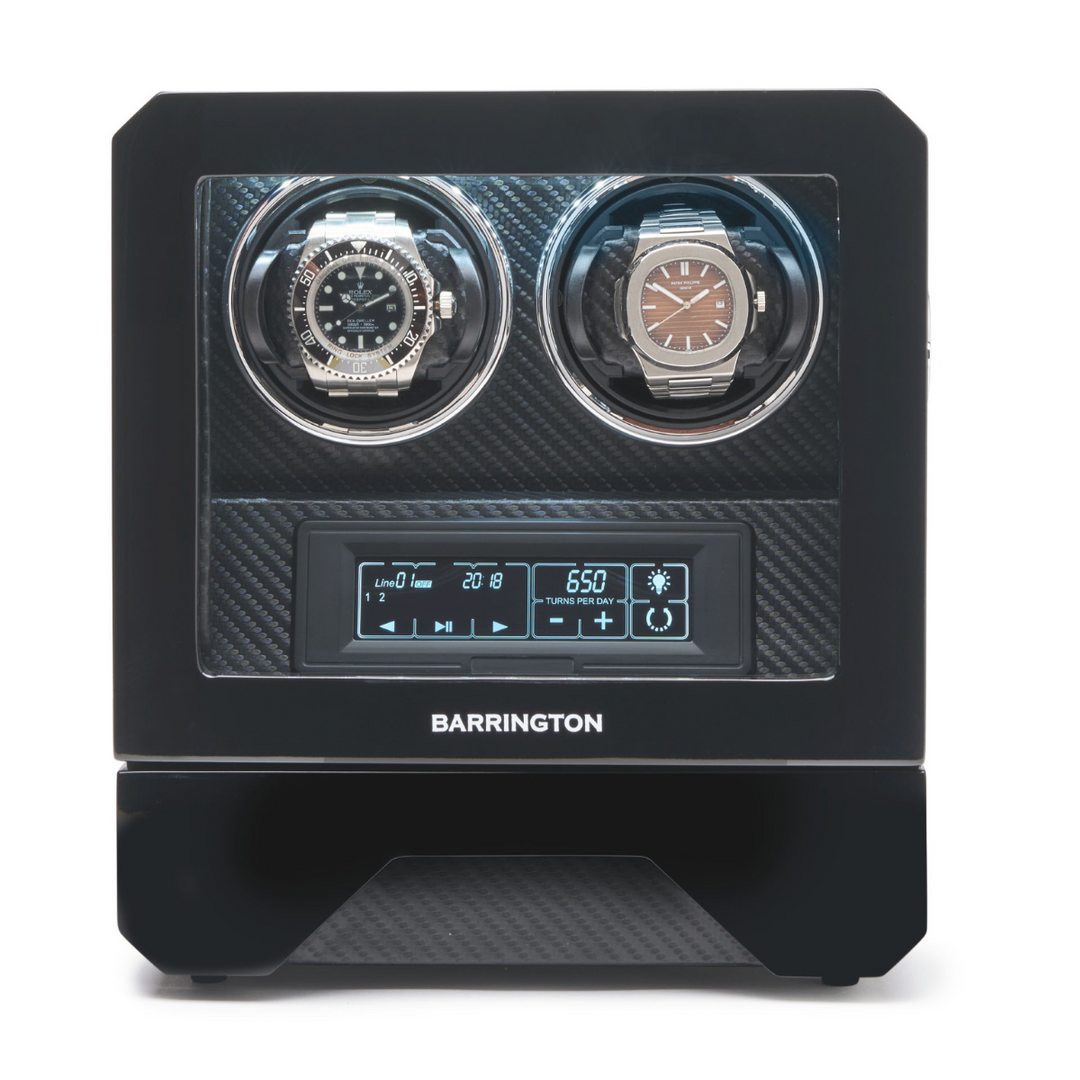
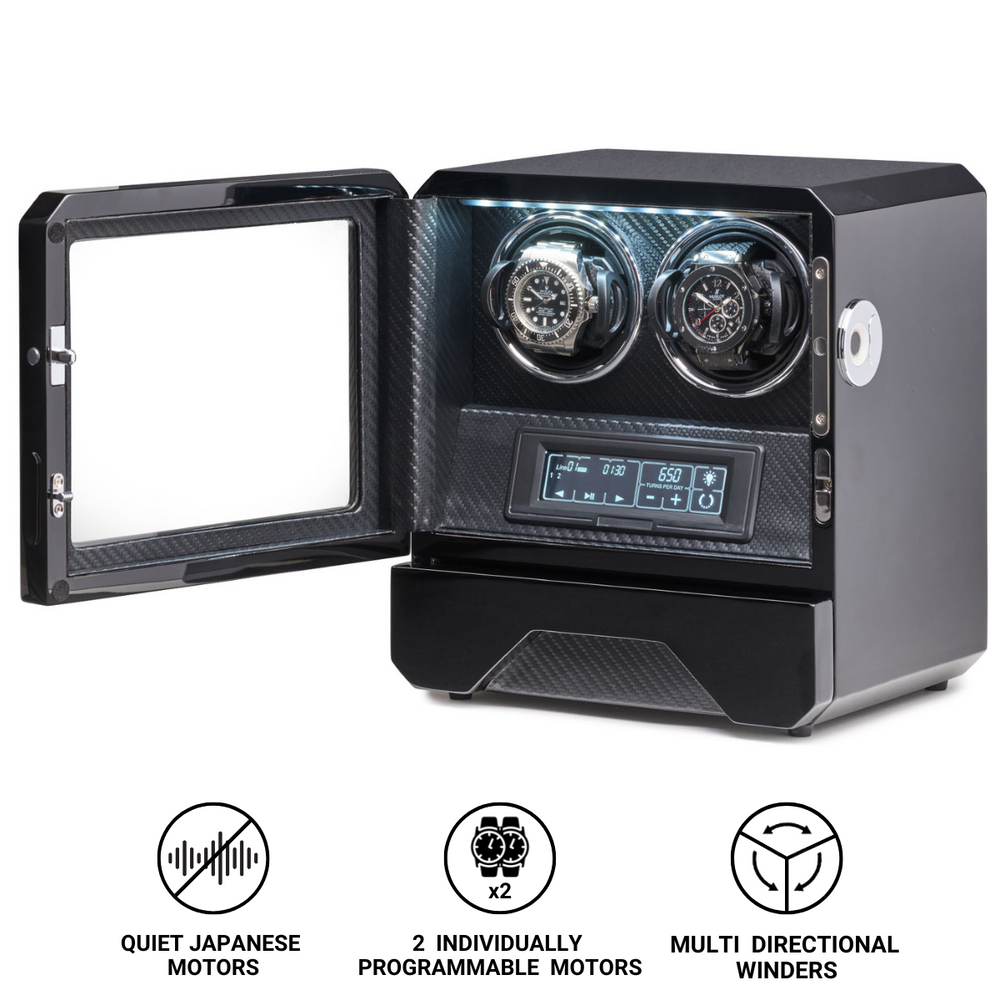
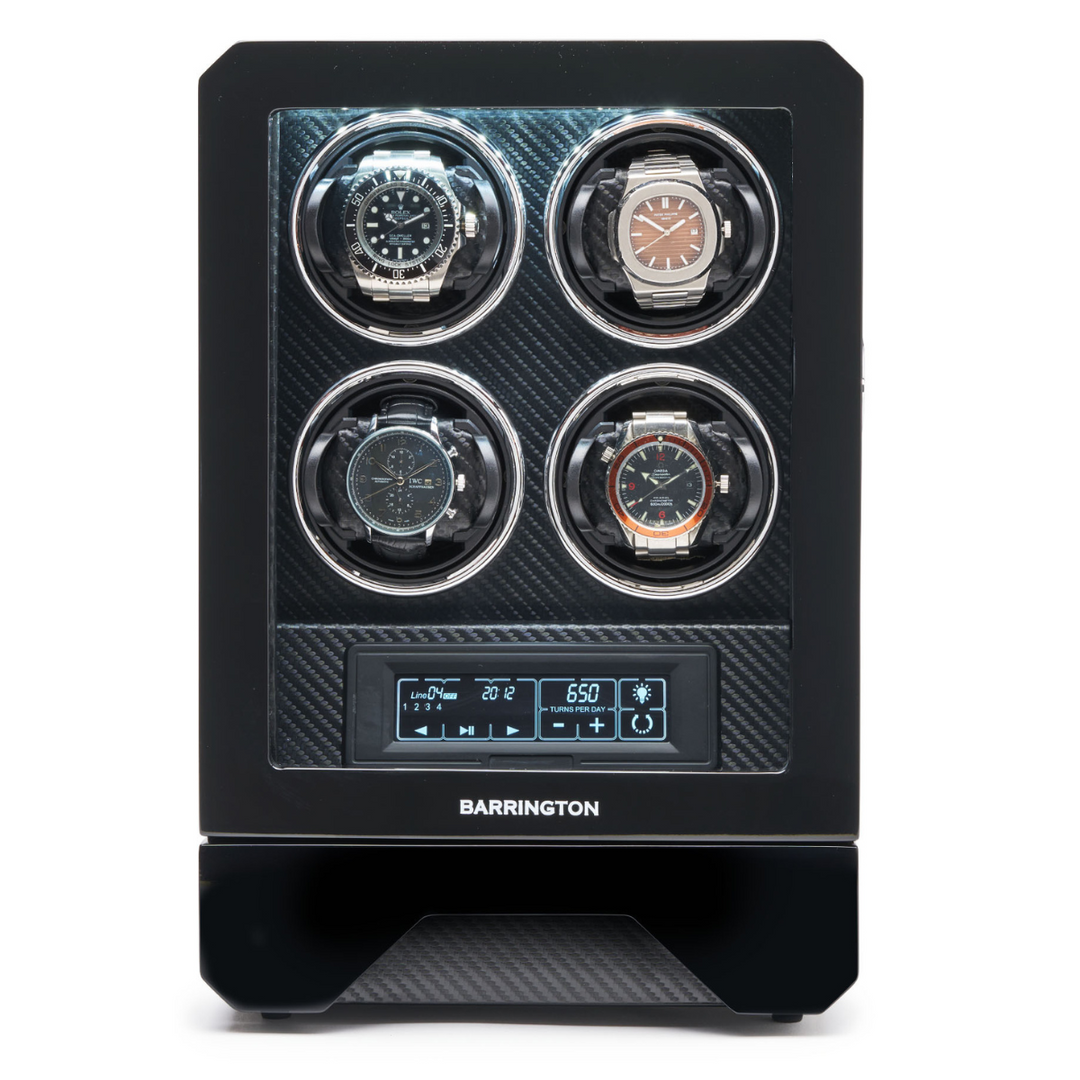
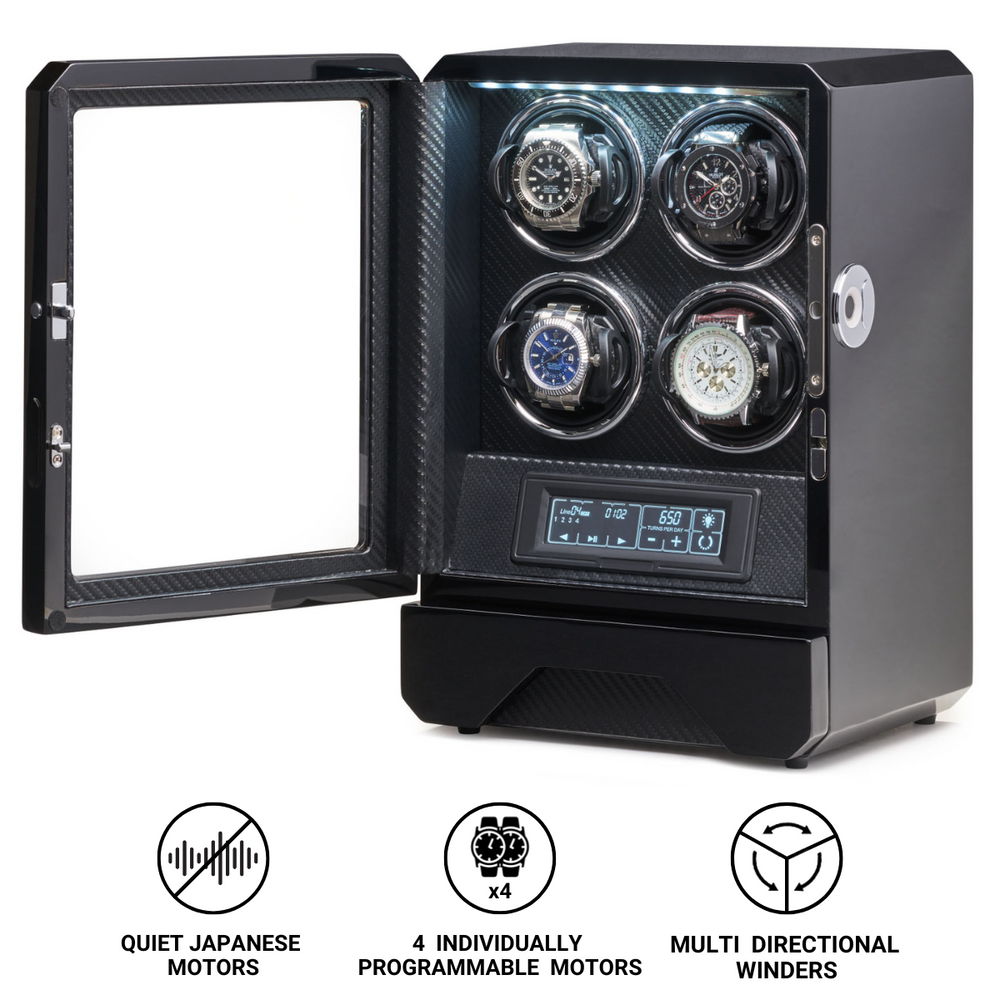
For owners who regularly rotate several automatic watches, a watch winder from Barrington Watch Winders can help maintain their power reserves between periods of wear. This is particularly convenient for automatic watches with calendar complications that require time and attention to reset.
Although a watch winder is not essential for every automatic watch, it can simplify collection management when used with the appropriate winding settings.
Best Watch Winders for Luxury Watches and Collections
Owning a luxury automatic watch involves more than appreciating its design and mechanical craftsmanship. For enthusiasts who alternate between several timepieces, a quality watch winder offers a convenient way to keep watches wound and ready to wear. Barrington Watch Winders combines precision engineering, elegant design and adjustable winding settings to accommodate different automatic movements. The following models cater to everyone from first-time luxury watch owners to experienced collectors.
Barrington Oxford Single Winder - Black

The Barrington Oxford Single Winder in Black is an elegant and compact solution for owners of luxury automatic watches. The watch winder features a premium ultra-quiet Japanese motor and offers five Turns Per Day (TPD) settings from 650 to 1,950, alongside clockwise, counter-clockwise and bidirectional rotation to accommodate different movement requirements. The Gentle Rotation system combines intermittent winding cycles with a 12-hour rest period, while the 12 o'clock resting position ensures an attractive presentation. Measuring just 12 × 12.5 × 19 cm, the device fits comfortably on a bedside table, desk or display shelf. It operates via AC mains or four AA batteries, providing approximately 60 to 70 days of battery life. The innovative Jump feature allows multiple compatible watch winders to share a single power source, making the Oxford an excellent choice for both individual luxury watch owners and enthusiasts looking to expand their collections.
Barrington 6 Watch Winder

Designed for dedicated luxury watch collectors, the Barrington 6 Watch Winder features six individually programmable rotors, allowing each automatic timepiece to receive its preferred winding settings. Five Turns Per Day options from 650 to 1,950 and three rotation directions accommodate different automatic movements. Premium Japanese Mabuchi motors ensure exceptionally quiet operation, while the Gentle Rotation system alternates 12 hours of intermittent winding with a 12-hour rest period. The elegant closed display case features a carbon fibre-effect interior, LED lighting, secure clip-in cushions and a fingerprint lock capable of storing up to 20 fingerprints. Touchscreen programming, a remote control and an additional storage drawer enhance everyday convenience. Measuring 33 × 35 × 19.5 cm, the device combines generous capacity with a refined appearance. Its repairable construction, user-replaceable motors and two-year warranty make it a particularly attractive long-term choice for owners of valuable automatic watch collections.
Barrington Oxford Single Winder - White

With its clean white finish and understated contemporary design, the Barrington Oxford Single Winder in White provides a stylish setting for a luxury automatic watch. Five programmable Turns Per Day settings (650, 750, 850, 1,000 and 1,950) and three rotation directions allow owners to match the winding requirements of different mechanical calibres. The premium Japanese motor operates exceptionally quietly, while the Gentle Rotation system provides intermittent winding followed by a 12-hour rest period. A choice of Omni and Micro cushions accommodates different bracelet and strap sizes, with the watch consistently returning to the 12 o'clock resting position. Measuring 12 × 12.5 × 19 cm and weighing just 800 g, the Oxford offers flexible placement and can operate on either mains power or four AA batteries. Its stackable construction and Barrington Jump connectivity make it particularly suitable for enthusiasts who wish to expand their luxury watch collection gradually without requiring additional mains sockets.
Choosing the right watch winder depends on the size of your collection, wearing habits and the winding requirements of your individual timepieces. Whether you own a single automatic watch or a diverse collection featuring Rolex, OMEGA, Tudor and other luxury brands, Barrington Watch Winders offers practical solutions with adjustable Turns Per Day (TPD) settings and rotation directions. Each model combines convenient winding with an elegant way to display your favourite automatic watches.
New vs Pre-Owned Luxury Watches: Which Offers Better Value?
Purchasing a new luxury watch through an authorised retailer typically provides a full manufacturer's warranty, unused condition and a known ownership history. However, buyers may experience considerable depreciation shortly after purchase.
Pre-owned luxury watches can offer better value when a model has already experienced its initial depreciation. A carefully selected second-hand OMEGA, Grand Seiko, Breitling or Jaeger-LeCoultre may provide access to more sophisticated watchmaking without exceeding the original budget. The secondary market also offers discontinued references unavailable through authorised retailers.
Condition, authenticity and servicing history remain essential considerations. An apparently inexpensive watch may become a costly purchase if it requires an immediate mechanical overhaul. Buying from a reputable specialist, reviewing available documentation and accounting for potential maintenance expenses are fundamental to securing genuine long-term value.
How to Choose the Best Luxury Watch Brand for You
The best first luxury watch should combine versatility, comfort and reliable performance. Consider the case diameter, thickness and lug-to-lug distance, as these dimensions determine how comfortably a watch sits on your wrist. Prioritise functions you will actually use and establish a budget that accommodates future servicing.
Choosing a Luxury Watch for Your Lifestyle
Different manufacturers excel in different areas of watchmaking. The following recommendations can help narrow your selection according to your priorities.
|
Purpose |
Recommended brands |
|
First luxury watch |
Longines, Tudor, OMEGA |
|
Everyday wear |
Rolex, OMEGA, Tudor |
|
Business and formal occasions |
Cartier, Jaeger-LeCoultre |
|
Sports and diving |
Tudor, OMEGA, Breitling |
|
Mechanical innovation |
Grand Seiko, Zenith |
|
Understated luxury |
Grand Seiko, IWC Schaffhausen |
|
Value retention |
Selected Rolex, Patek Philippe and Audemars Piguet references |
|
Haute horlogerie collecting |
Patek Philippe, Vacheron Constantin, A. Lange & Söhne |
Ultimately, the best luxury watches for men are those that complement their owner's lifestyle, personal taste and appreciation of watchmaking. A thoughtfully chosen timepiece can provide decades of enjoyment, regardless of its price or prestige.
Proper care is equally important. Since 2010, Barrington Watch Winders has developed single and multi-watch winders with adjustable rotation direction and Turns Per Day settings, helping enthusiasts keep their automatic timepieces wound and ready to wear.





Leave a comment