


Banking on British Heritage: The Brooklands Triple-Four Spectrum is Not Your Average Racing Chronograph
If you’ve ever stood at the crumbling concrete banks of Brooklands motor racing circuit in Surrey, you’ll quickly realise just how reckless early motorists really were. In the 1920s, drivers showed a flagrant disregard for health and safety, strapping themselves into machines and hurling themselves around the circuit at over 130 miles per hour. Fast forward a century, and capturing that glamorous lunacy in a wristwatch is no small task. Brooklands Watch Company, however, has recently launched the Triple-Four Spectrum, inspired by the Napier-Railton racing car.

Brooklands Watch Company has been capturing the essence of British engineering since 2017 and was founded by aero-mechanical engineer Simon Jeffs. He enlisted the design talents of the late, great Sir Terence Conran for this piece's visual architecture. And if you know anything about Conran’s extensive body of work, you know he didn't do fuss. Rather, he did clean, purposeful, and occasionally stark design. The Triple-Four reflects this design ethos beautifully, but it's, frankly, a bit of a beast on the wrist.
What? No tachymeter scale?
Measuring 41mm in diameter with an unapologetic 12.8mm thickness, the Triple Four Spectrum Chronograph features slab sides and long, sweeping lugs that make it sit wide and proud. It commands attention. But look closely at the dial, and what really strikes you is what's missing - the tachymeter scale.

I will admit, when I first realised this omission, my initial thoughts were: “How on earth can you make a watch inspired by the world’s first racing circuit and omit the very scale historically used to calculate speed over distance?” It felt a bit like making a dive watch without a rotating bezel. But the more you sit with it, the more you realise that a busy, cluttered tachymeter would have completely ruined Conran’s minimalist vision. Instead, the bi-compax layout, with sub-dials sitting cleanly at 6 and 12 o'clock, breathes, and the sloping rehaut draws the eye directly into the dial rather than distracting it with a mess of tiny numbers you were never going to use anyway.
A splash of colour and a decent movement
This new Spectrum line introduces a much-needed hit of vibrant colour to the collection. You can choose from Black, Blue, Navajo Sand, and Green. The Spectrum II range also offers an Opalin White dial with green or black sub-dials, both of which make for a pretty sophisticated panda if that’s what your collection is currently lacking. Beneath these clean dials sits the Sellita SW500 automatic chronograph movement. It’s robust and reliable, with that satisfyingly crisp pusher actuation that makes you want to start and stop the chronograph for absolutely no reason at all. (Come on. You do it.) It also features a customised, skeletonised rotor made visible through the exhibition caseback.
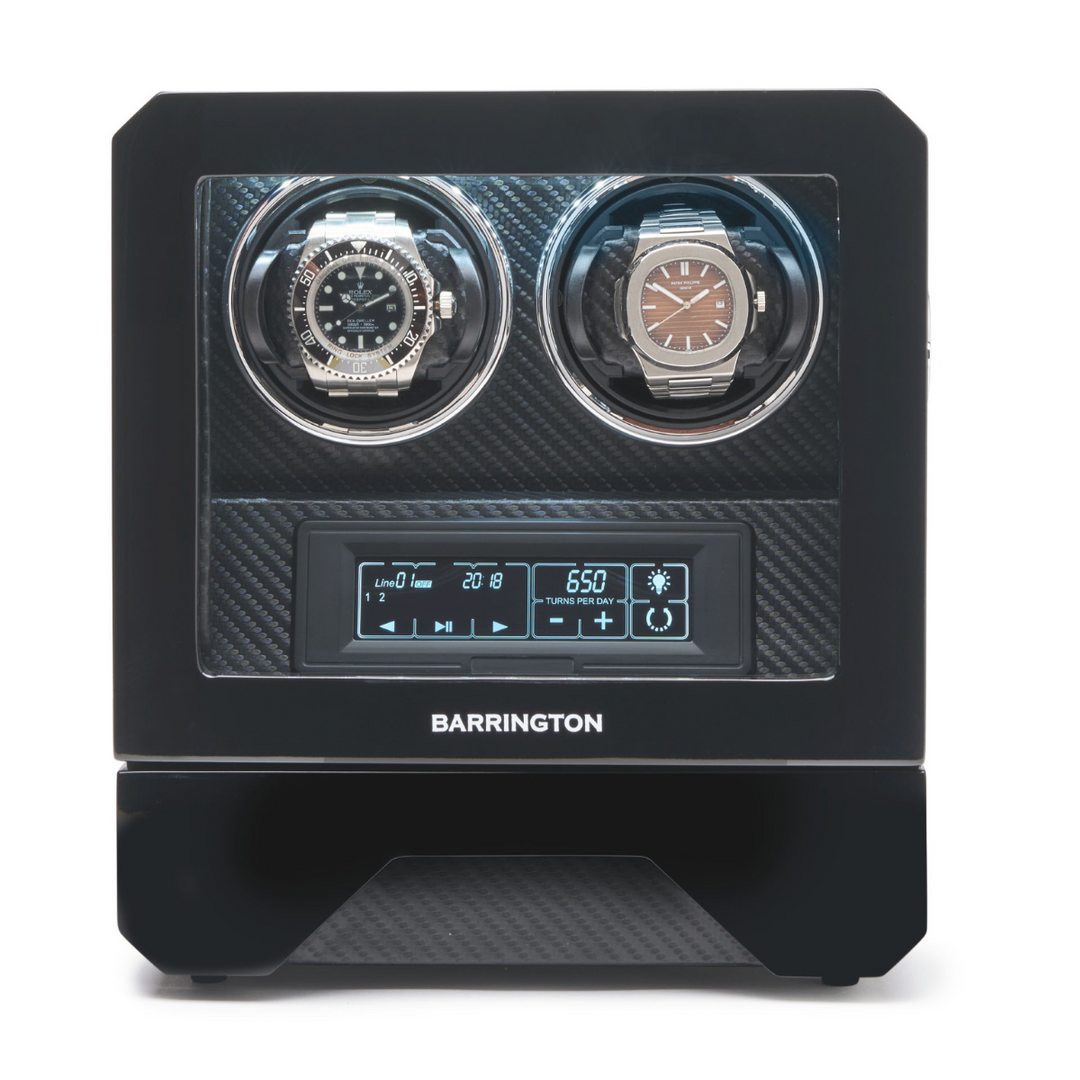
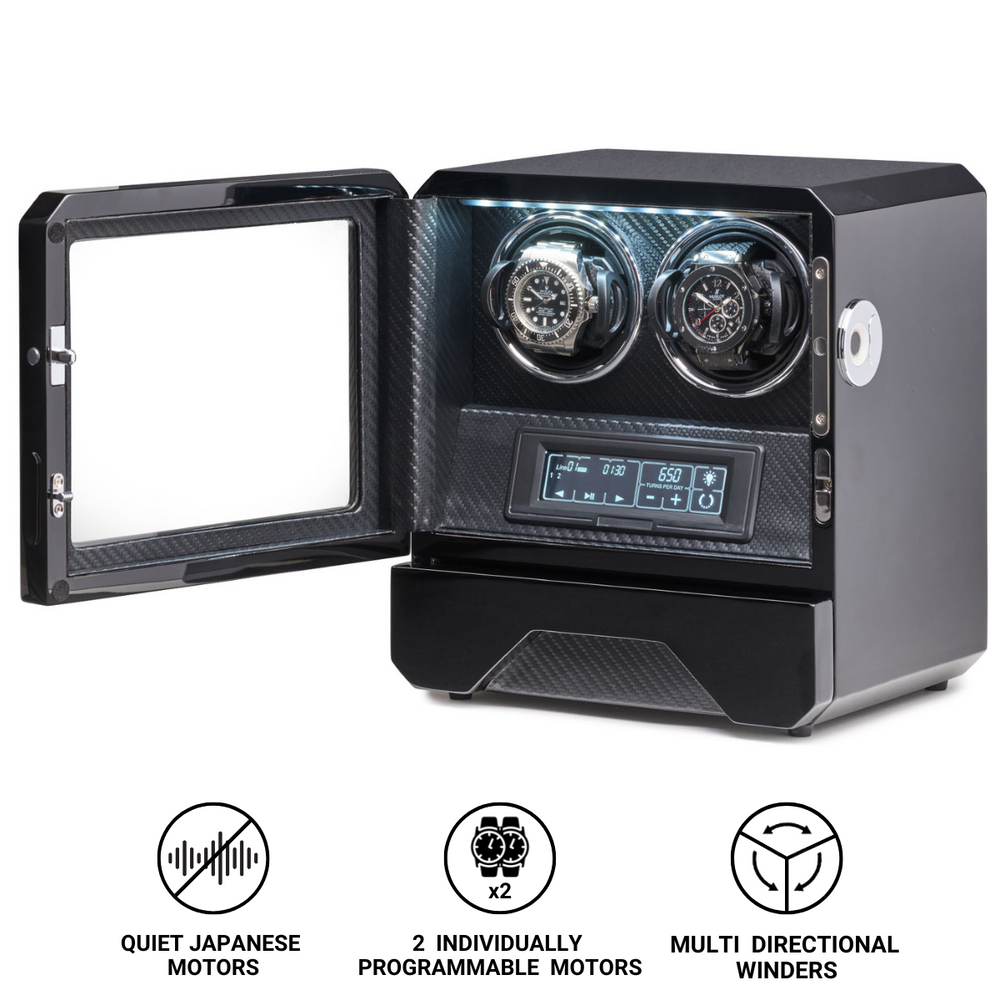
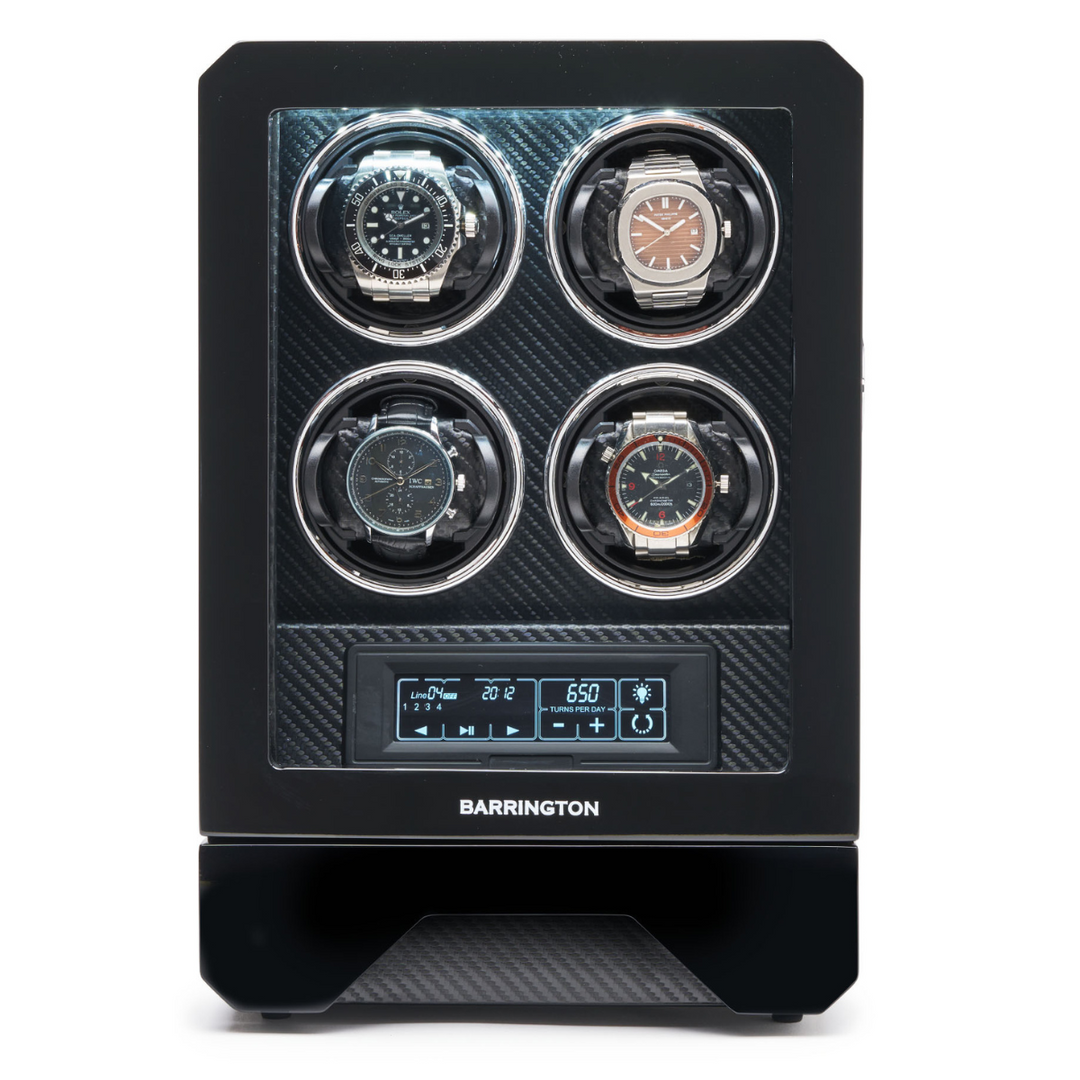
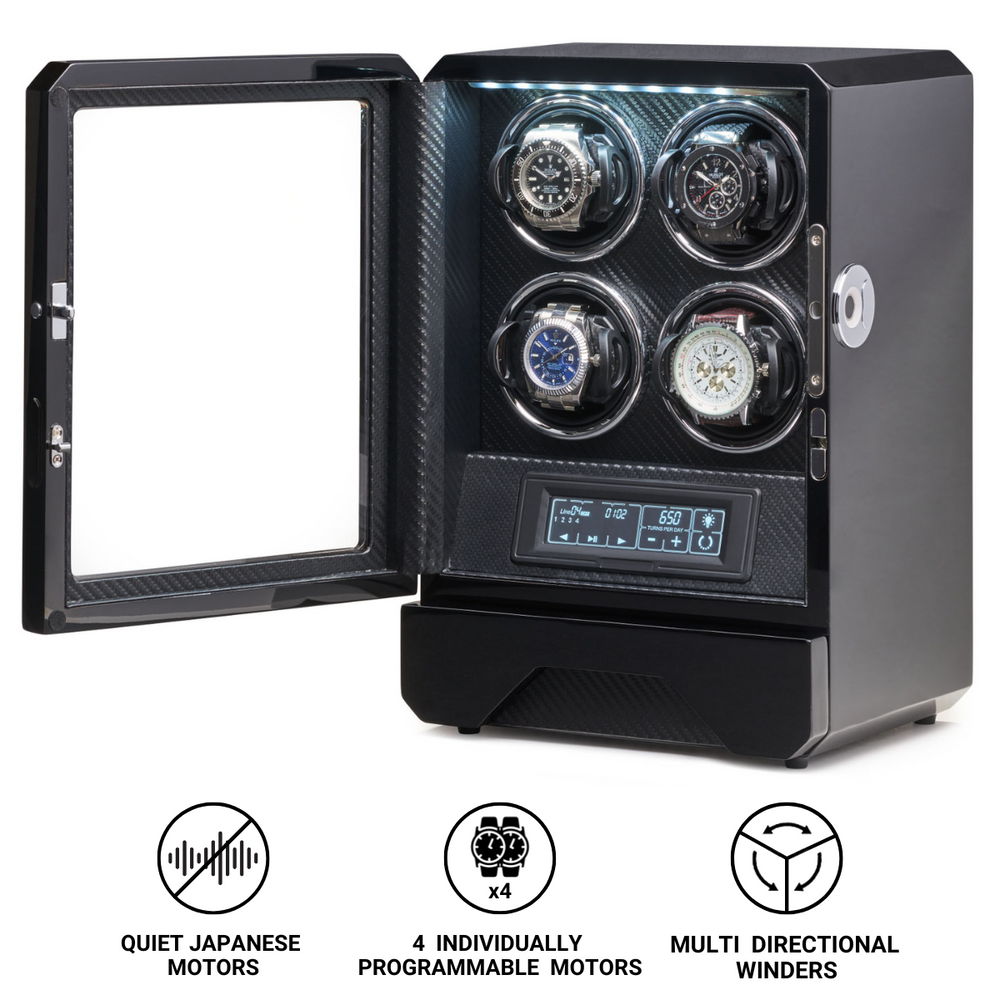
Of course, keeping automatic watches like this ticking when you aren't wearing them is half the battle. Heavy, complex chronograph movements like this benefit from a quality watch winder to keep the lubricants moving and save you the hassle of resetting the date complication every time you pick the watch up after a long weekend away.

Brooklands has also engineered 100 meters of water resistance, which is pretty impressive for a non-diving chronograph. The Triple-Four Spectrum will set you back £3,900. I’m not going to sugarcoat it: that’s a serious chunk of change for us mere mortals, and the movement's finishing isn’t exactly elaborate. Even the case, while exceptionally well-machined, is relatively straightforward in its construction. I suspect the price comes from exclusivity, presentation, and design pedigree. Brooklands is only producing 50 pieces of each colourway and delivers the watch in a beautifully crafted leather box. Think about it a little deeper. You’re buying the exclusive Sir Terence Conran design legacy. You’re buying a connection, however tangential, to the 1907 racetrack.
Should you buy it?
So, where does that ultimately leave us? Well, the Brooklands Triple-Four Spectrum is certainly not the strictly logical choice for a mechanical chronograph. It’s large, quite expensive, and it’s missing the most stereotypical racing feature. But logic has never been the primary driver of watch collecting, has it? We buy these things because they make us feel something. We buy them because they tell a story and start conversations. If you want a perfectly logical, value-driven stopwatch, you can just use your phone. But if you want a charismatic, beautifully designed piece of brutalist British engineering on your wrist, the Triple-Four Spectrum might just be exactly what you are looking for.





Leave a comment