


Do Watch Winders Damage Watches?
Let’s put this one to bed.
Somewhere along the line, a rumour took hold in watch collecting circles that leaving your automatic on a winder is somehow harmful. That the rotor will wear itself into dust, the lubricants will stage a quiet protest, and your movement will expire while you sleep. It sounds just technical enough to be convincing at a dinner party. It is also, for any well-made watch on a quality winder, not true.

I have spoken to a lot of watch owners who hesitate before buying their first winder for exactly this reason. They have read something on a forum, or had a friend tell them it is bad for the movement, and they are not sure what to believe. So let me go through it properly.
Your watch was built to keep moving
An automatic movement is designed around one core assumption: it will spend most of its life on a human wrist, charging its rotor as you go about your day. Reaching for your coffee. Gesturing unnecessarily during a Zoom call. Walking to the kitchen for the fourth time in an hour. Every one of those movements winds the mainspring, and the watch does this indefinitely without complaint.
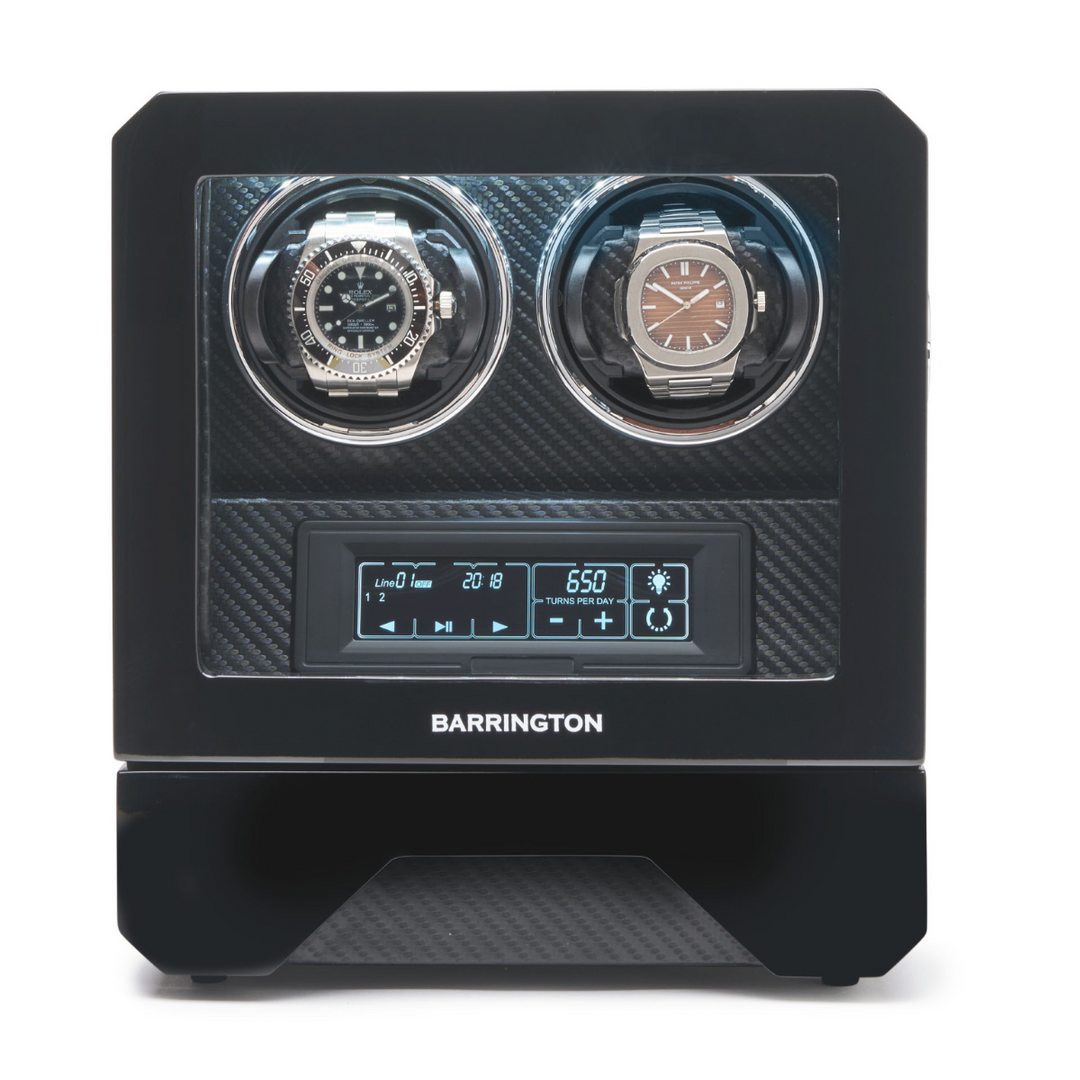
A watch winder does exactly the same thing. It rotates your watch at a controlled speed in a set direction for a defined number of turns per day, replicating the motion of regular wear. The movement has no idea whether it is sitting on your wrist or resting in a Barrington Oxford. It just runs, as it was designed to.
Can you over-wind an automatic watch?
No. This is probably the most common concern I come across, and it is the one most firmly answered by how modern movements are built. Automatic movements have a slipping clutch mechanism that releases once the mainspring reaches full tension. The spring hits its limit, the clutch slips, and no additional force is applied. You could run a winder continuously for a week and the movement would simply shrug off the surplus. The clutch mechanism has had this covered since the mid-twentieth century, and it has not changed because it works.
Turns per day: why this setting actually matters
Here is where a lot of generic winders fall short. Every automatic movement has a recommended turns per day range, which is the number of rotations the winder should complete in a 24-hour period to keep the mainspring appropriately wound. Set the winder far above that range and the rotor spins more than it needs to, adding unnecessary activity to the bearings over a long period. Not catastrophic, but not ideal either.
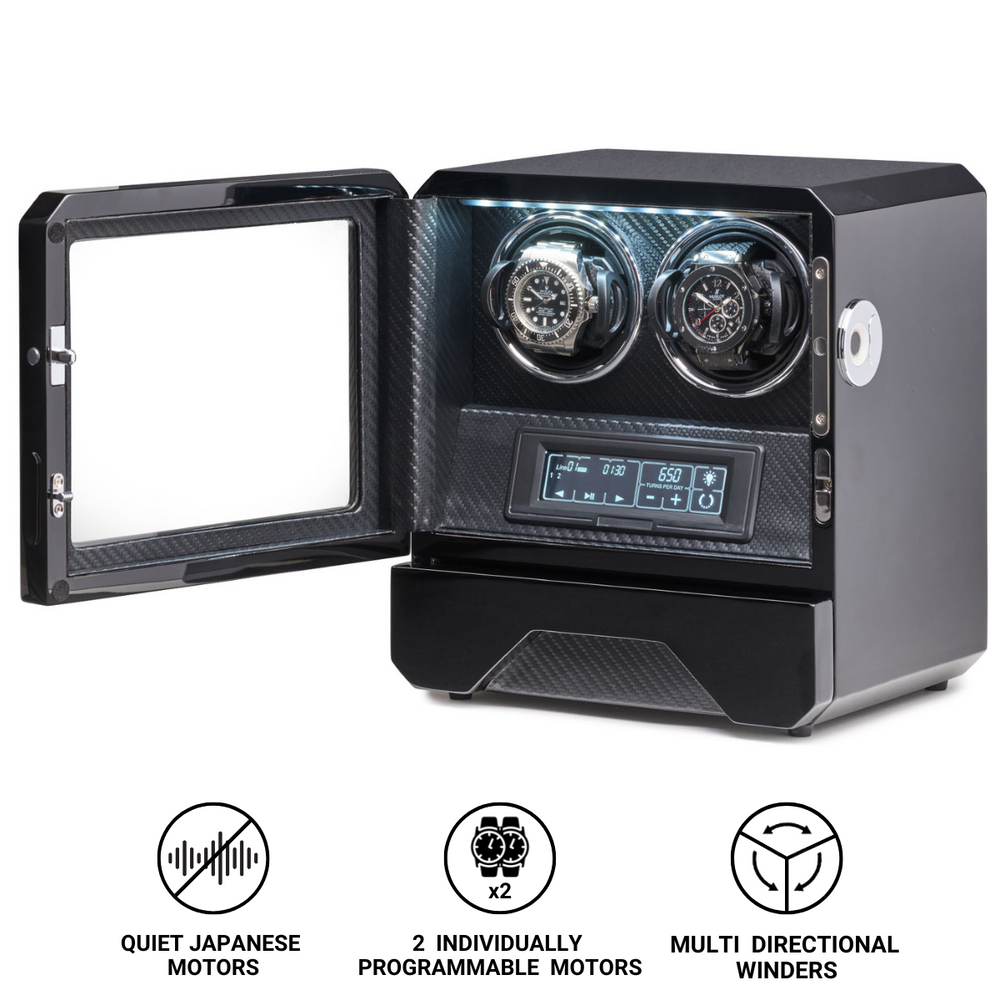
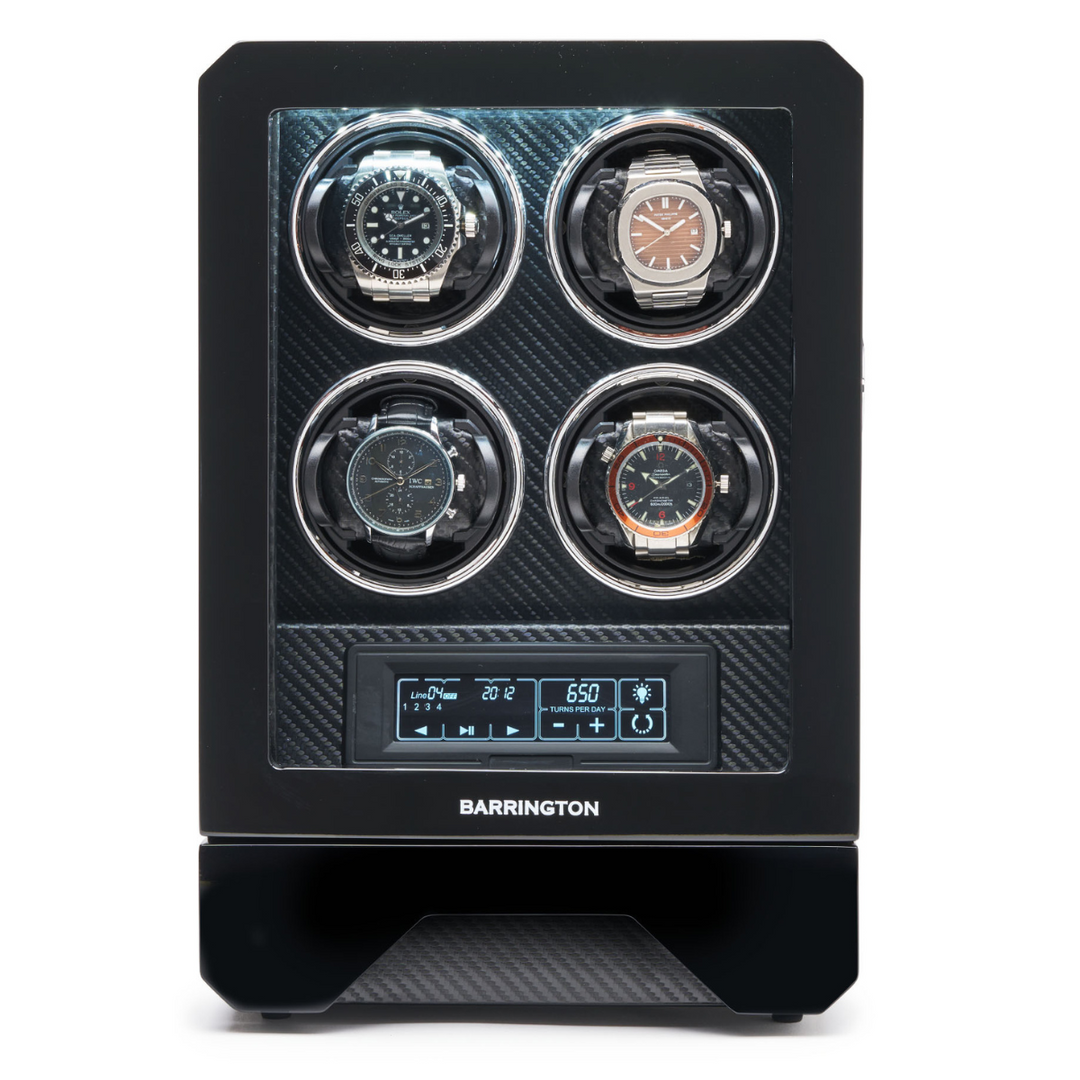
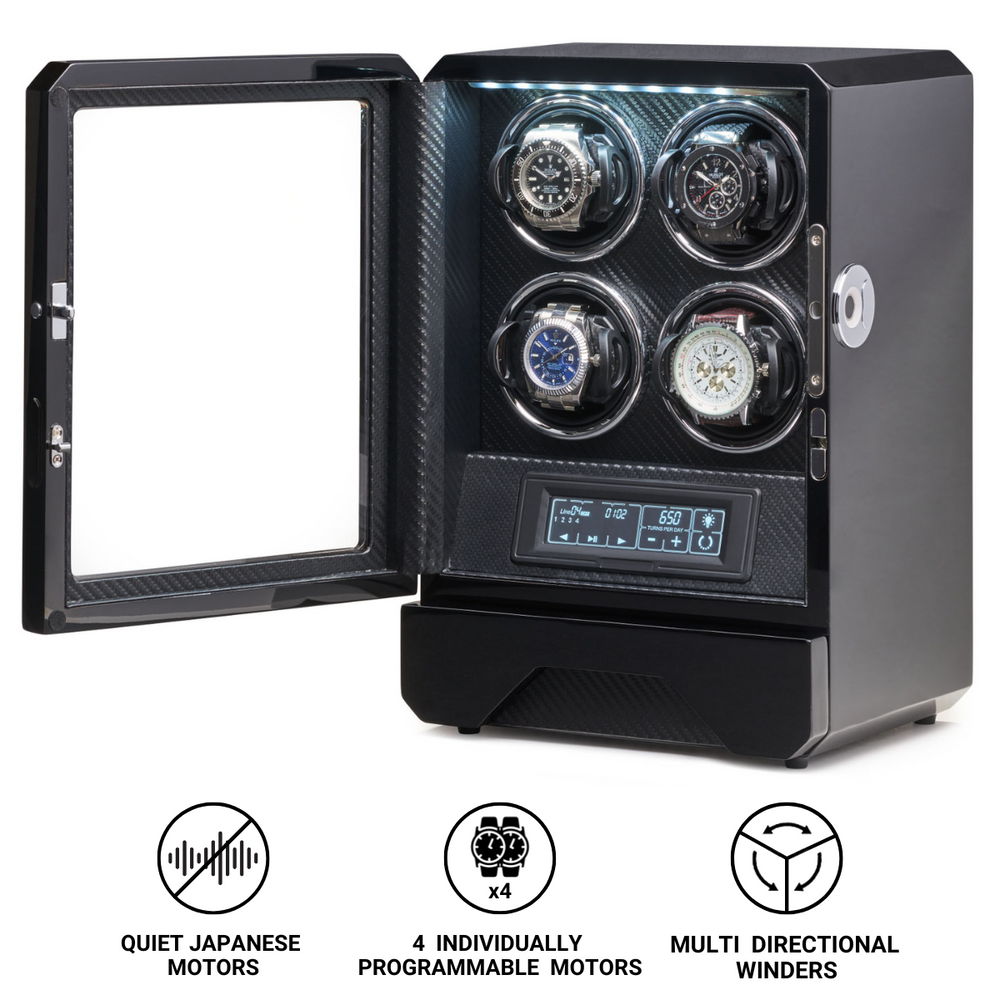
This is why I always recommend a winder with multiple TPD settings rather than a single fixed speed. Barrington winders offer five settings: 650, 750, 850, 1,000 and 1,950 turns per day. That range covers everything from a light dress watch movement to a heavy sports watch with a high-inertia rotor. You match the setting to your watch, and the winder does its job without working harder than it needs to.
If you are not sure what TPD your movement requires, your watchmaker or the manufacturer’s documentation will have the answer. Barrington also offers a handy TPD lookup tool on the website that covers the majority of popular movements.
Winding direction: worth five seconds of your time
Most modern automatic movements wind bi-directionally, meaning the rotor charges the mainspring whether it rotates clockwise or counter-clockwise. Some older movements, and a handful of more unusual modern ones, wind in one direction only. Put one of those on a bi-directional winder set incorrectly and it will not wind at all, which is more of an inconvenience than a damage risk, but worth knowing about.
Barrington winders offer clockwise, counter-clockwise, and bi-directional settings. It takes about ten seconds to check what your movement requires and set it accordingly. After that, you never need to think about it again.
How Barrington keeps your watch secure
Beyond the settings themselves, the physical design of the winder matters more than most people realise when they are buying for the first time. I have seen cheap winders that rattle and vibrate and clunk their way through a rotation cycle. That kind of inconsistent, jarring motion is a long way from what a movement experiences on a wrist, and it is worth avoiding.
Barrington winders use an ultra-quiet Japanese motor that runs smoothly and consistently. Smooth, consistent rotation is what an automatic movement is built to handle. There is no jolting, no vibration, and no noise to speak of.
The cushion system deserves a mention too. The Oxford Single comes with a choice of two cushion sizes: the Omni, which fits wrist circumferences from 16.5 to 22 centimetres and suits around 85 per cent of customers, and the Micro for slimmer wrists down to 12.5 centimetres. The watch sits held securely throughout its rotation and always stops at the 12 o’clock position. No sliding around the cushion, no pressure on the crown, no unnecessary contact with the case.

Power comes from AC mains via a USB-C connection or from four AA batteries, with a battery life of around 60 to 70 days and a low indicator light that blinks when they need replacing. The winder keeps running consistently regardless of which power source you use. Your watch is never caught out by an unexpected stop.
What actually damages a watch
Since we are being thorough: dropping it, exposure to strong magnetic fields, running it years past a service interval, and leaving it completely static for extended periods while the lubricating oils slowly thicken and dry out.
That last one is the point the myth gets backwards. A watch sitting unworn in a drawer is not resting peacefully. The oils inside a movement are designed to keep circulating, and a watch that sits still for months will typically need a service sooner than one that has been kept running through regular wear or a quality winder. The winder is not the risk. Leaving the watch unworn is.
The bottom line
A quality watch winder, set to the correct TPD and direction for your movement, will not damage your watch. It keeps the movement running, the oils circulating, and the watch ready to wear whenever you reach for it. If you have spent serious money on a serious watch, that is exactly the condition you want it in.
The key is getting the settings right and choosing a winder built to a standard that matches the watches going into it. A Barrington winder gives you the settings to do that properly and the build quality to back it up. Your watchmaker will not be unhappy with you at the next service, and that is as good an endorsement as any.





Leave a comment