


Watch Winder TPD Explained: Settings for Rolex, Omega & More
Key Points:
Understanding the correct TPD and rotation direction helps keep automatic watches accurate, fully wound and ready to wear.
Different watch movements, including chronographs and Co-Axial calibres, may require different winding settings depending on the calibre.
Most modern luxury watches perform well between 650 and 800 TPD, often using bidirectional rotation.
A high quality programmable watch winder provides safer long term operation, quieter performance and greater flexibility for growing collections.
Automatic watches are designed to stay powered through the natural motion of the wearer’s wrist. When left unworn for a few days, however, the mainspring gradually loses its stored energy and the watch eventually stops. While this is perfectly normal, repeatedly allowing a watch to run down can become inconvenient, particularly for models with complex functions such as annual calendars, moonphases or GMT complications that require resetting before wear.
This is where understanding TPD, or Turns Per Day, becomes important. TPD refers to the number of rotations a watch winder performs over a 24 hour period to keep an automatic movement sufficiently wound. Alongside TPD, rotation direction also plays a key role, as some calibres wind clockwise, others counter-clockwise, and many modern movements use bidirectional winding. Using the correct settings helps maintain stable power delivery to the movement, supporting consistent timekeeping accuracy while avoiding unnecessary strain on the winding system.
Modern watch winders are designed to replicate the gentle motion of daily wear by rotating the watch at carefully controlled intervals. High quality winders allow you to adjust both TPD and winding direction to suit specific movements from brands such as Rolex, Omega, Tudor and many others. Since winding requirements can vary significantly between calibres, choosing the correct settings is essential for keeping your watch running reliably and ready to wear at any time.
What Is TPD in a Watch Winder?
TPD stands for “Turns Per Day” and refers to the number of rotations a watch winder makes within a 24 hour period to keep an automatic watch wound. Since automatic watches rely on movement to maintain their power reserve, a watch winder simulates the natural motion of the wrist when the watch is not being worn.
Inside every automatic watch is a weighted rotor that rotates as the wearer moves throughout the day. This rotor transfers energy to the mainspring, which powers the movement. Different watch calibres are engineered with different winding efficiencies, gear ratios and power reserves, which is why one watch may require 650 TPD while another may need 900 or more to remain fully wound.
Several factors influence a watch’s ideal winding requirements, including:
-
Movement architecture
-
Rotor efficiency
-
Power reserve length
-
Complications such as chronographs or annual calendars
-
Whether the movement winds clockwise, counter-clockwise or bidirectionally
This is why there is no universal watch winder setting suitable for every brand or model.
Why Correct TPD Settings Matter
Setting the correct TPD is essential for keeping an automatic watch running as intended. If the setting is too low, the watch may gradually lose power and stop overnight or between wears. If the setting is unnecessarily high, the movement remains in near constant activity, which serves little practical benefit.
Using the correct TPD settings helps to:
-
Maintain the watch’s power reserve
-
Preserve stable timekeeping accuracy
-
Reduce unnecessary wear on winding components
-
Ensure the watch is always ready to wear
-
Prevent underwinding during long periods of storage
Most modern automatic watches perform best somewhere between 650 and 900 TPD, although this varies significantly depending on the calibre and manufacturer.
Can You Overwind an Automatic Watch?
One of the most common misconceptions surrounding watch winders is the fear of overwinding. In reality, most modern automatic watches are fitted with a slipping clutch mechanism within the mainspring barrel. Once the mainspring reaches full tension, the clutch disengages and prevents additional force from building up inside the movement.
In practical terms, this means a properly functioning automatic watch cannot usually be damaged by conventional winding in the same way as a manually wound watch. However, this does not mean excessively high TPD settings are beneficial. Running a watch winder at unnecessarily aggressive settings keeps the rotor and winding system in continuous motion, potentially increasing long term wear on moving components.
For this reason, the best approach is always to use the lowest effective TPD setting recommended for your specific watch model.
Understanding Watch Winder Rotation Directions
In addition to selecting the correct TPD setting, it is equally important to choose the proper rotation direction for your watch. Automatic movements are designed to wind in different ways depending on the calibre architecture. Some watches wind only when the rotor turns clockwise, others only counter-clockwise, while many modern movements can wind efficiently in both directions.
Most quality watch winders offer three rotation modes:
-
Clockwise (CW)
-
Counter-clockwise (CCW)
-
Bidirectional rotation
Choosing the correct mode helps maintain an efficient power reserve while avoiding unnecessary rotor movement.
Clockwise (CW)
Clockwise winding means the watch rotates to the right during the winding cycle. Many chronograph movements and older calibres rely primarily on clockwise rotor motion to generate power. Certain models from Omega, TAG Heuer and Breitling commonly use CW winding.
Counter-Clockwise (CCW)
Counter-clockwise winding rotates the watch to the left. While less common than CW or bidirectional systems, some automatic movements are specifically engineered to wind only in this direction. Using the wrong setting may result in the watch gradually losing power reserve despite being on the winder.
Bidirectional Rotation
Bidirectional winding alternates between clockwise and counter-clockwise rotation. This is the most common setting in modern watchmaking because many contemporary calibres are designed to wind efficiently regardless of rotor direction. Popular brands such as Rolex and many modern Omega movements typically perform well with bidirectional settings.
Bidirectional winding is also popular because it more closely replicates natural wrist movement during daily wear.
|
Rotation Mode |
How It Works |
Commonly Used By |
Typical Use Case |
|
Clockwise (CW) |
Rotates to the right only |
Many chronographs and older calibres |
Sports watches and chronographs |
|
Counter-clockwise (CCW) |
Rotates to the left only |
Selected specialist movements |
Less common automatic calibres |
|
Bidirectional |
Alternates between both directions |
Most modern luxury watches |
Everyday automatic watches |
Some chronograph movements differ from standard automatic calibres because their additional complications create higher energy demands and more complex gearing systems. As a result, certain chronographs require higher TPD settings or specific directional winding to maintain a full power reserve consistently.
If you are unsure which direction your watch requires, bidirectional mode combined with a conservative TPD setting is often the safest starting point until the exact calibre specification can be confirmed.
How to Set the Correct Watch Winder Parameters
Setting up a watch winder correctly is straightforward once you understand the basic principles behind TPD and rotation direction. While many modern luxury watches share similar winding requirements, the safest approach is always to start conservatively and adjust gradually if necessary. This helps maintain reliable timekeeping without placing unnecessary strain on the movement.
Step 1 - Manually Wind the Watch First
Before placing your watch onto a winder, it is best to manually wind it using the crown. This gives the mainspring an initial power reserve and allows the automatic system to maintain energy rather than build it from empty.
For most automatic watches, around 20 to 30 crown turns is sufficient. Avoid forcing the crown once resistance increases, particularly on manually wound models.
Starting with a partially charged mainspring helps:
-
Stabilise amplitude more quickly
-
Improve initial timekeeping accuracy
-
Reduce unnecessary strain on the winder
-
Ensure the movement starts operating correctly
Step 2 - Start With the Lowest Recommended TPD
If you know your watch’s recommended settings, begin with the lowest effective TPD value suggested by the manufacturer or calibre database. In many cases, this will be around 650 TPD.
A conservative starting point is generally safest because modern automatic watches rarely require excessive winding activity. Using unnecessarily high TPD settings offers little benefit and may keep the rotor system in constant motion for no reason.
For most watches, 650 TPD in bidirectional mode is an excellent baseline starting point.
Step 3 - Choose the Correct Rotation Direction
Next, select the appropriate winding direction for your watch. Some calibres wind clockwise, others counter-clockwise, while many modern movements support bidirectional winding.
Whenever possible, refer to the manufacturer’s specifications or a trusted watch winder database for confirmation. Brands such as Rolex, Omega and Tudor may use different winding systems depending on the calibre.
If you cannot confirm the exact direction, bidirectional mode is usually the safest option because it accommodates the majority of modern automatic movements.
Step 4 - Test the Watch for 48 Hours
Once the watch is on the winder, allow it to run for at least 48 hours before making any adjustments. This gives the movement enough time to stabilise and maintain a consistent power reserve.
During this period, monitor:
-
Timekeeping accuracy
-
Whether the watch stops overnight
-
Power reserve consistency
-
Smooth operation of complications such as date or GMT functions
If the watch remains fully powered and keeps accurate time, the settings are likely correct.
Step 5 - Fine Tune If Necessary
If the watch loses time or stops while on the winder, it may not be receiving enough rotational activity. Increase the TPD gradually in small increments, typically by 100 TPD at a time, and test again over another 48 hour period.
Common signs of an underwound watch include:
-
The watch stopping unexpectedly
-
Reduced power reserve
-
Inconsistent accuracy
-
The seconds hand appearing weak or unstable
Patience is important during this process. Small adjustments are usually all that is needed to find the ideal balance between maintaining power reserve and minimising unnecessary movement activity.
How to Find the Correct TPD for Your Watch
Finding the correct watch winder settings is usually straightforward once you identify the movement inside your watch. Most luxury watch manufacturers publish recommended winding specifications, including TPD and rotation direction, either by model or calibre. Using these recommendations is the safest way to ensure your watch remains properly wound without unnecessary rotor activity.
Use the Manufacturer’s Recommendation
Whenever possible, start with the official recommendation provided by the manufacturer. Brands such as Rolex, Omega, Breitling and TAG Heuer often specify winding requirements for their automatic movements.
It is important to understand that watches within the same collection may use completely different calibres. For example, two versions of the same chronograph may share a similar design while requiring different TPD settings due to variations in movement architecture.
This is why calibre data is generally more reliable than model names alone. The calibre determines:
-
Winding efficiency
-
Rotor direction
-
Power reserve characteristics
-
Energy consumption
-
Recommended TPD range
In many cases, identifying the calibre number on the caseback or warranty card provides the most accurate route to the correct watch winder settings.
If You Cannot Find Your Model
Not every watch model appears in online databases, particularly limited editions, discontinued references or vintage pieces. Fortunately, most automatic watches can still be safely configured using a cautious trial approach.
If you cannot locate your exact model, follow this method:
-
Start with 650 TPD
-
Use bidirectional rotation mode
-
Monitor the watch over several days
-
Increase TPD gradually if necessary
This conservative approach works well because 650 TPD in bidirectional mode suits a large percentage of modern automatic watches. After two or three days, check whether the watch maintains full power reserve and accurate timekeeping.
If the watch begins losing time or stops unexpectedly, increase the TPD slowly in small increments until performance stabilises. Avoid making large adjustments immediately, as most watches require only modest changes to reach their optimal winding level.
Patience is key. The goal is not maximum activity, but the lowest effective setting that keeps the movement running consistently and accurately.

Comment from Barrington Watch Winders: In our experience, starting conservatively almost always produces the best long term results. Most modern automatic watches do not require aggressive winding settings, which is why our winders are designed with flexible TPD adjustments and controlled rest periods for more natural operation.
Watch Winder Settings by Brand
While most modern automatic watches operate within a similar TPD range, exact winding requirements can vary depending on the calibre, production year and complication type. The recommendations below should therefore be treated as practical starting points rather than strict manufacturer specifications.
In many cases, the movement inside the watch matters more than the collection name on the dial. Chronographs, GMT models and watches with longer power reserves may require different winding behaviour even within the same product family.
Rolex Watch Winder Settings
Most modern Rolex watches are known for their highly efficient automatic winding systems and generally perform very well at around 650 TPD with bidirectional rotation. For collectors researching Rolex turns per day recommendations or Rolex watch winder turns per day settings, this range is widely considered the safest and most reliable starting point for modern Rolex calibres.
Rolex movements are typically less sensitive to winding settings than many other luxury brands, which makes them particularly straightforward to maintain on a programmable watch winder. In practice, the recommended turns per day for watches from Rolex rarely need to exceed conservative settings unless a specific calibre or complication requires additional activity.
Popular Rolex Models and Recommended Starting Points
|
Rolex Collection |
Typical TPD Range |
Common Rotation Mode |
|
Submariner |
Around 650 |
Bidirectional |
|
Daytona |
650 to 800 |
Bidirectional |
|
GMT-Master II |
Around 650 |
Bidirectional |
|
Datejust |
Around 650 |
Bidirectional |
|
Day-Date |
Around 650 |
Bidirectional |
|
Yacht-Master |
Around 650 |
Bidirectional |
For those specifically searching for Rolex Submariner turns per day settings, around 650 TPD in bidirectional mode remains the most commonly recommended starting point. Most current Rolex movements operate comfortably with moderate winding activity, and higher TPD values are rarely necessary.
Omega Watch Winder Settings
Omega uses a wide variety of movement families across its collections, which means winding requirements can differ significantly between models. Co-Axial calibres, Master Chronometer movements and automatic chronographs may all behave differently on a watch winder.
This is particularly important with Omega because two watches within the same collection may use entirely different calibres depending on the production year or complication.
Co-Axial Movements vs Chronographs
Many standard Omega Co-Axial movements perform well at around 650 TPD in bidirectional mode. However, automatic chronograph movements such as certain Speedmaster references may benefit from slightly higher TPD settings and, in some cases, clockwise rotation.
Chronographs generally consume more energy due to their more complex gear trains and additional functions.
Popular Omega Models and Recommended Starting Points
|
Omega Collection |
Typical TPD Range |
Common Rotation Mode |
|
Seamaster Diver 300M |
Around 650 |
Bidirectional |
|
Speedmaster automatic chronographs |
750 to 800 |
Often clockwise depending on calibre |
|
Aqua Terra |
Around 650 |
Bidirectional |
|
Planet Ocean |
650 to 800 |
Bidirectional |
|
De Ville |
Around 650 |
Bidirectional |
|
Constellation |
Around 650 |
Bidirectional |
For Omega watches, identifying the calibre is often the most reliable way to determine the ideal settings.
Tudor Watch Winder Settings
Most modern Tudor movements operate similarly to Rolex calibres and typically perform well with moderate winding activity.
|
Tudor Collection |
Typical TPD Range |
Common Rotation Mode |
|
Black Bay |
Around 650 |
Bidirectional |
|
Pelagos |
Around 650 |
Bidirectional |
|
Black Bay Chrono |
700 to 800 |
Bidirectional |
TAG Heuer Watch Winder Settings
TAG Heuer uses several different movement suppliers and in house calibres, so settings may vary depending on the model generation. Collectors researching turns per day TAG Heuer recommendations will find that most modern TAG Heuer automatic watches operate comfortably within the standard luxury watch range of 650 to 800 TPD.
|
TAG Heuer Collection |
Typical TPD Range |
Common Rotation Mode |
|
Carrera |
650 to 800 |
Bidirectional |
|
Monaco |
Around 800 |
Often clockwise |
|
Aquaracer |
Around 650 |
Bidirectional |
Breitling Watch Winder Settings
Many Breitling chronographs require slightly higher winding activity due to their movement design.
|
Breitling Collection |
Typical TPD Range |
Common Rotation Mode |
|
Navitimer |
Around 800 |
Often clockwise |
|
Chronomat |
Around 800 |
Often clockwise |
|
Superocean |
Around 650 |
Bidirectional |
Cartier Watch Winder Settings
Most modern Cartier automatic watches operate comfortably at moderate TPD levels.
|
Cartier Collection |
Typical TPD Range |
Common Rotation Mode |
|
Santos |
Around 650 |
Bidirectional |
|
Ballon Bleu |
Around 650 |
Bidirectional |
|
Calibre de Cartier |
Around 650 |
Bidirectional |
IWC Watch Winder Settings
IWC watches are known for robust winding systems and efficient automatic movements.
|
IWC Collection |
Typical TPD Range |
Common Rotation Mode |
|
Portugieser |
Around 650 |
Bidirectional |
|
Pilot’s Watch |
Around 650 |
Bidirectional |
|
Big Pilot |
650 to 800 |
Bidirectional |
Panerai Watch Winder Settings
Most automatic Panerai calibres perform well with moderate winding activity.
|
Panerai Collection |
Typical TPD Range |
Common Rotation Mode |
|
Luminor Automatic |
Around 650 |
Bidirectional |
|
Submersible |
Around 650 |
Bidirectional |
|
Radiomir Automatic |
Around 650 |
Bidirectional |
Patek Philippe Watch Winder Settings
Patek Philippe movements are highly refined and generally require only moderate winding settings.
|
Patek Philippe Collection |
Typical TPD Range |
Common Rotation Mode |
|
Nautilus |
Around 650 |
Bidirectional |
|
Aquanaut |
Around 650 |
Bidirectional |
|
Annual Calendar models |
650 to 800 |
Bidirectional |
Audemars Piguet Watch Winder Settings
Most Audemars Piguet watches use efficient automatic movements that work well with conservative settings.
|
Audemars Piguet Collection |
Typical TPD Range |
Common Rotation Mode |
|
Royal Oak |
Around 650 |
Bidirectional |
|
Royal Oak Offshore |
650 to 800 |
Bidirectional |
|
Code 11.59 |
Around 650 |
Bidirectional |
If you are ever unsure about the correct settings for a particular watch, starting at 650 TPD in bidirectional mode remains the safest and most widely compatible approach for the majority of modern automatic movements.
Common Watch Winder Mistakes to Avoid
A quality watch winder can be an excellent tool for maintaining automatic watches, but incorrect settings or poor usage habits can reduce its effectiveness. Fortunately, most common mistakes are easy to avoid once you understand how automatic movements behave over time.
Using Too Much TPD
One of the most common misconceptions is that more winding automatically means better performance. In reality, excessively high TPD settings are rarely necessary for modern luxury watches.
Most automatic movements are designed to operate efficiently at relatively moderate activity levels, often around 650 to 800 TPD. Running a watch continuously at much higher settings may keep the rotor and winding components in unnecessary motion without improving accuracy or power reserve.
The best approach is always to use the lowest effective TPD setting that keeps the watch fully wound and running consistently.
Choosing the Wrong Rotation Direction
Using the wrong rotation direction can prevent the movement from winding properly. Some watches wind only clockwise, others counter-clockwise, while many modern calibres support bidirectional winding.
If the incorrect mode is selected, the watch may slowly lose power reserve even while sitting on the winder. This issue is particularly common with certain chronograph movements and older calibres.
Whenever possible, check the manufacturer’s recommendation or use a trusted TPD guide. If the exact calibre is unknown, bidirectional mode is usually the safest starting point for most modern automatic watches.
Leaving Watches Running Permanently
Many collectors assume a watch should remain on a winder continuously throughout the year. While occasional use is perfectly reasonable, watches do not necessarily need to run 24 hours a day indefinitely.
Allowing a watch to rest periodically can help reduce long term wear on moving components, especially if the watch is not worn regularly. For collectors rotating between several watches, it is often more practical to use the winder only for pieces with complex calendars, moonphases or GMT functions that are inconvenient to reset.
Modern winders with programmable rest cycles offer a more balanced and realistic simulation of natural wear patterns.
Using Poor Quality Watch Winders
Not all watch winders are built to the same standard. Low quality winders may use inconsistent motors, uneven rotation patterns or poor internal components that create unnecessary vibration and noise.
A well engineered watch winder should provide:
-
Accurate and programmable TPD settings
-
Smooth and consistent rotation
-
Quiet operation
-
Reliable motor performance
-
Suitable support for different case sizes and straps
Quality matters particularly when storing valuable watches from brands such as Rolex, Omega or Patek Philippe.
Ignoring Service Intervals
A watch winder cannot replace regular servicing. Even if a watch remains fully wound and appears to run accurately, lubricants inside the movement will still age over time.
Most luxury watch manufacturers recommend servicing mechanical watches periodically to ensure continued performance and reliability. Ignoring these intervals may eventually lead to increased wear, reduced accuracy or premature component deterioration.
A watch winder should therefore be viewed as part of a broader care routine rather than a substitute for proper maintenance.
Comment from Barrington Watch Winders: One of the most common issues we see is collectors using unnecessarily high TPD settings for everyday automatic watches. A properly configured watch winder should maintain stable power reserve and accuracy without keeping the movement in constant activity around the clock.
How Different Watch Movements Affect Winding Needs
Not all automatic watches behave the same way on a watch winder. While many collectors focus primarily on the brand or model name, the movement inside the watch is usually the most important factor when determining the ideal TPD and rotation settings.
Different movement architectures consume energy differently, use varying rotor systems and place different demands on the mainspring. This is why two watches from the same manufacturer may require completely different winding behaviour.
Standard Automatic Movements
Standard three hand automatic movements are generally the easiest to maintain on a watch winder. These calibres are typically designed for efficient everyday use and often operate comfortably at around 650 TPD with bidirectional rotation.
Movements found in watches such as the Rolex Datejust or many Tudor Black Bay models usually fall into this category. Their relatively simple construction means they require less energy than more complex complications.
For most standard automatic watches:
-
Moderate TPD settings are sufficient
-
Bidirectional winding works well
-
Conservative settings help minimise unnecessary rotor activity
Co-Axial Movements
Co-Axial movements, most commonly associated with Omega, use a specialised escapement system designed to reduce friction and improve long term performance.
Although many Co-Axial calibres still operate effectively at around 650 TPD, some movement families behave differently depending on their power reserve and winding efficiency. Certain Master Chronometer movements may also respond best to carefully balanced winding cycles rather than aggressive continuous rotation.
Because Omega uses several generations of Co-Axial technology, checking the calibre reference is particularly important when configuring a watch winder.
Chronographs
Automatic chronographs typically require more energy than standard time only watches. Additional functions such as stopwatch mechanisms, extra gears and multiple registers increase the movement’s overall energy demands.
As a result, many chronographs benefit from:
-
Slightly higher TPD settings
-
More active winding cycles
-
Specific directional winding depending on calibre
This is especially common with watches from Breitling, TAG Heuer and certain automatic Omega Speedmaster models.
Chronographs can also be more sensitive to underwinding, particularly if the chronograph function is used frequently.
Perpetual Calendars
Perpetual calendar watches are among the most practical candidates for regular watch winder use. These highly sophisticated movements automatically track varying month lengths and leap years, making them extremely inconvenient to reset manually if allowed to stop.
Brands such as Patek Philippe and Audemars Piguet produce perpetual calendar watches with exceptionally complex calendar mechanisms that benefit from maintaining a stable power reserve.
For these watches, a carefully configured watch winder helps:
-
Avoid lengthy manual resetting
-
Maintain calendar synchronisation
-
Reduce handling of delicate crown mechanisms
-
Keep complications functioning correctly
High Complication Watches
High complication watches, including models with tourbillons, perpetual calendars, moonphases or multiple time zone displays, often require more careful watch winder setup than standard automatic movements.
These watches may use:
-
Longer power reserves
-
More delicate gear trains
-
Higher energy consumption
-
Complex winding systems
In many cases, lower but consistent winding activity is preferable to aggressive TPD settings. The goal is stable operation rather than maximum rotor movement.
For collectors with complicated mechanical watches, a programmable watch winder with adjustable TPD and rest cycles provides greater flexibility and allows the movement to operate in a more controlled and natural manner.
Why a Quality Watch Winder Matters
A watch winder is more than simply a storage accessory. For collectors who own automatic watches from brands such as Rolex, Omega or Patek Philippe, a properly engineered winder helps maintain stable operation while reducing the inconvenience of resetting stopped watches.
However, the quality of the watch winder itself plays a significant role in how effectively and safely those movements are maintained.
Consistent Rotation Accuracy
One of the most important differences between a premium watch winder and a cheaper alternative is consistency. High quality winders are designed to deliver precise and repeatable rotation cycles that closely match the selected TPD settings.
Inconsistent rotation patterns can lead to unreliable winding performance, particularly with more sensitive or complicated movements. A well engineered watch winder provides controlled motion and programmed rest periods that better simulate natural wrist activity.
This becomes especially important for watches with:
-
Long power reserves
-
Complex complications
-
Direction specific winding systems
-
Heavy rotor assemblies
Quiet Motors for Bedroom or Office Use
Noise is often overlooked until a watch winder is used in a bedroom, study or office environment. Lower quality motors can produce noticeable humming, vibration or uneven movement, particularly during extended operation.
Premium watch winders use quieter motor systems designed for continuous long term use without becoming intrusive in everyday living spaces. For many collectors, quiet operation is just as important as programmable settings or exterior design.
Ultra quiet motors are particularly valuable when:
-
The winder is placed beside the bed
-
The watch collection is displayed in an office
-
Multiple watches are wound simultaneously
-
The winder operates overnight
Independent Programmes for Multiple Watches
Collectors rarely own watches with identical winding requirements. A standard automatic three hand watch may perform perfectly at 650 TPD, while a chronograph or perpetual calendar may require a completely different setup.
This is why independently programmable rotors are such an important feature in multi watch winders. The ability to assign different TPD and directional settings to each watch provides far greater flexibility and helps ensure every movement receives the appropriate level of activity.
For growing collections, independent control also future proofs the winder as new watches are added over time.
Protection Against Magnetism and Vibration
Mechanical watch movements are highly precise systems with delicate internal tolerances. Excessive vibration, unstable rotation or exposure to magnetic interference can potentially affect long term performance and accuracy.
A quality watch winder is designed to minimise unnecessary vibration while maintaining smooth and stable rotation cycles. Better internal construction, properly balanced motors and carefully engineered housing materials all contribute to safer long term operation.
For valuable watches, especially complicated Swiss movements, build quality should always be considered just as carefully as appearance or storage capacity.
Barrington Watch Winders for Every Collection
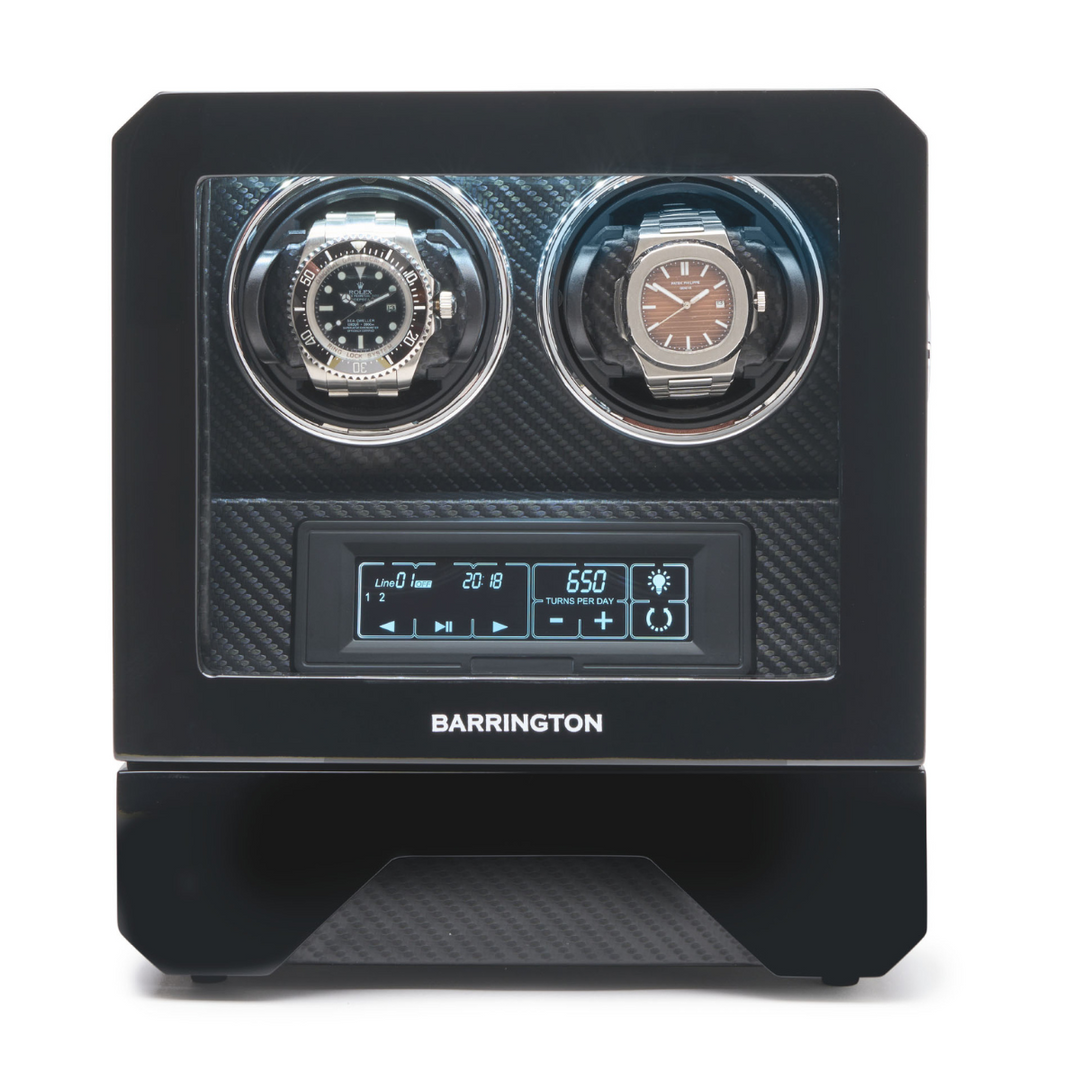
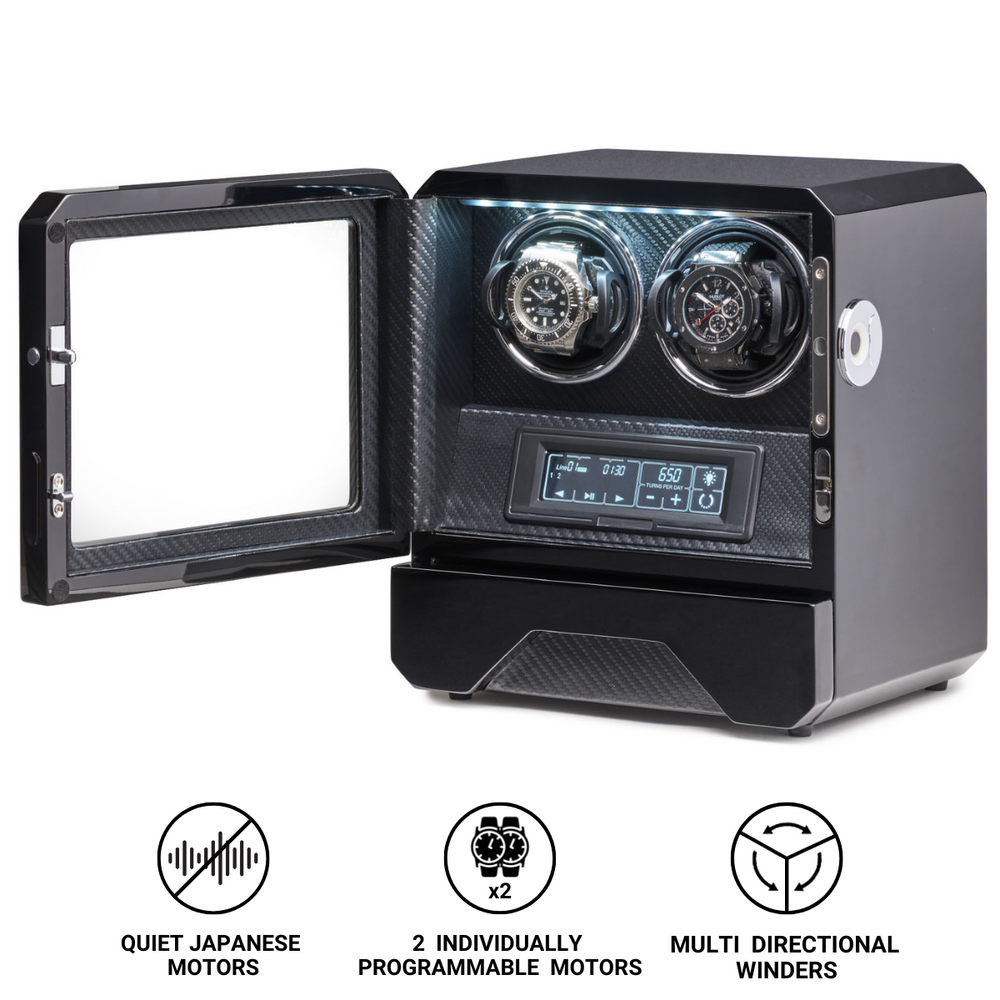
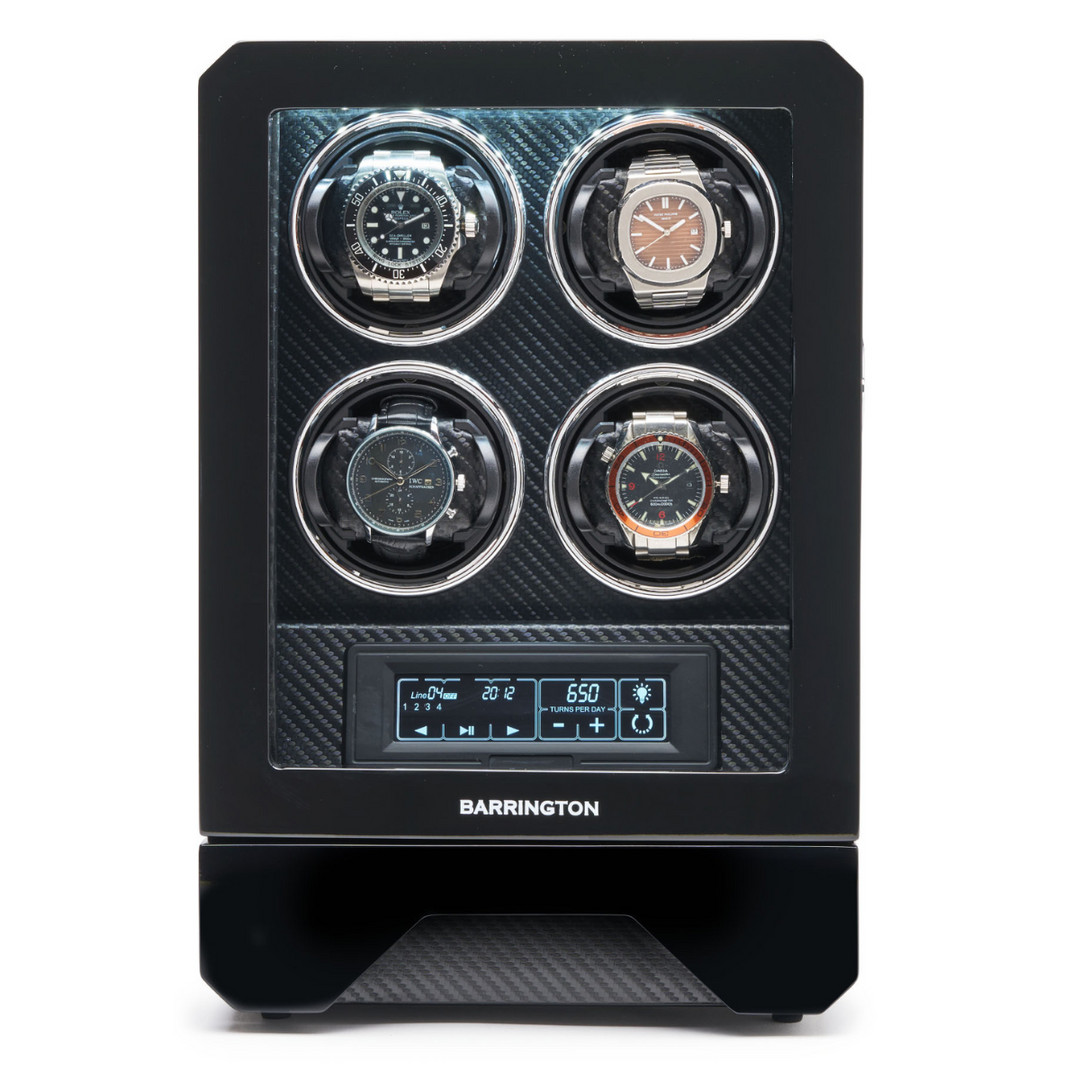
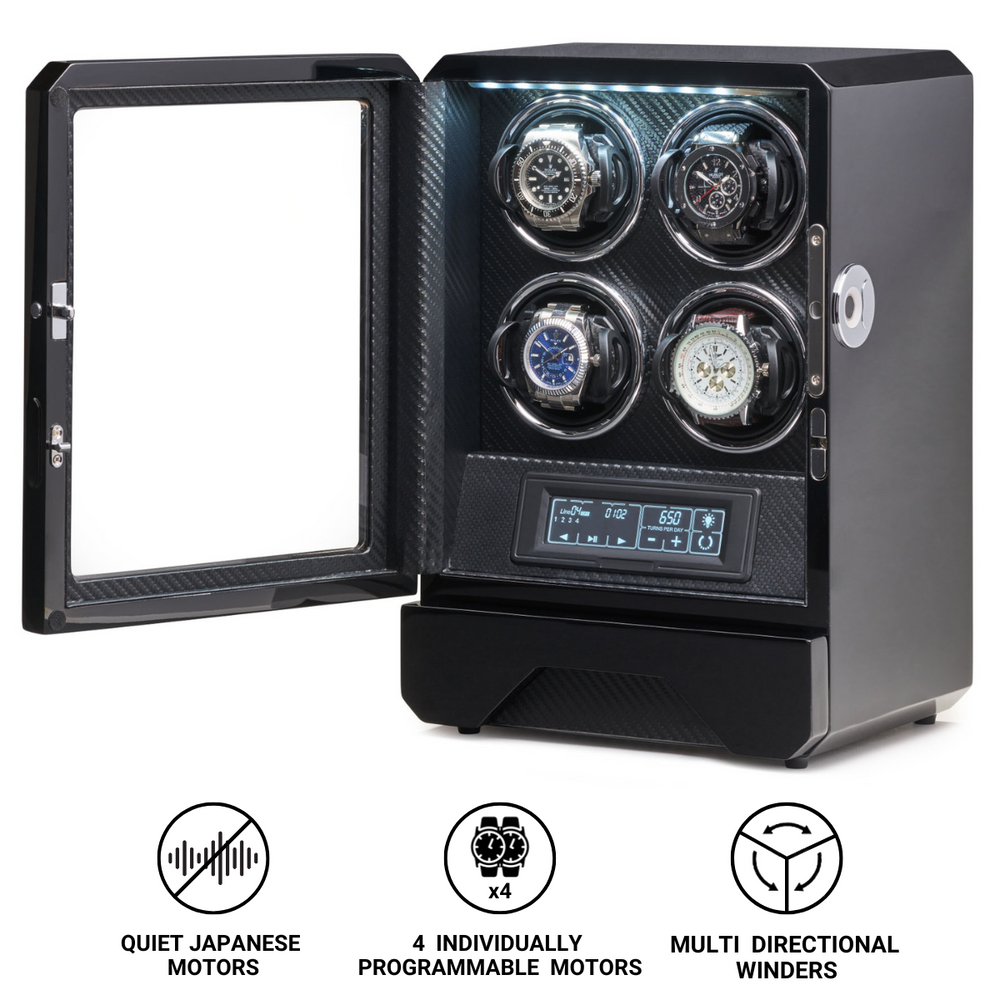
Choosing the right watch winder is just as important as selecting the correct TPD and rotation settings. A well engineered winder should provide precise control, reliable motor performance and quiet day to day operation, while also complementing the watches it is designed to protect. At Barrington Watch Winders, our collection is built to accommodate everything from straightforward automatic watches to more demanding chronographs and complicated mechanical movements.
Barrington Oxford Single Winder - Red

(The Barrington Oxford Single Winder in Red combines compact design, quiet operation and highly adjustable winding functionality in a format suitable for virtually any automatic watch collection. Designed to support watches from brands such as Rolex, Omega, Breitling and TAG Heuer, it offers multiple TPD settings from 650 to 1,950 alongside clockwise, counter clockwise and bidirectional rotation modes to accommodate a wide variety of calibres. Its ultra quiet premium Japanese motor and Barrington’s Gentle Rotation method help maintain accurate winding while reducing unnecessary movement activity through controlled rest periods. The compact case fits comfortably on a desk, bedside table or display shelf, while practical features such as battery or mains operation, the 12 o’clock resting position and Barrington’s Jump connectivity system make it an ideal choice for both new collectors and more established enthusiasts).
9 Watch Winder

(The Barrington 9 Watch Winder is designed for collectors who want precise control, secure storage and refined presentation for a larger automatic watch collection. Featuring nine individually programmable rotors, it allows each watch to be configured independently with its own TPD and rotation direction settings, making it suitable for collections that include watches from Rolex, Omega, Breitling and TAG Heuer. The carbon fibre-effect interior, integrated LED lighting and elegant 12 o’clock resting position create a highly polished display, while practical features such as the fingerprint lock, touch screen controls and full function remote control add an additional level of convenience and security. Despite its size and capability, the winder remains impressively quiet thanks to premium Japanese Mabuchi motors and Barrington’s Gentle Rotation programme, which alternates active winding cycles with controlled rest periods to better replicate natural wear conditions).
Barrington Oxford Single Winder - Black

(The Barrington Oxford Single Winder in Black offers a refined balance of compact design, practical flexibility and quiet day to day operation, making it an excellent choice for almost any automatic watch owner. Suitable for watches from brands such as Rolex, Omega, Breitling and TAG Heuer, it features adjustable TPD settings from 650 to 1,950 alongside clockwise, counter clockwise and bidirectional rotation modes to support a wide variety of automatic movements. The ultra quiet Japanese motor and Barrington’s Gentle Rotation system help maintain consistent winding while introducing controlled rest periods that better reflect natural wrist motion. With its elegant black finish, compact footprint, 12 o’clock resting position and the ability to operate either by battery or AC power, the Oxford Single Winder is designed to fit seamlessly into both modern interiors and growing watch collections).
Whether you own a single automatic watch or a growing collection from brands such as Rolex, Omega or TAG Heuer, choosing a programmable watch winder with flexible TPD and rotation settings helps ensure long term convenience and dependable performance. The right watch winder should not only keep your watches running accurately, but also provide the build quality, protection and refinement expected by modern collectors.
Final Thoughts
Choosing the correct watch winder settings is one of the simplest ways to keep an automatic watch accurate, reliable and ready to wear. The right combination of TPD and rotation direction helps maintain a stable power reserve while reducing unnecessary movement activity. Since every calibre behaves slightly differently, the safest approach is always to begin with conservative settings and make gradual adjustments only if needed.
A high quality programmable watch winder also makes a significant difference over the long term. At Barrington Watch Winders, our winders are designed to support a wide range of automatic movements through adjustable TPD settings, multiple rotation modes and our Gentle Rotation method, which helps simulate natural wrist motion more realistically. Whether you own a single Rolex or a growing collection of watches from brands such as Omega, Breitling or TAG Heuer, using a well engineered watch winder remains one of the safest and most convenient ways to care for your timepieces.





Leave a comment