



Rolex Serial Numbers: How to Find Your Watch’s Production Year
Key Points:
Rolex serial numbers help identify the approximate production year of a watch case, which can provide valuable insight into its history and collectability.
By comparing the serial number with established lookup tables, owners and collectors can estimate when a Rolex was manufactured, particularly for watches produced before 2011.
Modern Rolex watches use randomly generated serial numbers, meaning the production year must often be confirmed using the warranty card or reference generation.
Understanding serial numbers, reference numbers and related codes can help buyers verify specifications and make more informed decisions when purchasing a pre owned Rolex.
Rolex serial numbers play an important role in understanding the history of a watch. Every Rolex timepiece is engraved with a unique serial number that allows owners, collectors and dealers to identify key details about the watch. Among the most useful pieces of information this number can reveal is the approximate production year of the case. By comparing the serial number with historical production charts, it is often possible to determine when the watch was manufactured, which can provide valuable context about its generation, design features and period of production.
Knowing the production year is particularly important for collectors and buyers in the pre owned market, as it helps confirm the era of the watch and can influence its desirability and value. Vintage models, transitional references and early production examples are often of special interest. However, this method works primarily for watches produced before 2010. In that year, Rolex introduced a new system of randomly generated alphanumeric serial numbers, meaning the production year can no longer be determined directly from the serial number alone.
What Is a Rolex Serial Number?
A Rolex serial number is a unique identifier engraved on every watch produced by the brand. Rolex has used serial numbers since the 1920s as a way to track production and distinguish each individual watch. This number is assigned during manufacturing and is typically engraved on the watch case, making it a permanent part of the timepiece. Over the decades, Rolex has used different serial number formats, but the core purpose has remained the same: to identify and track each watch within the company’s production history.
It is important not to confuse the serial number with the Rolex reference number. While both are engraved on the case, they serve different purposes. The reference number identifies the model and configuration of the watch, whereas the serial number identifies the individual piece and helps estimate when it was manufactured.
In simple terms, a Rolex serial number can provide several useful insights, including:
-
Identification of an individual watch within Rolex production
-
An approximate production year for watches manufactured before the random serial system
-
Additional context when verifying authenticity or researching a watch’s history
-
A reference point when assessing collectability and market value
A key detail to understand is that the serial number reflects the production year of the watch case, not the exact date when the watch was sold. A Rolex may remain with an authorised dealer for some time before purchase, meaning the retail date can differ from the manufacturing date.
How Rolex Serial Numbers Work
Rolex has used several different serial number formats throughout its history. These systems evolved as production increased and the brand modernised its manufacturing processes. Understanding how these systems developed can help owners interpret the serial number on their watch and estimate its production period.
Numeric Serial Numbers (1926–1987)
From the mid 1920s until the late 1980s, Rolex used a purely numeric serial number system. During this period, serial numbers consisted only of digits and gradually increased as more watches were produced. This means that earlier watches have lower serial numbers, while later examples show higher numbers.
For collectors, this system makes it possible to estimate the approximate production year by comparing the serial number with historical production charts. For example, a Rolex with a serial number in the one million range would generally date to the mid 1960s, while numbers in the eight million range correspond to the mid 1980s.
Letter Prefix System (1987–2010)
In 1987 Rolex introduced a new serial number format that included a letter prefix followed by several digits. This change helped expand the numbering capacity as production volumes continued to grow.
Each letter prefix roughly corresponded to a specific production period. Some commonly seen prefixes include:
-
R for approximately 1987
-
L for around 1989
-
E for around 1990
-
X and N for the early 1990s
Over time, additional letters were introduced, allowing collectors to estimate the manufacturing year by identifying the prefix.
Random Serial Numbers (2011–Present)
Around 2011 Rolex introduced a new randomised serial number system. Instead of using a predictable sequence, modern Rolex watches feature randomly generated alphanumeric combinations.
Because these serial numbers are not sequential, they no longer reveal the production year of the watch. As a result, determining the manufacturing period for modern Rolex models usually requires additional information, such as the warranty card, original paperwork or the specific generation of the reference.
Where to Find the Serial Number on a Rolex
The location of the Rolex serial number depends on the year the watch was produced. Over time, Rolex changed where this engraving appears on the case. Knowing where to look will help you quickly locate the number and use it to estimate the watch’s production year.
Watches Produced Before 2005
On Rolex watches produced before 2005, the serial number is engraved on the case between the lugs at the 6 o’clock position. Because the bracelet covers this area, the number is not visible when the watch is fully assembled.
To see the engraving, the bracelet must be removed from the lower lugs of the case. Once the bracelet is detached, the serial number can be found on the case surface between the two lugs.
Watches Produced Between 2005 and 2008
Between 2005 and 2008, Rolex began engraving the serial number on the rehaut, which is the inner ring located between the dial and the crystal. During this transitional period, some watches feature serial numbers both between the lugs and on the rehaut.
Because of this overlap, it is possible to find the serial number in either location depending on the specific model and production year.
Watches Produced After 2008
On Rolex watches produced after 2008, the serial number is engraved only on the rehaut. The engraving runs around the inner bezel of the watch and can usually be seen when looking at the dial from certain angles.
The engraving is very precise and forms part of Rolex’s modern anti counterfeiting measures.
Practical Tips for Finding the Serial Number
If you are trying to locate the serial number on your Rolex, the following tips can make the process easier:
-
Remove the bracelet carefully if the watch was produced before 2005
-
Use a magnifying loupe to read small engravings clearly
-
Tilt the watch under strong lighting to make the rehaut engraving easier to see
-
Handle the watch carefully to avoid scratching the case or bracelet
If you are unsure about removing the bracelet yourself, it is best to ask a professional watchmaker or authorised service centre to assist.
Barrington Watch Winders Tip: When checking the serial number on older Rolex watches, it is important to remove the bracelet carefully to avoid scratching the case. If you are unsure how to do this safely, a professional watchmaker can help inspect the watch without risking damage.

Source: monochrome-watches.com
Rolex Serial Numbers Lookup Table (Production Year)
The table below provides a widely referenced guide to Rolex serial numbers and their approximate production years. By comparing the serial number on your watch with the ranges listed here, it is often possible to estimate when the case was manufactured. These dates are based on historical research and collector data gathered over many years, as Rolex does not publish an official public database of serial numbers.
It is important to remember that the serial number indicates the approximate production year of the watch case, not necessarily the year the watch was sold. In some cases, a watch may have remained with an authorised dealer for a period before being purchased.
|
Serial Number |
Production Year |
|
Random |
2011–Present |
|
G |
2010 |
|
V |
2009 |
|
M / V |
2008 |
|
M / Z |
2007 |
|
D / Z |
2006 |
|
F |
2003–2005 |
|
Y |
2002 |
|
K / Y |
2001 |
|
K000001 |
2000 |
|
P000001 |
2000 |
|
A000001 |
1999 |
|
U932144 |
1998 |
|
U000001 |
1997 |
|
T000001 |
1996 |
|
W000001 |
1995 |
|
S860880 |
1994 |
|
S000001 |
1993 |
|
C000001 |
1992 |
|
N000001 |
1991 |
|
X000001 |
1991 |
|
E000001 |
1990 |
|
L980000 |
1989 |
|
R598200 |
1988 |
|
9400000 |
1987 |
|
8900000 |
1986 |
|
8614000 |
1985 |
|
8070022 |
1984 |
|
7400000 |
1983 |
|
7100000 |
1982 |
|
6520870 |
1981 |
|
6434000 |
1980 |
|
5737030 |
1979 |
|
5000000 |
1978 |
|
5008000 |
1977 |
|
4115299 |
1976 |
|
3862196 |
1975 |
|
3567927 |
1974 |
|
3200268 |
1973 |
|
2890459 |
1972 |
|
2589295 |
1971 |
|
2241882 |
1970 |
|
1900000 |
1969 |
|
1752000 |
1968 |
|
1538435 |
1967 |
|
1200000 |
1966 |
|
1100000 |
1965 |
|
1008889 |
1964 |
|
824000 |
1963 |
|
744000 |
1962 |
|
643153 |
1961 |
|
516000 |
1960 |
|
399453 |
1959 |
|
328000 |
1958 |
|
224000 |
1957 |
|
133061 |
1956 |
|
97000 |
1955 |
|
23000 |
1954 |
|
855726 |
1953 |
|
726639 |
1952 |
|
709249 |
1951 |
|
— |
1950 |
|
— |
1949 |
|
628840 |
1948 |
|
529163 |
1947 |
|
367946 |
1946 |
|
302459 |
1945 |
|
269561 |
1944 |
|
230878 |
1943 |
|
143509 |
1942 |
|
106047 |
1941 |
|
99775 |
1940 |
|
71224 |
1939 |
|
43739 |
1938 |
|
40920 |
1937 |
|
36856 |
1936 |
|
34336 |
1935 |
|
30823 |
1934 |
|
29562 |
1933 |
|
29132 |
1932 |
|
— |
1931 |
|
23186 |
1930 |
|
— |
1929 |
|
23969 |
1928 |
|
20190 |
1927 |
|
00001 |
1926 |
For watches produced after 2011, Rolex uses randomly generated serial numbers, which means the production year can no longer be determined directly from the serial number alone. In these cases, the warranty card, service history and reference generation can provide additional clues about the watch’s manufacturing period.
Understanding Rolex Reference Numbers
In addition to the serial number, every Rolex watch also carries a reference number. This number identifies the specific model and configuration of the watch. While the serial number is unique to each individual timepiece, the reference number is shared by all watches of the same model and specification.
The reference number is typically engraved on the case between the lugs at the 12 o’clock position. On older watches, the bracelet may need to be removed in order to see the engraving clearly. Modern Rolex documentation and warranty cards also include the reference number, making it easier to identify the model without removing the bracelet.
Rolex reference numbers contain useful information about the watch, including the model family, the type of bezel and the material used for the case. By breaking the number into sections, it is possible to understand several design characteristics of the watch.
For example, the reference number 16234 can be interpreted as follows:
|
Section |
Meaning |
|
162 |
Model type |
|
3 |
Fluted bezel |
|
4 |
Stainless steel with white gold bezel |
In this example, the reference number indicates a Rolex Datejust with a fluted bezel and a stainless steel case paired with a white gold bezel. Understanding these codes can help collectors and buyers quickly identify key specifications of a Rolex watch.
Rolex Model Reference Prefixes
The first digits of a Rolex reference number usually indicate the model family. These prefixes allow collectors and enthusiasts to quickly identify the type of watch, even before looking at the full reference number. Over time, Rolex has introduced new generations of references, but many model prefixes remain closely associated with specific collections.
Understanding these prefixes can be useful when researching a watch, browsing the pre owned market or verifying that a reference number corresponds to the correct model. While the full reference number provides more detailed information about materials and bezel types, the prefix generally reveals the watch category.
Below is a simplified guide to some commonly seen Rolex model reference prefixes:
|
Model |
Reference Prefix |
|
Submariner |
16 / 166 / 168 |
|
Submariner No Date |
55 / 140 |
|
Sea-Dweller |
16 / 166 |
|
GMT-Master |
16 / 65 / 167 |
|
GMT-Master II |
167 / 1167 |
|
Day-Date |
65 / 66 / 180 / 182 / 183 |
|
Datejust |
16 / 162 |
|
Daytona |
165 / 1165 |
|
Explorer II |
165 |
|
Oyster Perpetual |
10 / 140 / 142 |
|
Air-King |
55 / 140 |
It is worth noting that Rolex has introduced many additional references over the years, particularly as new generations of movements and case designs have been developed. However, these prefixes remain helpful for recognising some of the most well known Rolex models.
Rolex Material Codes
Rolex reference numbers also contain information about the materials used in the watch case. In many classic reference formats, the final digit of the reference number indicates the metal or material combination used for the watch. This system allows collectors and buyers to quickly identify whether a model is made from stainless steel, precious metal or a combination of materials.
Understanding these material codes can be particularly helpful when researching older references or comparing similar models that were produced in different metal variations. For example, the same Rolex model may exist in stainless steel, Rolesor (steel and gold) or full gold versions, each with a slightly different reference number.
The table below outlines some commonly used Rolex material codes:
|
Code |
Material |
|
0 |
Stainless steel |
|
1 |
Yellow gold filled |
|
2 |
White gold filled |
|
3 |
Steel & yellow gold |
|
4 |
Steel with white gold bezel |
|
5 |
Gold shell |
|
6 |
Platinum |
|
7 |
14k yellow gold |
|
8 |
18k yellow gold |
These codes are most often seen on older five digit and four digit references. While modern Rolex reference numbers have evolved over time, the general principle of encoding material information within the reference remains a useful guide for identifying watch specifications.
Rolex Bezel Codes
In addition to identifying the model and material, certain Rolex reference numbers also indicate the type of bezel fitted to the watch. The bezel is the ring that surrounds the crystal and dial, and it plays both a functional and aesthetic role in the design of many Rolex models.
In traditional Rolex reference numbering systems, one of the digits within the reference number corresponds to the bezel style. This makes it possible to distinguish between different configurations of the same watch model. For example, a Datejust may be produced with a smooth polished bezel or with the brand’s well known fluted bezel, each reflected in the reference number.
The table below shows some commonly recognised Rolex bezel codes:
|
Code |
Bezel Type |
|
0 |
Polished |
|
1 |
Engine turned |
|
2 |
Engine turned |
|
3 |
Fluted |
|
4 |
Hand crafted |
|
5 |
Pyramid |
|
6 |
Rotating bezel |
These bezel codes are most commonly seen on vintage and older Rolex references. Although modern reference systems have evolved over time, understanding these codes remains helpful when researching historical models or identifying variations within classic Rolex collections.
Rolex Bracelet Clasp Codes
In addition to serial and reference numbers, many Rolex watches also feature bracelet clasp codes. These markings indicate when the bracelet was manufactured and can help determine whether the bracelet corresponds to the approximate production period of the watch.
The clasp code is typically engraved inside the clasp hinge, which becomes visible when the bracelet is opened. The code usually consists of one or two letters followed by a number. The letter represents the production year, while the number indicates the month of manufacture.
While bracelet codes do not confirm the exact production year of the watch case, they can provide useful supporting information when researching a Rolex timepiece. For example, if a bracelet was produced several years after the watch case, it may indicate that the bracelet was replaced during servicing.
Below is a reference table for commonly seen Rolex bracelet clasp codes:
|
Code |
Year |
|
A / VA |
1976 |
|
B / VB |
1977 |
|
C / VC |
1978 |
|
D / VD |
1979 |
|
E / VE |
1980 |
|
F / VF |
1981 |
|
G |
1982 |
|
H |
1983 |
|
I |
1984 |
|
J |
1985 |
|
K |
1986 |
|
L |
1987 |
|
M |
1988 |
|
N |
1989 |
|
O |
1990 |
|
P |
1991 |
|
Q |
1992 |
|
R |
1993 |
|
S |
1994 |
|
T / W |
1995 |
|
V |
1996 |
|
Z |
1997 |
|
U |
1998 |
|
X |
1999 |
|
AB |
2000 |
It is worth noting that bracelets can be replaced during the lifetime of a watch, especially if the original bracelet becomes worn. For this reason, clasp codes should be considered as an additional clue rather than definitive proof of the watch’s production date.
Rolex Country Codes
Rolex warranty papers and guarantee cards often include a country code that identifies the market where the watch was originally sold by an authorised dealer. This code appears on the official documentation rather than on the watch case itself. For collectors and buyers in the pre owned market, country codes can provide additional insight into the watch’s distribution history.
These codes represent the authorised dealer’s country or regional market at the time of the original sale. It is important to note that the country code does not indicate where the watch was manufactured, as all Rolex watches are produced in Switzerland. Instead, it simply identifies the location of the authorised retailer that first sold the watch.
Below are some commonly seen Rolex country codes:
|
Code |
Country |
|
010 |
Switzerland |
|
100 |
Germany |
|
110 |
France |
|
150 |
Spain |
|
160 |
United Kingdom |
|
170 |
Italy |
|
200 |
Greece |
|
400 |
Hong Kong |
|
500 |
India |
|
700 |
Canada |
|
710 |
USA |
|
720 |
Mexico |
|
780 |
Brazil |
|
810 |
Australia |
|
900 |
Japan |
For collectors, these codes can sometimes add an interesting detail to the history of a watch. In certain cases, watches originating from specific markets or special retailer partnerships may attract additional attention within the collector community.
Sapphire Crystal Evolution in Rolex Watches
For many years, Rolex watches were fitted with acrylic crystals. While acrylic offered good clarity and was relatively resistant to shattering, it was more susceptible to scratches over time. As materials technology advanced, Rolex gradually introduced sapphire crystal, which is far more resistant to scratching and provides greater long term durability.
The transition to sapphire crystal did not happen all at once. Instead, Rolex introduced the material at different times depending on the model and case material. In some collections, precious metal versions received sapphire crystals earlier than stainless steel models. Over time, sapphire became the standard across nearly all Rolex watches.
The table below highlights when sapphire crystals were introduced on several well known Rolex models:
|
Model |
Stainless |
Rolesor |
Gold |
Platinum |
|
Date |
1989 |
1989 |
1989 |
— |
|
Datejust |
1989 |
1989 |
1978 |
— |
|
Submariner Date |
1981 |
1984 |
1981 |
— |
|
Sea-Dweller |
1981 |
— |
— |
— |
|
GMT-Master |
1989 |
— |
1981 |
— |
|
GMT-Master II |
1984 |
1989 |
1989 |
— |
|
Explorer |
1990 |
— |
— |
— |
|
Daytona |
1988 |
1988 |
1988 |
— |
Today, sapphire crystal is used across the entire modern Rolex range. For collectors of vintage watches, understanding when this transition occurred can help identify specific production eras and technical updates within different Rolex models.
Red Letter Papers Explained
Some vintage Rolex watches that were originally sold in the United States include warranty papers featuring red stamped letters. These markings were used by Rolex USA to indicate the date when the watch was shipped from the company’s distribution centre to an authorised dealer.
The system uses a sequence of letters that correspond to numbers in the word ROLEX WATCH, where each letter represents a specific digit. By reading the stamped letters, it is possible to determine the shipping date recorded on the original documentation.
For example, a stamp such as “L RCCT” can be decoded using the Rolex Watch letter system. When the letters are converted into numbers, the stamp corresponds to March 19, 1998, indicating the date the watch was dispatched from Rolex USA to the authorised retailer.
Although these red letter markings do not reveal the production date of the watch itself, they can provide an interesting additional detail about the watch’s early history and distribution.
Why Knowing the Production Year Matters
Understanding the production year of a Rolex watch can provide valuable context about its history, authenticity and position within the brand’s timeline. For collectors and enthusiasts, even small differences in production periods can reveal important details about design changes, movement upgrades or limited production variations.
One of the main reasons collectors research production years is to determine whether a watch qualifies as vintage. In the world of horology, watches that are several decades old often carry additional appeal, especially if they retain original components and remain in good condition. Identifying the correct production period can help place a watch within a specific era of Rolex manufacturing.
The production year can also influence a watch’s market value. Certain years may correspond to desirable transitional models, rare dial variations or early production runs. As a result, two watches with the same reference number may have different values depending on when they were produced and how closely their components match the original specification.
Finally, knowing the production year can be helpful when purchasing a pre owned Rolex. By comparing the serial number with other details such as the dial, bezel and bracelet, buyers can check whether the components are consistent with the watch’s era. This information can provide greater confidence when assessing authenticity and overall collectability.
Barrington Watch Winders Insight: For many collectors, the production year is more than just a date. It helps place a watch within the evolution of a model and can reveal subtle changes in design, materials or movement generation that make certain years especially desirable.
Caring for Your Rolex
Proper care plays an important role in preserving the performance and long term value of a Rolex watch. While Rolex timepieces are known for their durability and precision, regular maintenance and careful storage can help ensure that the movement continues to operate accurately for many years. Keeping the watch clean, avoiding unnecessary impacts and storing it in a safe place when not in use are simple steps that help protect both the case and the movement.
Rolex also recommends periodic servicing to maintain the reliability of the movement. During a service, a professional watchmaker inspects the internal components, lubricates the movement and replaces worn parts if necessary. Regular servicing helps keep the watch functioning within its intended performance standards and can extend the lifespan of the movement.
For owners of automatic Rolex watches that are not worn every day, a watch winder can be a practical solution. A quality watch winder keeps the movement running by gently rotating the watch, helping maintain consistent timekeeping and keeping the watch ready to wear. This can be particularly useful for watches with additional complications or for collectors who rotate between several automatic timepieces.
Recommended Watch Winders for Rolex Owners
Many Rolex watches are automatic, meaning they rely on movement to keep the mainspring wound. When a watch is not worn for several days, the movement can stop and the time and date will need to be reset before wearing it again. For collectors who rotate between several watches, this can quickly become inconvenient.
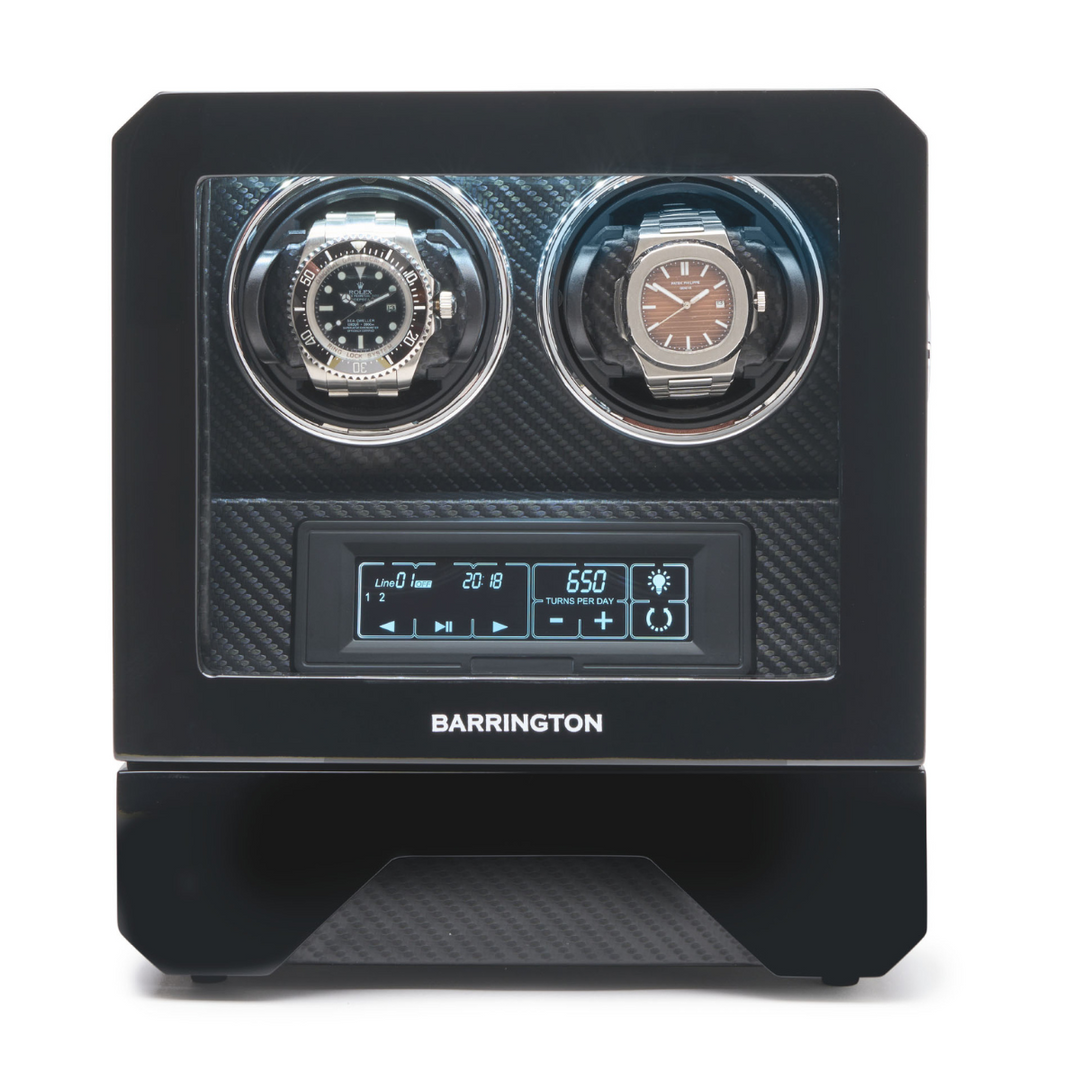
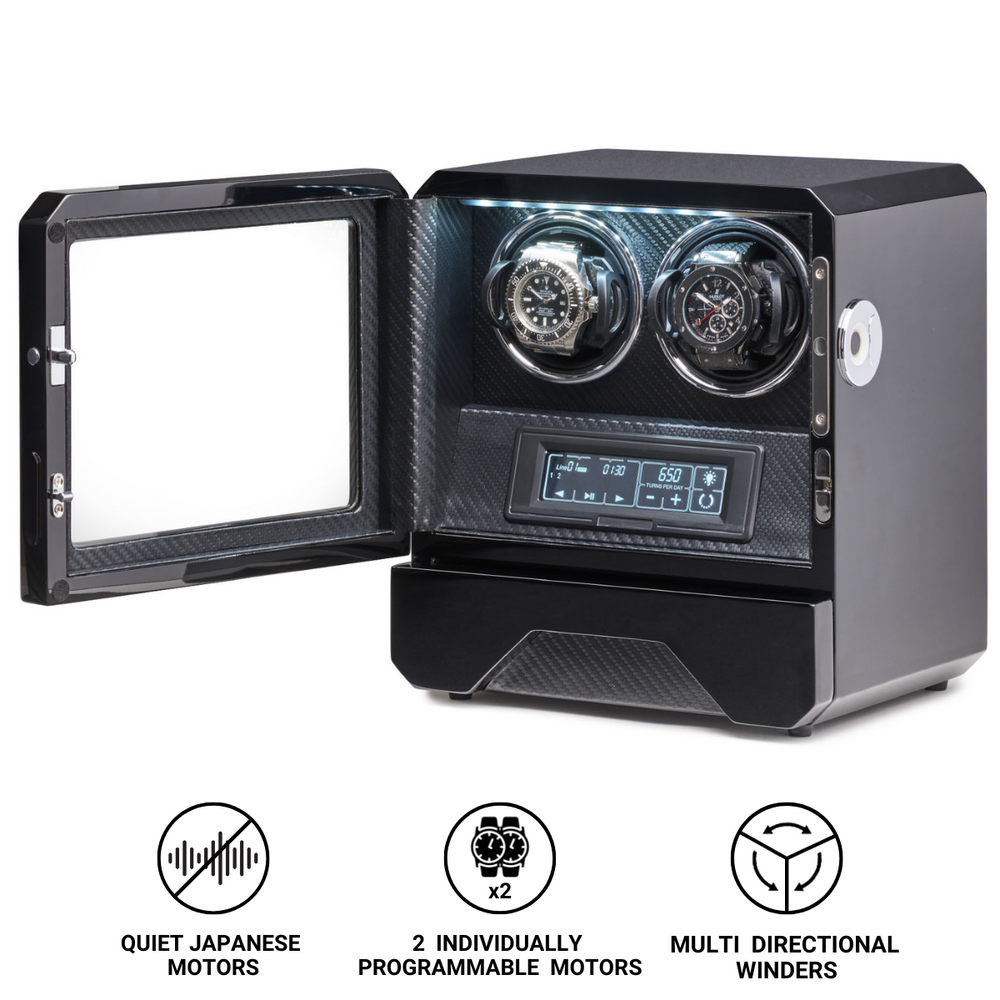
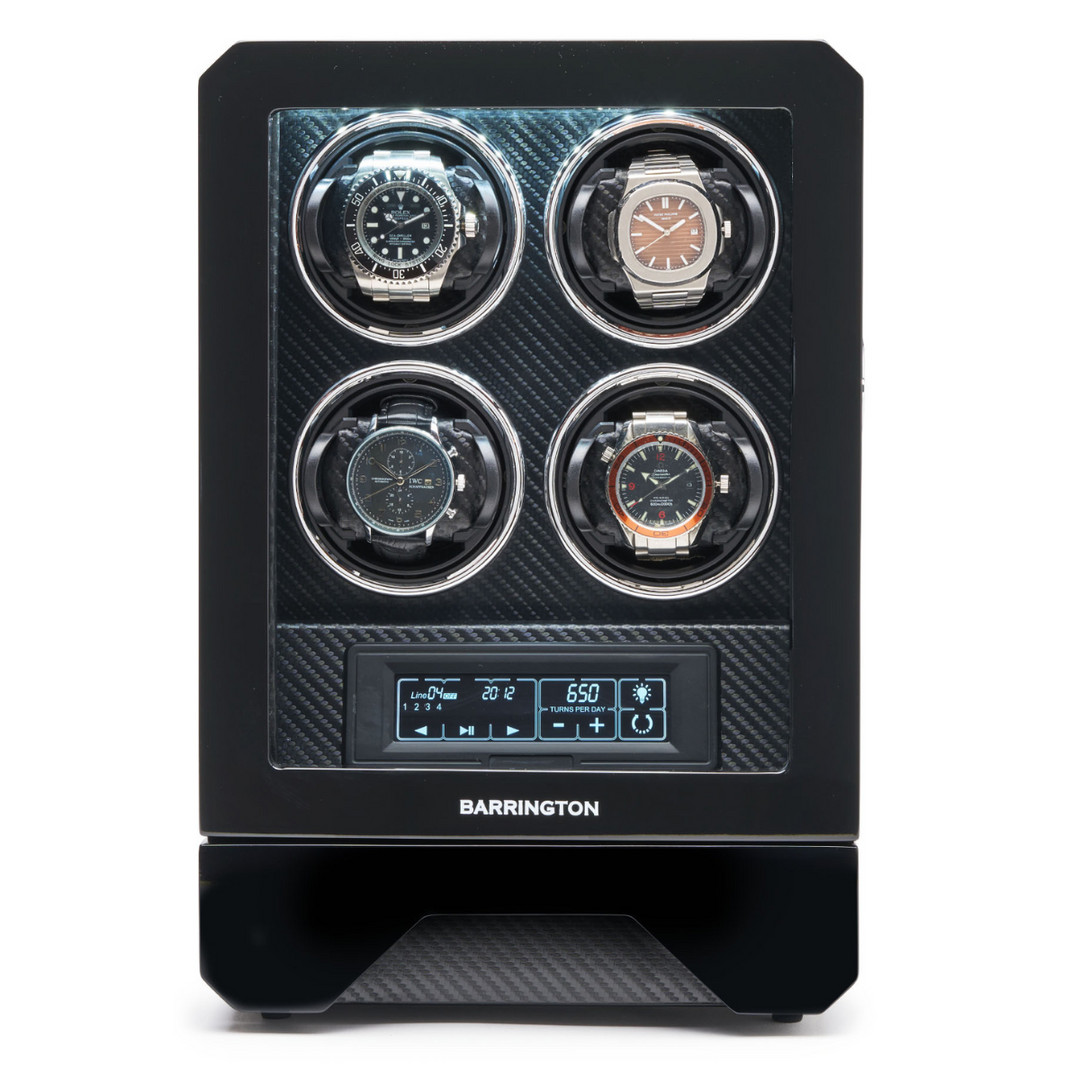
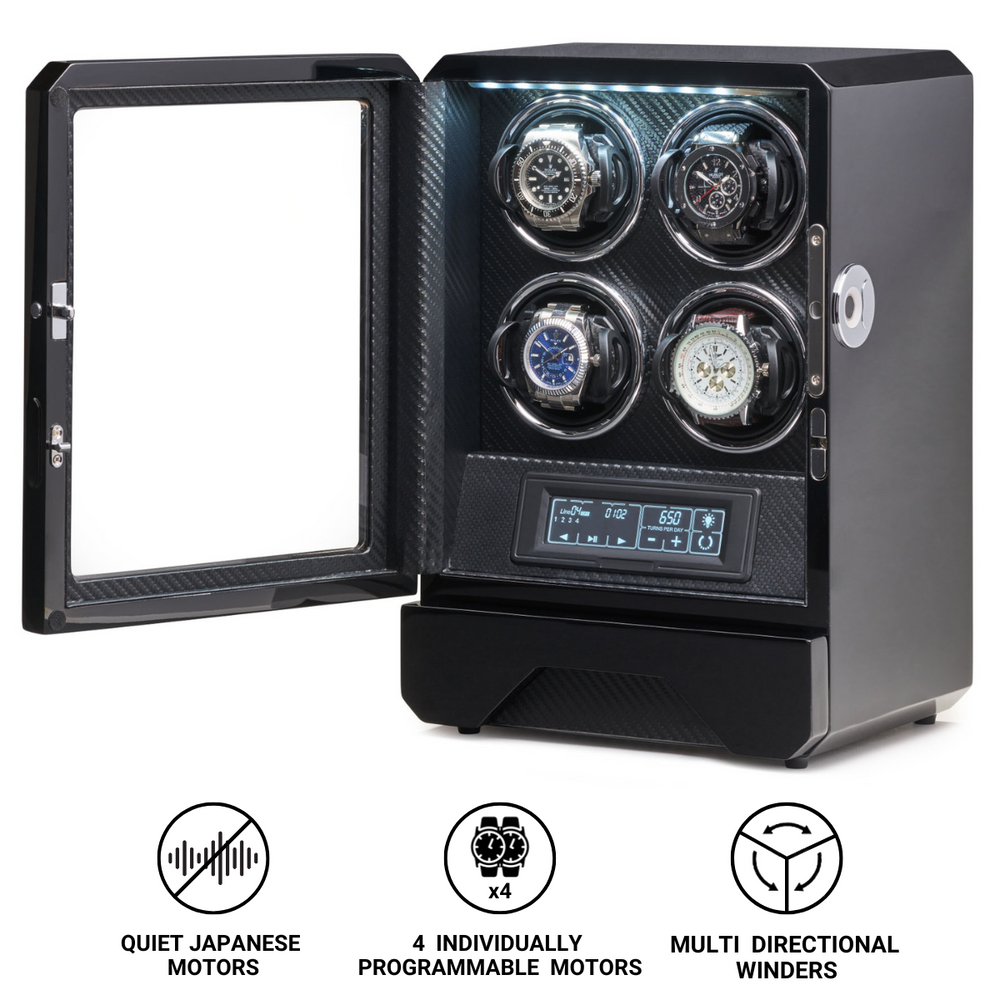
A quality watch winder keeps an automatic Rolex running by gently rotating the watch to simulate natural wrist movement. This helps maintain accurate timekeeping and ensures the watch is ready to wear whenever you need it. Barrington watch winders are designed specifically for watch enthusiasts, combining precise rotation settings, quiet operation and elegant presentation for luxury timepieces.
Barrington Oxford Single Winder - Black

(The Barrington Oxford Single Winder in Black is a compact and elegant solution designed to keep automatic watches such as Rolex, Omega and Breitling perfectly wound when they are not being worn. Despite its small footprint, it offers the functionality expected from a premium watch winder, including adjustable Turns Per Day settings ranging from 650 to 1,950 and the choice of clockwise, counter clockwise or alternating rotation to suit different watch movements. The winder uses a high quality Japanese motor that operates extremely quietly, making it suitable for use in any room, while the watch rests securely on a cushioned mount and stops in the refined 12 o’clock display position. Powered either by AC mains through a USB connection or by four AA batteries, the unit also features Barrington’s Jump connection system, allowing multiple winders to be linked together and powered from a single source for collectors who wish to expand their display).
6 Watch Winder

(The Barrington 6 Watch Winder is designed for collectors who want to keep several automatic watches running while displaying them securely and elegantly. The unit features six individually programmable rotors, allowing each watch to be set with its own Turns Per Day and rotation direction to match the specific requirements of different movements. Housed in a refined display case with a carbon fibre effect interior, the winder combines practical storage with sophisticated presentation, enhanced by LED lighting and rotors that always stop in the 12 o’clock position. Security and convenience are enhanced by a fingerprint lock that can store up to twenty fingerprints, along with a touch screen interface and remote control for easy programming. Powered by ultra quiet Japanese Mabuchi motors and operating on a gentle rotation cycle designed to mimic natural wrist movement, the winder is quiet enough for use in a bedroom while also offering a built in drawer for storing additional watches or jewellery).
Barrington Oxford Single Winder - Blue

(The Barrington Oxford Single Winder in Blue offers the same premium functionality as the flagship Oxford series while adding a vibrant and distinctive finish that stands out in any watch collection. Designed for automatic watches such as Rolex, Omega and Breitling, it features adjustable Turns Per Day settings from 650 to 1,950 along with clockwise, counter clockwise or alternating rotation to suit the requirements of different movements. The compact case houses a precision Japanese motor that operates extremely quietly, while the watch is secured on a cushioned mount and always returns to a refined 12 o’clock resting position for display. The winder can be powered either by AC mains through a USB connection or by four AA batteries, and Barrington’s Jump feature allows multiple winders to be connected together from a single power source, making it an elegant and practical solution for collectors who want to expand their display over time).
Choosing the right watch winder helps protect your timepiece while also providing a practical and stylish way to display your collection. Consistent rotation helps keep the movement active and reduces the need to reset the watch after periods of inactivity. For collectors who own several automatic watches, it can also simplify everyday use.
Barrington watch winders are built with flexibility and reliability in mind, offering adjustable rotation settings and quiet motors suitable for a wide range of automatic watches, including Rolex. Whether you own a single timepiece or a growing collection, a well designed watch winder can help keep your watches ready to wear while showcasing them beautifully.
Conclusion
A Rolex serial number is more than just a sequence of characters engraved on the case. It provides an important clue to the history of a watch and helps owners understand when the timepiece was produced. By comparing the serial number with historical reference tables, collectors and enthusiasts can estimate the production year and place the watch within a specific era of Rolex manufacturing.
For modern Rolex watches with random serial numbers, additional information such as the warranty card, documentation and reference generation may be required to determine the production period. Proper care also plays an important role in preserving any fine timepiece. At Barrington Watch Winders, we design precision engineered watch winders created specifically for watch enthusiasts who want to keep their automatic watches running accurately and displayed elegantly when not being worn.





Leave a comment